

You are cruising through Tamworth or up the A5, everything feels normal – then the DPF warning light pops up. A mile later the car feels like it has half an engine. No boost, sluggish pickup, and it will not rev cleanly. That combination of a DPF light and limp mode is your vehicle protecting itself, not “having a bad day”. The right response is calm, methodical, and based on what the ECU is actually seeing.
This is a practical guide to getting a genuine dpf warning light limp mode fix, without guessing, without throwing random parts at it, and without turning a manageable soot issue into a failed DPF or turbo problem.
What limp mode with a DPF light usually means
Limp mode is not a single fault. It is a strategy the ECU uses when it believes continued normal running could damage the engine, turbo, DPF, or emissions system.
When the DPF warning light is involved, the common story is: soot load has risen beyond what the car can clear with normal regeneration. The ECU then reduces power (often by limiting boost and torque request) to keep exhaust temperatures and backpressure within safer limits.
That said, the DPF light can be the symptom, not the cause. A split boost hose, EGR fault, sticky turbo actuator, weak glow plugs (on some models), or a tired differential pressure sensor can all prevent a successful regeneration. The DPF then loads up, and the car reacts.
The safest first checks you can do
If your car has gone into limp mode, the best first move is not to floor it “to clear it”. You want information and a quick safety check.
Start with the basics. Check oil level and coolant level. If the oil level is unusually high and smells of diesel, do not attempt forced regens or long high-load drives – diesel dilution can occur when repeated regenerations fail, and that can damage the engine.
Next, consider how the car has been used recently. If it has done lots of short runs, school runs, stop-start commuting, or idling, a soot-loaded DPF is very plausible. If the light came on right after a motorway run, that points more towards a sensor or control fault stopping regeneration rather than simply “needs a longer drive”.
If you can, read fault codes. Generic code readers help, but they do not always show the important live data. The difference between “DPF efficiency” codes, “DPF differential pressure” faults, “EGR flow” faults, and boost control faults matters, because the fixes are very different.
When a motorway drive helps – and when it does not
A sustained drive can help if the car is asking for a normal active regeneration and conditions are right. As a rough guide, you want a warmed engine, steady speed, and consistent load for 20-30 minutes. For many diesels that means 50-70 mph in a suitable gear so revs sit comfortably above idle (often around 2,000 rpm, depending on the car).
However, this is not a magic reset. If the soot load is already too high, the ECU may refuse to regenerate. If there is a fault logged for a temperature sensor, pressure sensor, EGR, turbo control, or glow system, the ECU may also block regeneration as a protection measure. In those cases, a motorway run wastes time and can make things worse by increasing backpressure and exhaust heat while the underlying issue remains.
A key trade-off here is that pushing a heavily restricted DPF under load can raise exhaust backpressure. That can stress turbo seals, increase EGR contamination, and in extreme cases contribute to DPF substrate damage. So yes, an “Italian tune-up” can work for early warnings, but it is the wrong tool once limp mode has arrived.
What a proper dpf warning light limp mode fix looks like
A proper fix follows a sequence. Skip steps and you tend to pay twice.
Step 1: Diagnose the reason regeneration failed
You are looking for the trigger: why did soot rise and why could the car not clear it?
A technician will typically check fault codes and then confirm with live data. Differential pressure across the DPF at idle and under load is a big clue. Exhaust gas temperatures, requested versus achieved boost, EGR command and position (where applicable), and fuel system health also matter.
If the pressure sensor lines are blocked with soot, the ECU can be “lied to” about DPF load. If the sensor itself has drifted, it may report high restriction when the filter is not actually that bad – or the opposite, which is worse.
Step 2: Decide whether cleaning is appropriate or the DPF is beyond it
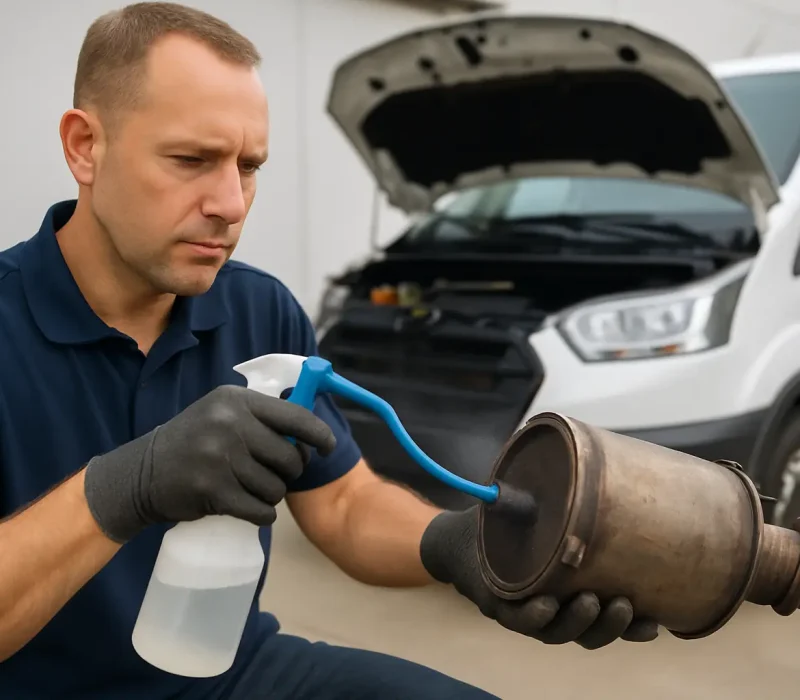
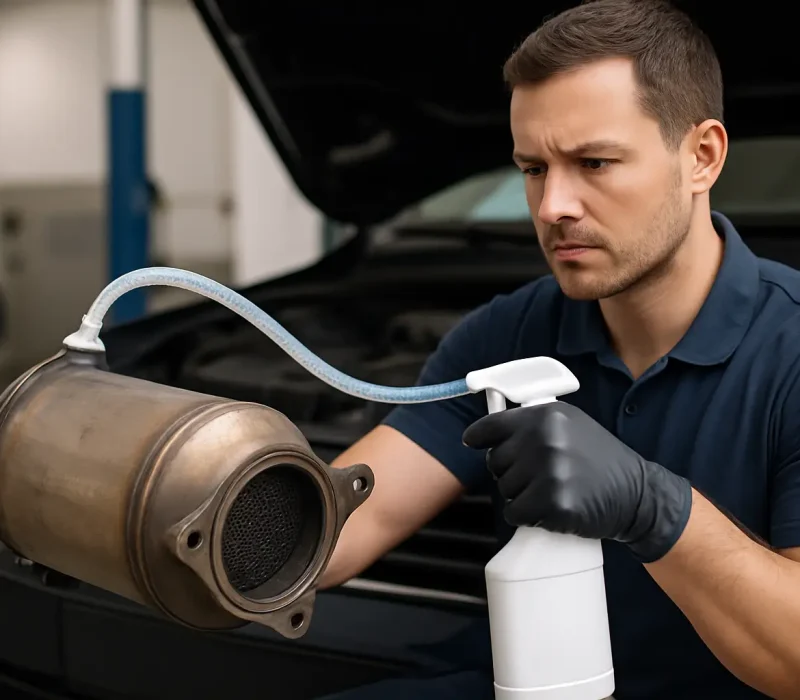
DPFs can be chemically cleaned when the substrate is intact and the restriction is primarily soot and some soluble deposits. If the filter is full of ash from long service life, or the honeycomb is cracked/melted, cleaning has limits.
This is where honesty matters. A cheap “quick fix” that forces a regen repeatedly on a high-ash filter can bring the light back within days, because ash does not burn off in normal regeneration. The vehicle may temporarily feel better, but restriction returns.
Step 3: Restore correct airflow and combustion control
Even if you clean the DPF, you still need the engine to run cleanly enough to keep it clean.
Common supporting work includes addressing EGR sticking, intake carbon build-up, boost leaks, tired MAF/MAP readings, and glow plug issues that prevent stable regens. On some vehicles, a thermostat that is stuck open keeps coolant temperatures low, which can stop successful regeneration cycles and drive soot accumulation.
Step 4: Confirm the fix with post-repair data
Clearing codes is not the same as fixing the vehicle. After repairs or cleaning, you want to see sensible differential pressure, normal boost behaviour, and no pending faults. If the ECU still sees implausible readings, it will return to limp mode.
Why DPF problems often show up as “loss of power” first
Many drivers expect a DPF issue to feel like a misfire. More often it feels like the turbo has stopped working.
That is because backpressure affects how easily the engine can push exhaust out. Turbochargers rely on controlled exhaust energy. When the exhaust side is restricted, the ECU may limit boost to protect the turbo, and the car feels flat. You can also see higher fuel consumption because the engine is working harder to achieve the same road speed.
If the car is used for towing, short-haul deliveries, or lots of idle time on site, you can reach that point sooner. The vehicle is doing the hardest type of diesel life: low exhaust temperature, low sustained load, and frequent stop-start.
What not to do if you want to avoid expensive damage
There are a few habits that reliably turn a warning into a bill.
Do not keep driving for weeks with a DPF light and reduced power, hoping it will “clear itself”. It usually does the opposite.
Do not repeatedly stop the engine mid-regeneration if you can avoid it. If you notice higher idle speed, fans running, or a hot smell after a drive, let it finish if safe to do so.
Do not use random additives as your only plan. Some additives can help support regeneration, but they will not fix a faulty sensor, a boost leak, or a DPF that is physically overloaded with ash.
And avoid any approach that disables DPF functions. Besides the legal and MOT implications, the vehicles we see that have been tampered with often end up with worse drivability issues and harder-to-diagnose faults later.
Why mobile diagnostics matters when you are stuck in limp mode
Limp mode is inconvenient. It is also disruptive – especially if you rely on the car for commuting, school runs, or a small fleet job where downtime costs money.
The advantage of proper on-site diagnostics is speed and clarity. Instead of booking into a garage, arranging lifts, and waiting days for a look, you can get a technician to the vehicle, read the right data, and make a call on the best route: drive-cycle regen if safe, targeted repair, or DPF chemical cleaning.
At High REVS Performance, the approach is straightforward: dealer-level diagnostics, genuine tools, and a process that aims to restore performance and reliability without guesswork, all delivered mobile across Tamworth and Staffordshire. If you need that kind of help, you can book via https://ecurmp.com.
The bigger picture: prevent the next limp mode
Once it is fixed, prevention is mostly about giving the car the conditions it needs and keeping the control systems healthy.
If your driving pattern is mostly short trips, build in a longer run occasionally so the engine reaches proper operating temperature and has time to complete regens. If you tow or carry weight regularly, stay on top of servicing and do not ignore early warning signs like rising fuel use, frequent fan running, or a change in idle quality.
Most importantly, treat the DPF light as a message, not a nuisance. The sooner you find out whether it is a simple soot load issue or a sensor/control fault stopping regeneration, the more likely the fix stays in the “maintenance” category rather than the “replacement” category.
A helpful way to think about it is this: a DPF does not fail in one journey – it builds up to the moment you notice. If you act at the first sign, you are usually choosing between smart options. If you wait until limp mode becomes the normal way the car drives, the car will eventually choose for you.