

The moment a DPF light pops up or the car drops into limp mode, it stops being a “book it in next week” job. It becomes a cancelled meeting, a missed school run, or another day of nursing the throttle and hoping it clears itself. That’s exactly where a good mobile mechanic earns their keep – not by doing everything a workshop can do, but by solving the right problems where your vehicle already sits.
If you’re searching for a mobile mechanic Tamworth drivers actually use for modern engines, it helps to know what mobile really means in 2026: professional diagnostics, specialist cleaning and calibration work, and targeted repairs that reduce downtime. It also means knowing when mobile is the best option, and when a ramp and a full workshop is the smarter call.
What a mobile mechanic in Tamworth is best for
Mobile works brilliantly when the job is diagnostic-led, time-sensitive, or doesn’t require heavy strip-down. Most of the real-world wins come from eliminating the “drop it off, get a lift, wait for a call” cycle.
In practice, mobile support is most valuable for people who rely on the vehicle daily – commuters, high-mileage diesel drivers, towing users, and small fleets that cannot afford a van off the road for two days while a garage squeezes it in.
A strong mobile service typically focuses on four areas: fault-finding, drivability issues, emissions-related faults (especially DPF), and performance optimisation that stays within safe limits. You’re paying for expertise and equipment arriving at your door, not just for someone with a socket set.
On-site diagnostics that actually narrow the problem down
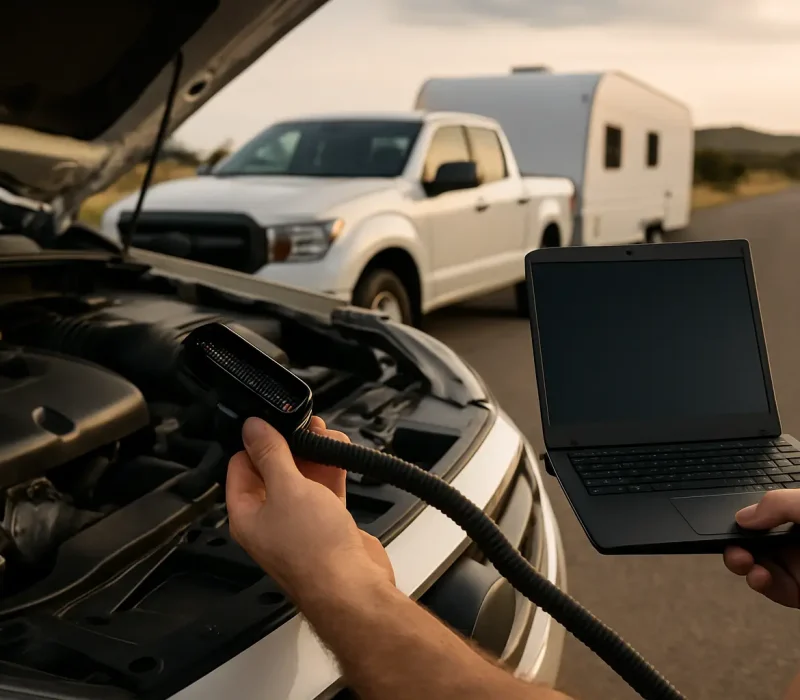
“Plugging in a code reader” is not the same as diagnosing. A proper diagnostic approach looks at fault codes, live data, sensor readings, soot load calculations (where relevant), and the conditions that caused the fault to log.
For example, a P2002 DPF efficiency code might be the DPF itself, but it can also be an EGR problem, a boost leak, a failing temperature sensor, or a driving pattern that never allows a full regeneration. Good mobile diagnostics can get you from symptom to cause quickly, which is where you save money.
DPF issues: the classic mobile-friendly problem
DPF faults are common on diesel vehicles used for shorter trips, stop-start driving, or frequent idling. When the filter loads up, you might see warning lights, higher fuel use, rough running, or limp mode.
Mobile DPF chemical cleaning (done correctly) is a practical middle ground. It can restore flow and reduce soot loading without the cost and disruption of removing the DPF and sending it away, and without jumping straight to replacement. It’s not magic, and it’s not a cure for underlying causes, but it can be a very effective reset when the DPF is blocked and the vehicle is still fundamentally healthy.
The trade-off is simple: if the filter is physically damaged, melted, or excessively ash-loaded, cleaning may offer only temporary relief. That’s why diagnostics first matters.
Carbon build-up and sluggish response
Modern engines – diesel and many petrol direct-injection setups – can suffer from carbon build-up that restricts airflow and affects drivability. The symptoms are usually gradual: flat spots, hesitation, a general feeling that the engine has lost its edge, and in some cases more frequent fault codes.
Mobile carbon cleaning can be a sensible option when the vehicle feels tired but you want to avoid invasive strip-down. The goal is not “more power than factory”; it is restoring what you’ve already paid for: smooth running, cleaner combustion, and more predictable throttle response.
ECU remapping: performance and economy without workshop hassle
A lot of people still think remapping is only for enthusiasts. In reality, the biggest demand in day-to-day driving is usable torque and efficiency – especially for diesels that spend time on A-roads, motorways, or towing.
Mobile ECU tuning is a good fit when the technician is using genuine professional tools, writing the calibration properly for your vehicle, and staying within manufacturer tolerances. That last part matters. Safe tuning is not about chasing the highest dyno number; it is about improving the way the engine and gearbox behave while keeping thermal limits, turbo duty, and torque modelling under control.
Most drivers choose between three outcomes:
- An economy-focused tune that aims to reduce fuel spend when you drive sensibly.
- A balanced tune that improves torque and response without turning the car into something it is not.
- A Stage 1 power tune that makes the vehicle feel sharper and stronger through the mid-range.
It depends on your use case. If you’re doing high motorway mileage, an eco or balanced approach often feels “better” day to day than an aggressive setup. If you tow or carry weight regularly, torque delivery and drivability matter more than peak power.
What mobile cannot (and should not) pretend to do
Mobile servicing has limits, and anyone claiming otherwise is usually overselling.
If your vehicle needs a clutch, gearbox removal, timing chain work that requires extensive disassembly, or anything that genuinely needs a lift and fixed workshop equipment, a garage is the right environment. The same goes for jobs where corrosion, seized fasteners, or heavy suspension work is likely – you do not want shortcuts on safety-critical components.
A reputable mobile mechanic will tell you when the job is better handled in a workshop and, just as importantly, when you should stop driving the car to prevent damage.
How to choose a mobile mechanic in Tamworth without guessing
When the car is playing up, it’s tempting to book the first available slot. A better approach is to look for signs that you’re dealing with a specialist who can solve the issue, not just reset a light.
Ask what diagnostic process they follow
You want to hear about live data, test routines, and verifying the fix – not just “we’ll plug it in”. For DPF problems, ask whether they check soot load readings and regeneration status. For boost or performance complaints, ask whether they verify requested vs actual boost and look for leaks.
Look for genuine tooling and safe calibration standards
For remapping and advanced diagnostics, professional-grade hardware and software matters. It reduces the risk of failed reads/writes, corrupted files, or generic tuning that does not suit your vehicle.
Also ask how they keep a remap safe. The best answer is not a promise of outrageous gains; it is an explanation of how the tune stays within sensible limits for torque, temperatures, and component protection.
Get clarity on pricing and what it includes
Mobile should feel transparent. A clear starting price is helpful, but you also need to know what you’re getting for that number: diagnostic time, call-out, whether fault finding is included, and what happens if the issue turns out to be something that needs parts or workshop time.
A cheap call-out that ends in “needs a garage” is not cheap if you’ve paid twice.
Where mobile shines for busy drivers and small fleets
The hidden cost of vehicle problems is rarely the repair itself. It’s the disruption.
If you manage a couple of vans, run a small trade business, or depend on your car to earn, mobile appointments reduce the downtime that kills margins. Diagnostics at the workplace can also prevent parts darts – swapping components based on a guess – because you can make decisions based on evidence.
For high-mileage diesel vehicles, a sensible cycle of diagnostics, targeted cleaning (where appropriate), and safe calibration can be the difference between frequent warning lights and a vehicle that simply does its job.
A realistic example: warning light, poor pull, rising fuel use
This is a common pattern: the engine feels strangled, fuel economy drops, and a warning light appears. The temptation is to clear codes and hope.
A competent mobile approach would usually be: confirm fault codes and freeze frame data, check live readings (airflow, boost, temperatures, DPF differential pressure where applicable), assess whether the vehicle is able to regenerate, then decide whether the next step is a repair (sensor, leak, EGR fault), a cleaning process, or a combination.
Sometimes the fix is straightforward. Sometimes it exposes an underlying issue that needs attention before any cleaning or tuning is worth doing. That honesty is what stops you paying for the same problem twice.
If you want performance and reliability, do it in the right order
If you’re considering a remap because the vehicle feels flat, but it also has an intermittent fault light, sort the health issues first. Tuning a vehicle with existing airflow, boost, or emissions faults is rarely money well spent.
The best results come when diagnostics confirm the engine is operating correctly, any DPF or carbon restrictions are handled, and then the calibration is adjusted to suit your driving needs. That’s how you get the “dealer-level” smoothness people talk about – not just a stronger pull, but a vehicle that feels consistent.
For drivers in the area who want that mobile, specialist approach – ECU tuning, DPF chemical cleaning, carbon cleaning, and on-site diagnostics – High REVS Performance operates as a fully mobile service you can book directly at https://ecurmp.com.
The closing thought
If your car is costing you time, the smartest “repair” is often the one that happens where the car already is – provided the person turning up has the tools, the process, and the restraint to do it properly.