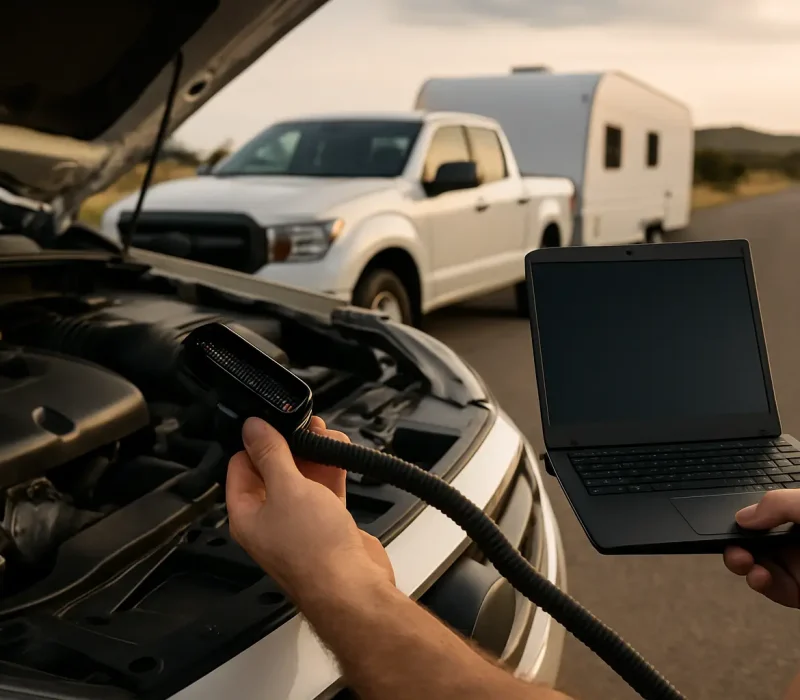


If your car feels flat in the mid-range, slow to pick up when overtaking, or harder work than it should be with passengers, tools or a trailer on board, a Stage 1 remap is often the first place to look. Not because it turns every vehicle into a track car, but because many modern engines leave useful performance on the table from the factory.
For drivers who do real miles, the bigger advantage is usually how the car responds day to day. Stronger torque lower down the rev range, cleaner pull through the gears, and less need to work the engine hard can make the vehicle feel more capable without changing how you use it.
What a mobile stage 1 remap Staffordshire service actually does
A Stage 1 remap is a software calibration adjustment to the engine control unit. On a healthy standard vehicle, it refines key parameters such as boost pressure, fuelling, torque request and throttle response within safe operating limits. The aim is not to chase unrealistic headline numbers. It is to improve the way the engine delivers its power and torque in normal driving.
The mobile part matters just as much for many owners. Instead of taking time out to sit in a garage waiting room, the work is carried out at your home or workplace. For commuters, small business users and people who simply do not want the inconvenience of losing half a day, that makes the service easier to fit around real life.
A proper mobile stage 1 remap Staffordshire appointment should still feel professional and methodical. Convenience should not mean guesswork. The vehicle needs checking first, the file needs to be suitable for that exact engine and ECU, and the process needs to stay within manufacturer tolerances rather than pushing the car beyond what its standard hardware can comfortably support.
Why drivers choose Stage 1 rather than more aggressive tuning
For most road cars, Stage 1 is the sensible middle ground. It delivers noticeable gains without needing hard parts such as upgraded intercoolers, injectors or turbochargers. That keeps cost, complexity and downtime down.
It also suits the way most people actually drive. If your car is used for commuting, motorway miles, towing, business use or family trips, you want performance that feels stronger and smoother, not peaky or awkward. A well-written Stage 1 map should improve flexibility across the rev range, especially where you spend most of your time on the road.
That is why Stage 1 often appeals to two different types of customer at once. Enthusiast drivers enjoy the sharper response and stronger pull. Practical owners value easier overtaking, less strain under load and in some cases the chance of improved fuel economy when the car is driven sensibly.
What improvements can you realistically expect?
It depends on the vehicle, engine condition and the headroom built into the factory calibration. Turbo petrol and turbo diesel engines usually show the clearest gains. Naturally aspirated engines tend to see more modest improvements, so expectations need to stay realistic.
On the right vehicle, common improvements include increased torque, faster throttle response and stronger acceleration through the middle of the rev range. Diesel vehicles in particular often benefit from a more effortless feel at everyday road speeds. That can be useful if you spend a lot of time on A-roads, carry tools, or tow regularly.
Fuel economy is the area where honesty matters. A remap does not magically reduce fuel use in all circumstances. If you use the extra performance all the time, MPG may stay the same or even drop. If the calibration improves efficiency and drivability and you drive with restraint, some vehicles can return better economy because the engine works less hard to do the same job.
Is a Stage 1 remap safe?
Done properly, yes. Done badly, no.
The difference comes down to the quality of the calibration, the health of the vehicle and the standard of the tools being used. A safe remap starts with a vehicle that is mechanically sound. If the car already has boost leaks, DPF issues, injector problems, worn sensors or existing fault codes, tuning on top of those faults is asking for trouble.
That is why pre-checks matter. Reading the ECU correctly, checking for stored faults and understanding the condition of the engine allows sensible decisions before any software changes are made. It is also why custom-written remaps are worth far more than generic files loaded with no real assessment.
Staying within manufacturer tolerances is not a marketing phrase. It is the line between dependable gains and unnecessary risk. Reliable tuning should work with the limits of the factory hardware, not ignore them.
When a remap is not the first job to do
Not every vehicle is ready for Stage 1 the moment it arrives. If a diesel is suffering from repeated DPF regeneration issues, limp mode, heavy carbon build-up or warning lights, those faults need attention first.
A remap cannot fix a blocked DPF. It cannot cure airflow problems caused by carbon deposits, and it will not solve underlying mechanical or sensor faults. In fact, adding more performance to a vehicle with those issues can make drivability worse and increase the chance of further problems.
For some owners, diagnostics or intake and DPF-related cleaning work is the better starting point. Once the vehicle is running properly again, tuning becomes a worthwhile option. That approach is slower than loading a file and hoping for the best, but it is the right one if you want results that last.
Who benefits most from a mobile Stage 1 service?
Drivers doing regular mileage often feel the benefit quickly because they spend enough time in the car to notice the difference. If your route includes motorway joining, overtaking on faster roads, or carrying weight, improved torque and response can make the vehicle easier and more relaxing to drive.
Diesel owners are a strong fit, especially where the engine feels underpowered from the factory or has become less pleasant to drive over time. Small commercial users also tend to see the value straight away. If a van is part of your working day, having the remap carried out on site rather than taking it off the road for a garage visit makes practical sense.
Then there are drivers who simply want the car to feel how it should have felt in the first place. Not wild. Not stressed. Just stronger, smoother and better matched to the engine’s capability.
What to expect from a professional mobile appointment
A proper visit should be straightforward, but not rushed. The process normally begins with confirming vehicle details and carrying out checks to make sure the car is suitable for tuning. The original ECU data is then read using professional equipment, the revised software is prepared or installed, and the vehicle is checked again afterwards.
Transparency matters here. You should know what type of remap is being carried out, whether it is tailored to your specific vehicle, and what kind of results are realistic. If a provider promises huge gains on every engine or avoids discussing the health of the vehicle first, that is a warning sign.
For customers in and around Tamworth and the wider county, the advantage of a mobile service is simple. You get specialist tuning and diagnostics capability without the usual workshop hassle. That convenience only has value when it is backed by proper tools, experience and a safety-first approach.
Choosing the right provider for a mobile stage 1 remap Staffordshire
Price matters, but it should not be the only thing you compare. The cheapest file is rarely the best value if it creates drivability problems or leaves you sorting out avoidable faults later.
Look for experience with your type of vehicle, genuine tuning tools, and a clear process rather than vague claims. Ask whether the remap is custom-written for your vehicle, whether fault checks are carried out first, and whether the calibration is kept within safe limits for standard hardware. Those are the questions that separate professional tuning from file-flashing.
High REVS Performance is built around that balance – mobile convenience, proper diagnostics and dealer-level standards without the garage visit. For drivers who want stronger performance, better drivability and a service that fits around work or home life, that is usually the right combination.
A good Stage 1 remap should make your vehicle feel easier to live with every day, not just quicker for five minutes. If the car is healthy and the calibration is written properly, the best result is simple: you get in, drive off, and the whole vehicle feels more capable from the first press of the throttle.