

You notice it on the same stretch of road every day – that flat spot when you pull out, the extra downshift on a hill, the fuel gauge dropping quicker than it should. You are not imagining it. Modern engines are calibrated to satisfy a wide spread of conditions, markets, and emissions targets, and that often leaves real-world drivability on the table.
Mobile ECU remapping at home is a straightforward way to change that without taking time off work or sitting in a waiting room. Done properly, it is not a mystery file loaded in ten minutes. It is a controlled calibration change, written for your specific vehicle, then verified with proper diagnostics and careful on-road checking.
What “mobile ECU remapping at home” actually means
An ECU remap changes how the engine control unit manages fuelling, boost pressure, torque delivery, and a range of limiters and protection strategies. On turbocharged petrol and diesel vehicles, that typically translates into stronger mid-range torque, improved throttle response, and a more relaxed drive.
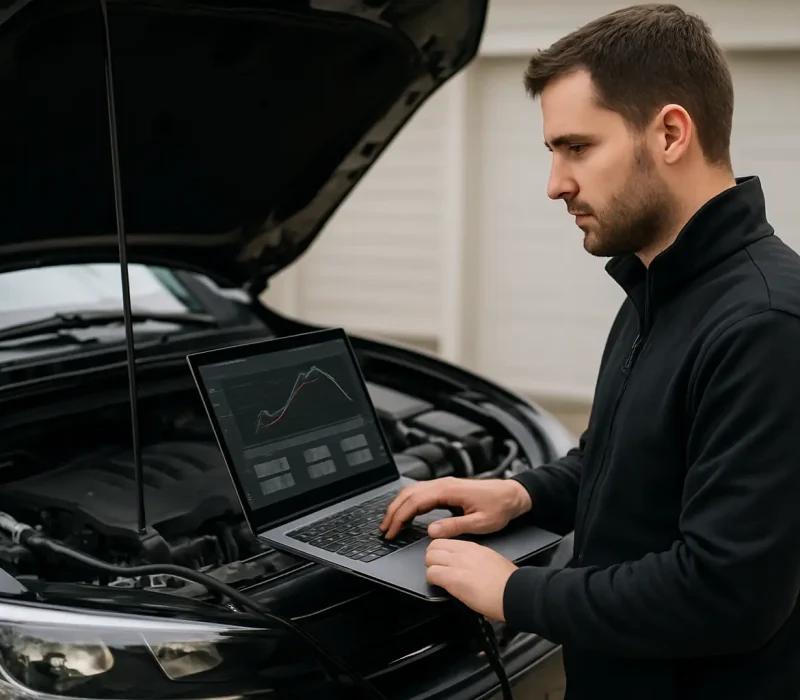
“Mobile” simply means the technician comes to your home or workplace with the right hardware and software to read your ECU, edit the calibration, and write the updated file back safely. Depending on the vehicle, this is done via the OBD port or through bench programming where the ECU is accessed directly. Either way, the key point is the same: the job is not defined by where it happens, but by the quality of the process and the safety checks around it.
Why at-home remapping suits Staffordshire drivers
If you are commuting across Tamworth and the wider Staffordshire area, your vehicle tends to live a predictable life: cold starts, stop-start traffic, A-roads, and motorway runs. Those patterns are exactly where a well-judged remap can make the car feel less strained.
At-home appointments also remove the friction that stops many owners doing anything about poor drivability. For high-mileage drivers, light commercial users, and anyone towing, downtime is expensive. Mobile service means you can keep the day moving while the vehicle is being assessed and tuned on your driveway.
The benefits, without the hype
A sensible Stage 1 style remap (on a healthy engine) usually aims for better torque where you use it most, rather than chasing peak numbers. That means fewer gear changes, less throttle needed to maintain speed, and a vehicle that feels easier to drive.
Fuel economy gains are possible, but they depend on how you drive. If you use the extra torque to short-shift and cruise, an “Eco” or economy-focused calibration can help. If you use the extra performance at every opportunity, you will often see similar MPG to before – sometimes slightly worse – because you are asking the engine to do more work more often. The benefit is still real, but it shows up as drivability and flexibility rather than a magical drop in fuel spend.
The trade-offs and when a remap is not the answer
Not every problem is a tuning problem. If your car is in limp mode, has a DPF warning, suffers boost leaks, or is already logging underboost or fuel pressure faults, a remap should not be the first step. A calibration cannot compensate for a split hose, sticky actuator, blocked DPF, or failing sensor for long.
There is also the matter of mechanical sympathy. A safe remap stays within manufacturer tolerances and respects the gearbox and clutch. But if your clutch is already close to the limit, extra torque can expose that weakness sooner. The honest approach is to assess condition first, discuss realistic torque targets, and tune to suit the vehicle – not the other way round.
Insurance is another consideration. Any modification that changes performance should be declared. Most insurers are used to remaps now, but it is still your responsibility to tell them.
What happens during a proper mobile remap appointment
A professional mobile visit should feel more like a controlled diagnostic session than a quick “plug in and go”. You want process clarity because that is where safety lives.
1) Vehicle health check and diagnostics
The first step is a scan for fault codes and a look at key live data. This helps spot issues that would make tuning risky or pointless, such as airflow problems, EGR/DPF related faults, or temperature and pressure readings outside expected ranges.
A technician will also ask how you use the vehicle: lots of short trips, heavy loads, towing, mostly motorway, or mixed. That matters because the best calibration for a towing car is not always the best calibration for a town-only commuter.
2) Reading the original ECU file and backing it up
Before any changes are made, the original ECU file should be read and saved. This is your safety net. If anything ever needs to be returned to standard, you want the correct original data for that specific ECU.
3) Creating a custom calibration for your vehicle
This is where quality varies dramatically. A custom remap is built around your engine, ECU type, and your goals – economy, balanced, or power – while keeping within sensible limits.
A responsible calibration keeps protective strategies intact. It does not remove safety features for the sake of a headline figure. It also avoids aggressive requests for boost or torque that create excessive exhaust gas temperatures or gearbox stress.
4) Writing the file back to the ECU
Writing is the part that must be treated with care. Stable voltage is essential. Many professional mobile tuners use battery support equipment to keep the electrical system steady throughout the programming process, reducing the chance of corruption.
5) Verification and test drive
Once written, the vehicle is checked again. Fault codes are re-scanned, and the car is driven to confirm behaviour under load, throttle response, and general drivability. Any reputable provider will want to see the car operating correctly in the conditions you actually drive in.
OBD vs bench: why some cars are quicker than others
You may hear “OBD remap” and assume that is always possible. It depends on the vehicle and ECU security.
Many cars can be read and written via the diagnostic port, which is efficient and ideal for mobile work. Others require bench access, meaning the ECU is removed and connected directly. That can still be done on-site with the right skill and equipment, but it takes longer and demands more care. The upside is that bench methods can be the correct and safest route for certain ECUs – forcing an OBD approach on a car that does not support it is where problems begin.
Common questions from local drivers
Will it pass an MOT?
A properly calibrated remap that keeps emissions systems functioning as designed should not stop a vehicle passing an MOT. If your DPF is already overloaded or your car is logging emissions-related faults, you should address that first because those issues can fail regardless of mapping.
Is it safe for a daily driver?
When written within sensible tolerances and applied to a healthy vehicle, yes. The risk increases when people chase maximum torque on a tired drivetrain, or when a car already has unresolved faults. The safest route is diagnostics first, then a calibration tailored to your use.
Will it damage my engine?
Calibration alone does not “damage” engines. Neglect, poor maintenance, overheating, low-quality fuel, unresolved boost leaks, and abusive driving do. A good remap respects temperature control, fuelling limits, and protection strategies – and it should be paired with sensible servicing.
How to prepare your car for a home remap
If you want the best results, treat the appointment like you would any serious maintenance work.
Make sure the vehicle is serviced on time, with the correct oil grade. If it is due an oil change, do that first. Check tyre pressures too, because test driving a car with low pressures can make it feel sluggish and mask improvements.
If you have warning lights or intermittent faults, mention them upfront. Even if the car “feels fine today”, stored codes and live data tell the real story. And if you are a diesel driver doing mostly short trips, be honest about it – DPF loading and regeneration history matter when making drivability improvements stick.
Choosing a mobile tuner: what separates professional from risky
If you are comparing options, focus on process and standards rather than promises.
A professional mobile service will use genuine tools, take a full backup, run diagnostics before and after, and explain what is being changed and why. They will also be clear about limits: what is realistic for your engine, and what should be repaired before tuning.
If you are in Tamworth or across Staffordshire and want the convenience of a driveway appointment backed by professional-grade equipment and an experienced, safety-first approach, High REVS Performance provides mobile remapping and diagnostics via https://ecurmp.com.
The most useful mindset is simple: the best remap is the one you forget about. It just drives better, pulls more cleanly, and fits your day-to-day life without drama.