

You notice it first on the morning pull-away. The throttle feels a fraction duller, the engine needs more pedal than it used to, and motorway inclines seem to demand a downshift that never used to be necessary. Nothing has “failed”, but the car feels tired. For a lot of modern petrol and diesel engines, that slow drop in crispness is often carbon build-up doing what it does best – restricting airflow, upsetting combustion and making the ECU work harder to keep things civil.
An engine carbon cleaning service is designed to remove those deposits in the places that matter, so the engine can breathe and burn fuel properly again. Done correctly, it is not a gimmick and it is not a magic reset button either. It is a targeted maintenance job with clear wins in the right scenarios, and limited value in others.
What carbon build-up actually is (and why it happens)
Carbon deposits are the sooty, oily residues that form as by-products of combustion and crankcase vapours. Every engine creates some, but certain designs and driving patterns accelerate the problem.
On diesels, EGR systems feed a portion of exhaust gas back into the intake to reduce NOx emissions. That exhaust contains soot. Mix soot with oily vapour from the breather system, add heat cycles, and you get sticky deposits in the intake tract, inlet manifold, EGR valve and, on many engines, the swirl flaps.
On many modern petrol engines, especially direct injection (GDI), fuel is injected directly into the cylinder rather than over the back of the intake valves. That means the valves do not get the “washing” effect of petrol, so oil vapour and blow-by can bake onto the valve stems and backs. Over time this disrupts airflow and mixture quality.
Add lots of short journeys, cold starts, stop-start traffic around Tamworth and Staffordshire routes, plus the occasional low-rev potter, and you have perfect conditions for build-up.
The symptoms drivers feel day to day
Carbon build-up rarely announces itself with one dramatic failure. It usually shows up as a collection of annoyances that gradually become normal – until you drive something else and realise what you have been missing.
Common symptoms include hesitant acceleration, flat spots, rough idle, reduced fuel economy and a general sense that the engine is “working harder”. On diesels you might also see more smoke under load, more frequent DPF regeneration attempts, or DPF and EGR-related fault codes as the system struggles to meet targets.
It depends on the vehicle, but if you are towing, carrying tools, or doing lots of motorway miles, you tend to notice it sooner because you spend more time asking for torque.
What an engine carbon cleaning service can and cannot do
A proper engine carbon cleaning service aims to restore airflow and combustion efficiency by removing deposits from the intake and related components. The goal is measurable drivability improvement: smoother idle, better throttle response, stronger low-end pull and often improved MPG.
What it cannot do is fix a worn turbo, a failing injector, low compression or a split boost hose. Carbon is often part of the story, not always the whole story. That is why a decent provider should validate the complaint with diagnostics and live data first, rather than guessing.
You should also be cautious with any promise of guaranteed power gains. If carbon was restricting airflow badly, you may feel a big difference. If build-up is mild, the improvement may be subtle but still worthwhile as preventative maintenance.
Different cleaning methods (and what they suit)
“Carbon clean” can mean very different things depending on the technique used. The right choice depends on engine type, access and severity of the deposits.
Chemical intake cleaning
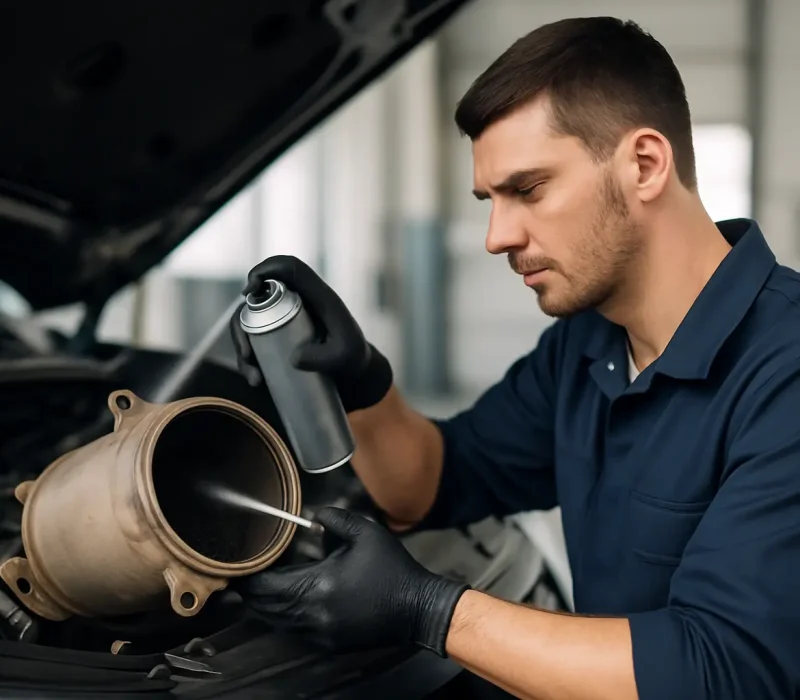
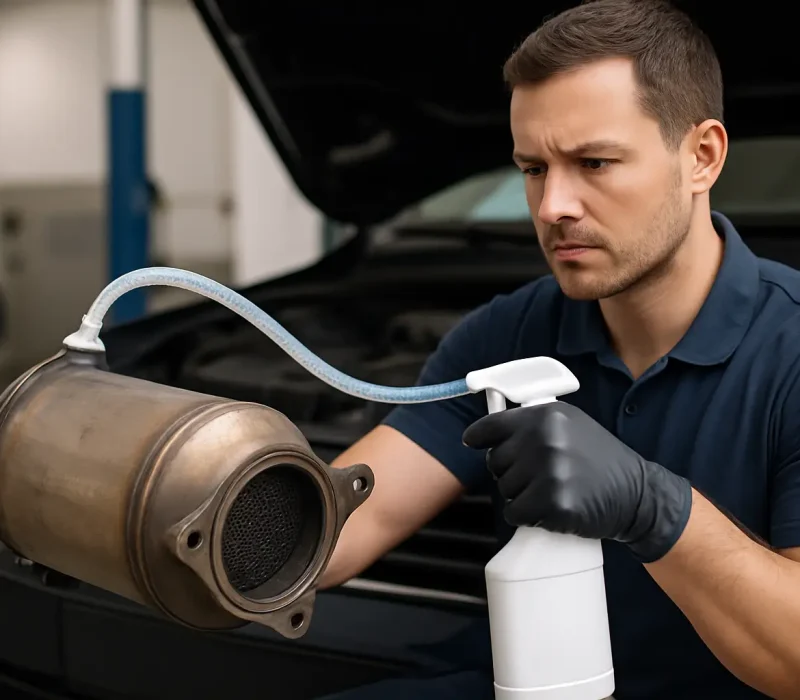
Chemical cleaning uses a controlled chemical solution introduced through the intake path to soften and remove deposits. When performed with the correct process and dwell time, it can be effective for light to moderate build-up and is often a good option where stripping parts down would be disproportionate.
Trade-off: it is not as physically aggressive as manual cleaning. If the intake is heavily coked, chemicals alone may not remove everything.
Manual strip-down cleaning
This involves removing components like the intake manifold, EGR valve and sometimes the throttle body, then cleaning them off the vehicle. It is labour-intensive, but it allows you to physically remove thick deposits and verify the result.
Trade-off: more time on the job, and access can vary massively by engine layout.
Walnut blasting (common on GDI petrol)
Walnut shell blasting is popular for direct injection petrol engines because it cleans intake valves effectively without damaging metal surfaces when done properly. It requires correct masking and vacuum extraction.
Trade-off: it is specialist work and not every mobile setup is suited to it. It is also specific to where the deposits are – great for valves, less relevant for diesel intake soot elsewhere.
“Italian tune-up” and fuel additives
A longer, higher-load drive can help certain issues, and quality fuel system cleaners can have a place. But neither is a replacement for targeted intake cleaning where deposits are already restricting flow.
Trade-off: additives are low cost but limited in reach. If your problem is intake valves or EGR soot, a bottle in the tank will not physically scrub that area.
How you know if it is carbon or something else
If you are seeing an engine management light, limp mode, or repeated DPF warnings, guessing wastes money. The best approach is to check fault codes, then look at live data such as MAF readings, boost targets vs actual boost, EGR command and response, and DPF soot load where applicable.
Carbon build-up often shows itself as airflow that does not match expectations, EGR that sticks or responds slowly, and performance that improves temporarily after a forced regen or an extended motorway run – then drops back.
The “it depends” part: the same symptoms can come from split intercooler hoses, sticky VNT turbo vanes, weak injectors, tired glow plugs, or a thermostat stuck open keeping the engine cold. Diagnostics matters because the right fix for the wrong problem is still the wrong fix.
What results you can realistically expect
When carbon is the limiting factor, drivers typically report stronger low-rev torque, smoother pull through the mid-range and more predictable throttle response. On automatics, that often means fewer unnecessary gear changes because the engine is making usable torque earlier.
Fuel economy can improve, especially on cars that have been compensating with extra throttle for months. The gain is rarely a miracle jump, but it can be enough to feel on a weekly commute.
On diesels, cleaning intake and EGR restriction can also reduce the workload on the DPF because combustion quality improves. That can translate to fewer interrupted regenerations and fewer warning-light episodes.
When carbon cleaning is worth prioritising
If you do short trips, school runs, or lots of stop-start work and the car is a couple of years old or more, it is a sensible preventative service. It is also worth considering before you spend money chasing “performance issues” with parts cannon replacements.
It is particularly relevant if you are planning an ECU calibration. A remap can safely optimise torque, boost and fuelling within manufacturer tolerances, but it cannot bypass airflow restriction. Cleaning first means you are tuning a healthier engine and the calibration can be delivered more consistently.
When you might skip it (or delay it)
If the car is running cleanly, pulling strongly, and you mainly do longer motorway journeys at stable temperatures, your build-up may be minimal. In that case, money might be better spent on basics: correct oil, genuine filters, addressing coolant temperature issues, and confirming the engine reaches proper operating temperature.
Also, if you have a hard fault – misfire, injector correction values out of range, turbo actuator faults – you should fix that root cause first. Cleaning carbon without repairing a failing component can mean the deposits return quickly.
Mobile carbon cleaning: what convenience should look like
A mobile service only makes sense if the technical standard is the same as a workshop visit. You want a process that is controlled, repeatable and backed by real diagnostics, not just a quick spray and a promise.
For local drivers, the practical benefit is time. An at-home or workplace appointment means you are not arranging lifts, losing a day, or leaving a van off the road. For small fleets and sole traders, that uptime matters.
If you are in the Tamworth and wider Staffordshire area and you want this handled as part of a wider performance and maintenance approach, High REVS Performance offers fully mobile diagnostics-led carbon cleaning alongside ECU remapping and DPF chemical cleaning – details and booking are at https://ecurmp.com.
What to ask before booking an engine carbon cleaning service
A good provider should be comfortable answering practical questions. Ask how they confirm carbon is the issue, what parts of the system they are cleaning, and which method they use for your specific engine. You should also ask what they do to protect sensors and intake components during the process, and whether they clear adaptations or perform post-clean checks.
It is reasonable to ask what improvement you should expect based on your mileage and symptoms. If the answer is “guaranteed massive gains” with no diagnostic conversation, that is a red flag.
Keeping carbon from coming straight back
You cannot eliminate carbon completely on modern emissions-controlled engines, but you can slow it down.
A consistent maintenance routine matters more than people think. Correct oil grade reduces vapour contamination, and quality filters help airflow readings stay accurate. Making sure the engine reaches temperature on a regular basis helps too – a thermostat that runs cold encourages soot and moisture.
Driving style plays a role, without needing to abuse the car. A regular longer run at full operating temperature, with occasional higher-load acceleration once warm, can help keep EGR and intake systems from living permanently in low-temperature soot territory.
If you want the engine to feel sharp for the long term, treat carbon cleaning as part of a broader reliability plan, not a one-off rescue. The best result is when you book it before the car is so restricted that it is throwing warnings or forcing regens.
The helpful way to think about it is simple: if your engine has been gradually getting less responsive, do not wait for the dash to start shouting. Get it checked properly, clean what is genuinely restricted, and you will usually get back to a car that feels like it is working with you again – not against you.