

You notice it most when you join a short slip road or pull out of a junction with a loaded boot: the car is fine, but it feels like it is holding back. On a diesel it can be worse – a flat spot low down, a narrow power band, and that slightly laboured feeling when you ask for torque. A well-written ECU remap can change that character without changing the car you rely on every day.
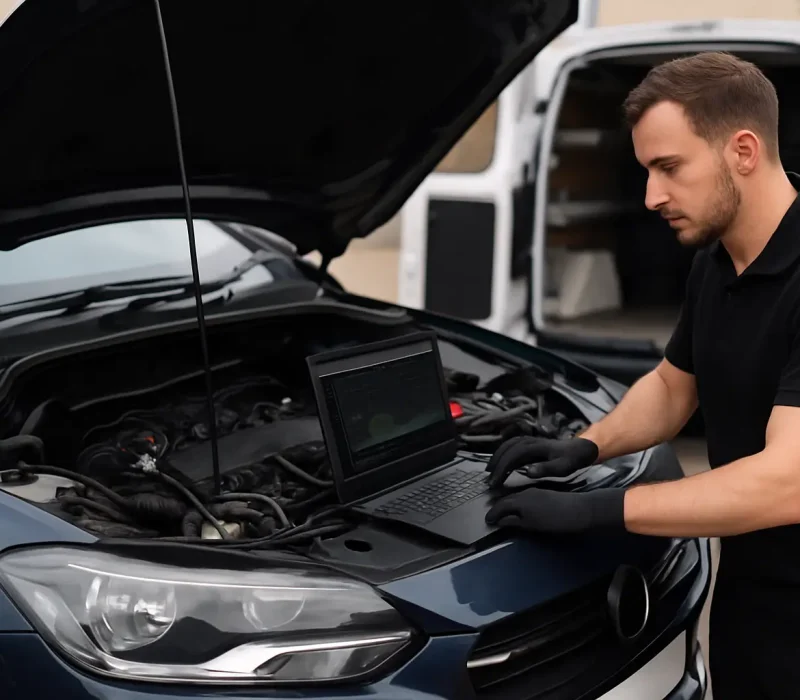
A mobile ecu remap tamworth service simply means the tuning comes to you. No lift, no waiting room, no arranging lifts home. The key question is not whether mobile can be “as good as a garage” – it is whether the technician is using genuine tools, reading your car properly, and writing a calibration that stays within safe operating limits.
What an ECU remap actually changes
The ECU is the engine’s control centre. It decides how much fuel to inject, when to inject it, how the turbo is controlled, and how torque is delivered. Manufacturers calibrate these maps to suit a wide range of fuel quality, climates, driver behaviour, servicing standards, and emissions targets. That wide net is one reason many engines feel conservative.
A remap adjusts those control strategies to better suit your vehicle and goals. On turbocharged engines, the biggest real-world change usually comes from torque delivery. You feel it as stronger pull from lower revs and fewer downshifts. On modern diesels used for commuting or towing, that can make the car easier to drive as well as quicker.
That said, it depends on the engine and its condition. Some vehicles respond dramatically, others more subtly. Any reputable remap should be based on the car in front of the technician, not a generic promise.
Why mobile remapping suits real-world drivers
Most people are not chasing dyno numbers. They want the car to feel right on their own roads and on their own routine – school run, motorway commute, towing at weekends, or keeping a van working without losing a day at a workshop.
Mobile remapping fits that reality. Your vehicle stays where it is normally used, so there is less disruption and less risk of driving around with warning lights to “see what happens”. If the technician arrives with professional-grade tuning hardware and proper diagnostics, the results are the same calibre you would expect from a fixed site.
The bigger win is time. A remap appointment at your home or workplace removes the friction that stops many owners from sorting niggles early, and that matters because engine issues rarely fix themselves.
The three common remap goals: economy, balance, power
Most drivers in Staffordshire fall into one of three camps.
An economy-focused calibration aims to improve fuel efficiency by optimising torque delivery and reducing the need to rev or kick down. It is not magic – your right foot still controls consumption – but on high-mileage cars it can make a noticeable difference, particularly on steady A-road and motorway use.
A balanced tune sits in the middle. You get improved response and torque, with sensible economy gains when you drive normally. For mixed driving – town, A-roads, and the odd long run – it is often the most satisfying option.
A Stage 1 power remap is the choice when you want the engine to feel like it should have from the factory. Expect stronger mid-range, improved overtaking, and a more engaged drive. On turbocharged diesels and petrols, Stage 1 is typically the sweet spot because it stays within the capability of standard hardware when it is written properly.
What happens during a mobile remap appointment
A proper mobile remap is a process, not a five-minute plug-in.
First comes a health and suitability check. The vehicle is scanned for fault codes and the technician will look for signs that something is already unhappy – airflow issues, boost control faults, fuel pressure problems, or existing DPF and EGR-related warnings. If the car is in limp mode or throwing active faults, mapping around it is a bad idea. Fix the cause first.
Next is reading the original ECU software. Depending on the vehicle, this may be done via the OBD port or by bench reading the ECU if required. The original file is saved so the car can be returned to stock when needed.
Then the calibration is written and applied. A custom approach matters because two “identical” vehicles can behave differently depending on servicing history, mileage, and even how they have been driven. After writing, the vehicle is checked again – codes cleared where appropriate, and basic live data observations made to ensure it is behaving as expected.
Finally, you test the result in real conditions. You are listening for clean, consistent power delivery and checking that the car drives smoothly. If something feels off, it is addressed there and then.
Safety, reliability, and what “within tolerances” really means
The best remaps are the ones you do not have to think about. They start in the morning, drive cleanly in traffic, and pull hard when asked.
A safe Stage 1-style calibration respects the limits of the turbo, clutch, gearbox and fuelling system. It should not chase headline figures at the expense of excessive smoke, extreme peak torque spikes, or aggressive boost requests. Those are the choices that tend to shorten component life.
There are also trade-offs to be honest about. More torque can expose a tired clutch on a high-mileage manual car. On some automatics, extra torque may prompt more frequent gearbox adaptation or highlight existing slip. If your vehicle is already marginal, the remap does not create the weakness, but it can reveal it.
This is why diagnostics and an experienced technician matter more than marketing.
DPF and carbon: the issues that often sit behind “slow” cars
A lot of drivers book a remap because the vehicle feels lethargic or economy has dropped. Sometimes the ECU calibration is only part of the picture.
On modern diesels, DPF loading and poor regeneration behaviour can make a car feel strangled. Short journeys, stop-start commuting, and lots of idling are perfect conditions for soot build-up. Before anyone talks about tuning, it is worth knowing whether the DPF is operating correctly. A chemical DPF clean, done properly, can restore airflow and reduce backpressure – which can bring back response and economy even before performance work.
Carbon build-up is another common culprit, particularly on direct-injection engines and diesels with EGR systems. Restrictions in the intake path and deposits around valves reduce airflow efficiency. Again, if the engine cannot breathe, you will not get the best from any remap.
The practical approach is straightforward: confirm the engine is healthy, restore airflow if needed, then tune.
Cost, value, and what you should be paying for
Pricing varies because vehicles vary. The value is not in “a file”, it is in the outcome and the care taken to get it right.
You are paying for genuine tuning hardware, correct reading and writing methods, a proper backup of your original software, and diagnostic capability to identify when a remap is not the right first step. You are also paying for experience – knowing what to change, what not to change, and how to keep the car pleasant to drive in normal traffic.
If you are quoted a suspiciously low figure with vague promises, ask what checks are carried out, whether the file is custom-written, and what happens if the car already has underlying faults.
Choosing a mobile remap service: the questions that protect your car
If you want a simple filter, focus on evidence of process.
Ask whether the remap is custom-written for your specific vehicle and whether the original file is saved. Ask what diagnostic checks are done before tuning and what happens if faults are present. Ask what tools are used – professional ecosystems such as Alientech/KESS are a good sign when combined with the right method for your ECU type.
Also ask how the service handles your actual goal. If you want better MPG on a motorway commute, a punchy peak-power tune is not the point. A good tuner will talk about torque shaping and drivability, not just bhp.
If you want a service that combines mobile convenience with a cautious, professional approach, High REVS Performance offers mobile ECU tuning packages alongside on-site diagnostics and common diesel fixes like DPF chemical cleaning and engine carbon cleaning.
When a remap is a great idea – and when it is not
A remap makes the most sense when the car is mechanically sound and you have a clear goal: easier towing, better in-gear pull, improved economy on longer runs, or simply a more responsive drive.
It is not the right move if the vehicle is already showing unresolved issues – persistent DPF warnings, turbo control faults, fuel pressure codes, or overheating. It is also worth being cautious if your clutch is slipping, the gearbox is behaving oddly, or servicing has been neglected. In those cases, spending money on health checks and repairs first usually saves money overall.
The best outcome is when tuning is the final step in getting a vehicle back to how it should feel.
If you are thinking about mobile remapping, treat it like any other professional service: choose the technician, not the headline claim, and you will end up with a car that feels better every time you drive it – not just on the day it is tuned.