

Your van does not earn its keep sitting in limp mode, crawling up the A5 with a load on, or guzzling fuel in stop-start runs. Most light commercial drivers do not want “fast”. They want usable torque, predictable pulling power, and a van that feels less strained when it is working for a living. That is exactly where a light commercial van ECU remap makes sense – when it is done properly, for the right reason, and with clear boundaries.
What a light commercial van ECU remap actually changes
The ECU is the engine’s control unit. From the factory it runs a calibration designed to cover every market, fuel quality, driver style, service history, and emissions scenario the manufacturer has to account for. That approach keeps things safe and consistent, but it often leaves drivability on the table, especially in the mid-range where vans spend most of their time.
A professional remap adjusts the engine’s control strategy rather than “fitting a part”. On most modern turbo-diesel and turbo-petrol vans, that typically means refining boost control, torque request, fuelling, and throttle mapping so the engine delivers stronger, cleaner torque in the rev range you actually use. The goal is not to push beyond sensible limits – it is to make the engine respond more efficiently and predictably.
You feel that as less hesitation pulling away, fewer gear changes on inclines, and a more relaxed motorway cruise. For many working vans, that translates directly into reduced driver fatigue and better day-to-day productivity.
Why vans respond so well to remapping
Light commercial vans are usually tuned conservatively from the factory because they are expected to cope with high payloads, towing, varied drivers, and long service intervals. The engines are also commonly shared across different power outputs within the same model range. That is why it is normal to see the same basic engine offered in multiple factory power levels.
The biggest “real world” gain is normally torque. Torque is what gets you moving with weight in the back, what holds speed up a hill without a downshift, and what makes overtakes feel less planned and more natural. A good remap targets that usable torque band rather than chasing headline peak power that you rarely touch.
Economy improvements are possible too, but they are not magic. If you use the extra torque to drive in a higher gear with less throttle, MPG can improve. If you use it to accelerate harder everywhere, fuel use will rise. A sensible calibration plus sensible driving is what moves the needle.
Choosing the right tune: Eco, Balanced, or Stage 1 Power
Most van owners fall into one of three camps, and the tune should match the job.
An Eco-focused remap is for high-mileage runs, mixed routes, and drivers who care about fuel spend and range. The mapping prioritises efficient torque delivery and drivability at light to medium throttle so the van works less hard to do the same job.
A Balanced tune is the most popular choice for working vehicles because it aims for a noticeable lift in torque and response without turning the van into something peaky or fussy. It suits mixed use – commuting, site work, and occasional towing – where you want the van to feel stronger but still behave like a van.
Stage 1 Power is for drivers who want the most from a standard hardware setup. It can be ideal if you regularly tow, carry heavy loads, or simply want more overtaking confidence and a more engaging drive. The key is that Stage 1 should still be written within safe operating tolerances for the engine and turbo, not as an aggressive “max effort” file.
If you are unsure which fits, the simplest test is this: do you want the van to feel less busy and more efficient, or do you want it to feel genuinely quicker and stronger? The right answer is different for a courier doing 25,000 miles a year versus a tradesperson towing a trailer twice a week.
What you should notice after a proper remap
A good light commercial van ECU remap feels like the engine has gained capacity. The van pulls earlier, builds speed with less effort, and holds gears more confidently. That matters in the places vans live: roundabouts, junctions, hills, and those awkward overtakes when you are boxed in by slower traffic.
Throttle response is usually the first thing drivers comment on. The “dead” pedal sensation reduces, which makes the van easier to drive smoothly, especially in traffic. On automatics, improved torque control can also make the gearbox feel more decisive because it has more usable torque to work with.
Where economy improves, it is usually because you are not asking for as much throttle to maintain the same pace. That is why torque gains at modest revs can help MPG more than a top-end power increase.
Safety and longevity: the trade-offs people rarely talk about
Remapping is not risk-free if it is done carelessly. The engine, turbo, clutch, and gearbox all live inside a system of limits. A calibration that chases maximum figures can create excessive exhaust gas temperatures, boost overshoot, or torque levels that the clutch cannot reliably hold.
There are also “it depends” scenarios:
If your van already has a marginal clutch, extra torque can reveal the slip sooner. That is not the remap “breaking” it – it is exposing a wear issue. A competent tuner will talk to you about symptoms beforehand.
If the van is used for short runs, stop-start traffic, and lots of idling, the remap is not a fix for DPF or EGR-related soot loading. It may help drivability, but it will not change the underlying duty cycle that causes the problems.
If maintenance is behind schedule, especially oil changes on turbo-diesel engines, you should address that first. A remap works best on a healthy baseline.
A professional approach is to check diagnostics, confirm the engine is operating correctly, and write a calibration that stays within manufacturer tolerances. That is how you get the benefits without turning a working vehicle into an experiment.
DPF, carbon buildup, and warning lights: where remapping fits (and where it does not)
Many van owners start looking at tuning because the van feels sluggish, the DPF light has appeared, or it has started dropping into limp mode. It is important to separate cause and effect.
A remap can improve airflow and torque delivery, which can make the van feel healthier. But if the DPF is already heavily loaded, or the intake system is restricted with carbon, you are still working against a physical blockage. In those cases, diagnostics and maintenance come first. Chemical DPF cleaning and carbon cleaning can restore proper flow, which then allows the remap to deliver its full benefit.
If you are chasing a drivability problem, the quickest route is usually a proper fault-code scan and live-data check rather than guessing. Boost leaks, sticking EGR valves, tired MAF sensors, and split intercooler hoses can all mimic the same “flat” feeling people blame on mapping.
Custom-written vs generic files: what you are paying for
There is a big difference between a generic tuning file and a calibration written for your specific van. Generic files are designed to work “well enough” across many vehicles, but vans vary by software version, engine code, gearbox type, and even how they have been maintained.
A custom approach allows the tuner to read the existing software, confirm compatibility, and tailor torque delivery to how you use the vehicle. For light commercial vehicles, that matters because smooth, controllable torque is often more valuable than peak numbers. It also matters for safety, because limits and protections need to be respected rather than overwritten.
When you hear phrases like “genuine tools only”, that is not marketing fluff. Professional-grade tuning hardware and processes reduce the chance of read/write issues and help keep the job repeatable and safe.
Mobile remapping: why it suits working vans
Taking a van off the road for half a day to sit in a workshop waiting area is not convenient if you are self-employed or running a small fleet. Mobile remapping is built around uptime. Done properly, it means the work is completed at your home or workplace, with the same technical process you would expect from a fixed site.
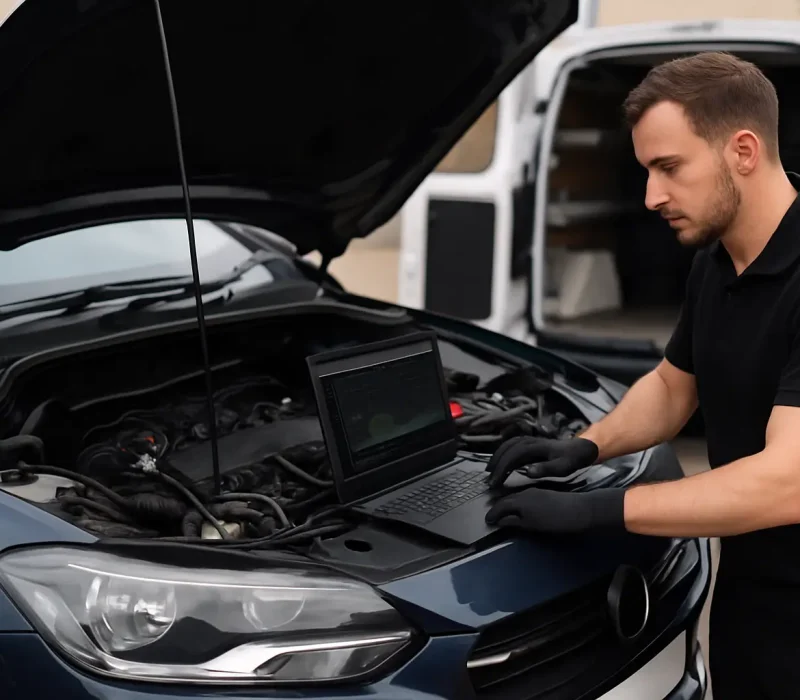
It also makes it easier to combine services in one appointment. If the van needs diagnostics first, or it is showing DPF-related faults, you can deal with the real cause rather than just applying a performance change and hoping it masks the symptoms.
If you are in Tamworth or across Staffordshire and want the convenience of a professional mobile service, High REVS Performance provides ECU remapping alongside diagnostics, DPF chemical cleaning, and carbon cleaning at your location – details are at https://ecurmp.com.
What to check before booking a remap
A quick conversation can prevent disappointment. Be ready to describe how the van is used (payload, towing, daily mileage, route type) and any existing symptoms. If there is clutch slip, smoke, repeated warning lights, overheating, or boost-related faults, those should be assessed first.
Service history matters too. Fresh oil and correct-spec filters are not just “good practice” – they are part of keeping a tuned turbo engine happy. If the van is overdue, get it caught up and you will get a better result.
Finally, be clear about your goal. If you want economy, say so. If you want stronger towing performance, say so. The best map is the one written around the job the van actually does.
A helpful closing thought: the right ECU remap does not try to turn your light commercial into something it is not – it simply makes the van feel like it is finally pulling its weight, especially on the days when you need it most.