

You book a remap because you want the car to drive better – more torque where you actually use it, smoother pull in-gear, or simply fewer trips to the pump. The decision most drivers don’t think about until the last minute is where the work happens. Not “which map” first, but whether a mobile visit or a garage appointment is the better fit for your car, your routine, and your tolerance for downtime.
The truth is that a quality remap can be delivered either way. The bigger difference is how the job is controlled: the environment, the time pressure, the support equipment to hand, and the way the technician handles the small but important steps that keep a tune safe and repeatable.
Mobile remap vs garage remap: what’s actually different?
A remap is software calibration work on the engine control unit (ECU). The method of reading and writing the ECU – via the diagnostic port (OBD) or directly on the bench – doesn’t automatically change because it’s mobile or in a workshop. What changes is everything around it.
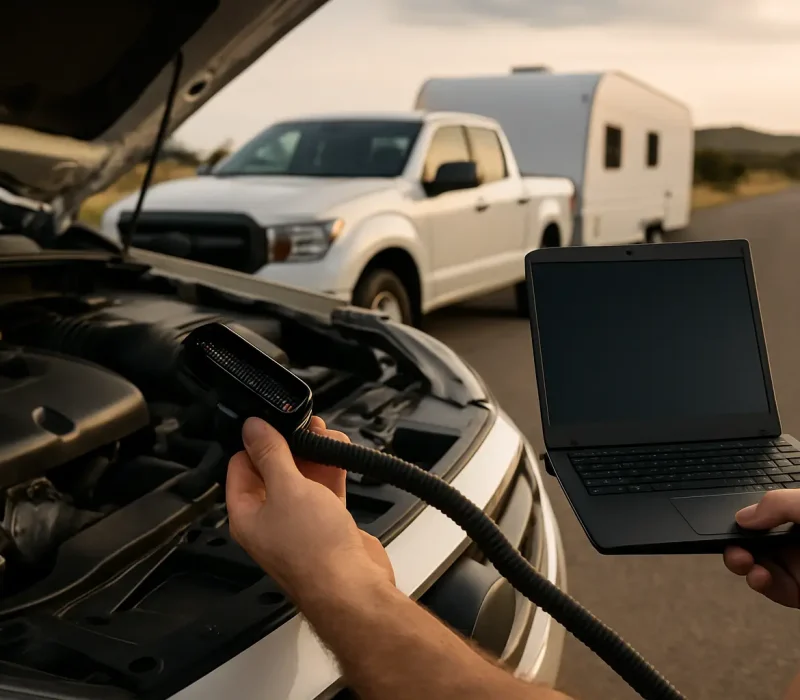
A garage remap typically happens with the car brought into a workshop bay. That usually means mains power on tap, a controlled indoor space, and sometimes a rolling road (dyno) if the business offers one. A mobile remap takes the same professional tuning hardware to the car, and the technician works on your driveway or at your workplace, building the same discipline into the process without you losing half a day.
If you’re comparing mobile remap vs garage remap, focus on what influences quality: stable voltage, correct ECU access method for that vehicle, proper diagnostics beforehand, and a calibration that’s written for your car – not a generic “one file fits all” approach.
Convenience and downtime: the part most drivers feel immediately
The most obvious advantage of a mobile remap is time. You’re not arranging lifts, sitting in a waiting room, or trying to fit a workshop slot around work runs, school pick-ups, and deliveries. For commuters and small fleet operators, that matters as much as the torque gain.
A garage remap can still be convenient if you’re already having other work done, or if your vehicle is off the road for a day anyway. But if the only reason you’re visiting is the remap, you’re adding extra friction: travel time, fuel, and the simple hassle of leaving the vehicle somewhere.
Mobile also reduces the temptation to rush decisions. When the car is at home, you can check service history, confirm how you use the vehicle (motorway miles, towing, stop-start town driving), and discuss what you want the car to feel like. Those details should shape the calibration.
“Will a mobile remap be as safe?” Yes – if the process is right
Safety isn’t about the postcode. It’s about controls.
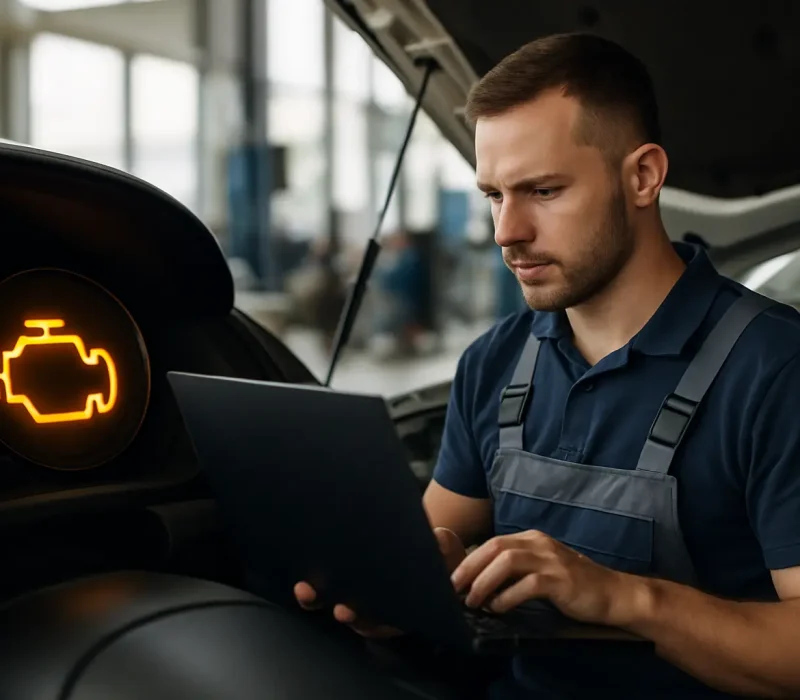
The biggest technical risk during any ECU write is voltage drop. If battery voltage dips at the wrong moment, you can corrupt the programming and create an immobilised vehicle. A good mobile setup mitigates this by using professional-grade support equipment and by refusing to proceed if the vehicle’s electrical health is questionable.
A garage has easy access to mains-powered battery stabilisers and chargers, so the perception is that it’s inherently safer. In practice, a competent mobile technician brings the same standard of voltage support and checks the basics first: battery condition, existing fault codes, and whether the car has underlying issues that would make tuning irresponsible.
The other safety factor is calibration philosophy. The safest remaps are custom-written with manufacturer tolerances in mind, taking account of the drivetrain, turbo limits, EGT considerations, and the reality that a road car has to deal with hot days, cold mornings, short journeys, and heavy loads. That mindset isn’t tied to a building – it’s tied to the technician.
Equipment and tooling: what you should expect either way
Whether you choose a mobile remap or a garage remap, ask what tools are used and what the workflow looks like.
Professional tuning platforms (for example, the Alientech/KESS ecosystem) are designed for field reliability as well as workshop use. A mobile technician can legitimately run genuine tools, log data, and apply proper ECU protocols without compromise.
What you don’t want is a “quick flash” with no diagnostics. Before any changes are made, the car should be checked for stored and pending faults, and the current software should be read and backed up. After the write, the vehicle should be verified with scans and road checks to confirm expected boost control, fuelling behaviour, and drivability.
A garage can sometimes look more impressive because you see ramps and tool chests. That’s not the key metric. The key metric is whether the technician can demonstrate process control: stable power, correct ECU access, verified file integrity, and proper aftercare.
Road testing vs dyno testing: what matters for most drivers
A rolling road can be useful for controlled power runs and repeatable measurements. If you’re chasing exact peak figures, a dyno environment can help quantify changes. That said, a dyno is not the only way to produce a good map, and it’s not a substitute for a sensible calibration.
For most daily-driven cars – especially diesels used for commuting, towing, or carrying loads – the win you feel is mid-range torque and clean, predictable response. That’s experienced on the road: pulling from 30-50 mph in a higher gear, joining a motorway slip road, or climbing a hill without hunting for gears. A mobile remap that includes proper road verification can be extremely effective because it focuses on real conditions.
The important nuance is this: road testing should be done responsibly and within legal limits. You’re checking how the car behaves, not trying to set records.
When a garage remap genuinely makes more sense
There are scenarios where a workshop environment is simply the better choice.
If your vehicle requires bench work because the ECU can’t be programmed via OBD, a garage can provide a more controlled space to remove trim, access modules, and handle components carefully. Some cars also have ECUs located in awkward, sensitive areas. Bench work is not “better” – it’s just the correct method for that hardware.
A garage is also useful if you already have mechanical issues that need hands-on diagnosis or repair at the same time. If the car has boost leaks, intake restrictions, clutch slip, or cooling problems, you may be better off resolving those in a workshop before tuning. Remapping a sick engine is a fast way to turn a manageable fault into an expensive one.
When a mobile remap is the smarter option
Mobile remapping suits drivers who need the benefit without the disruption.
If you rely on the vehicle for work, the ability to book a time at your home or workplace reduces downtime massively. It’s also ideal for anyone who wants to understand the options properly: Eco, Balanced, or a Stage 1 Power style setup depends on how you drive, not what sounds best on paper.
Mobile visits also pair well with modern “real-world” problems. Many remap enquiries come alongside complaints like poor MPG, flat spots, or warning lights that appear intermittently. On-site diagnostics can confirm whether you’re dealing with a genuine performance limitation or an underlying maintenance issue such as DPF loading, EGR-related soot buildup, or carbon accumulation affecting airflow and throttle response. If the root cause is mechanical or emissions-system related, a trustworthy technician will tell you before they touch the calibration.
Results: will you get the same gains?
If the remap is written properly and installed correctly, the gains should be comparable whether it’s mobile or in a garage. The ECU doesn’t know where it’s parked.
What can change results is the conversation and the checking. A proper tune is matched to the driver’s priorities and the vehicle’s condition. An Eco-oriented calibration can focus on usable torque and reduced throttle effort, helping economy on steady motorway runs. A Balanced approach can keep it civil while making the car feel less strained. A Stage 1 Power setup prioritises stronger acceleration and mid-range pull, but should still respect safe limits for turbocharger, smoke control, and drivetrain.
The quality gap isn’t mobile vs garage. It’s custom work vs generic files, and careful validation vs “write it and hope”.
Questions to ask before you book either one
If you want to choose confidently, ask a few direct questions and listen to how they’re answered.
First, ask whether the remap is custom-written for your specific vehicle and software version. Then ask what pre-checks are carried out – particularly fault-code scanning and battery voltage support during programming. Finally, ask what happens if the car already has issues like DPF warnings, limp mode, or persistent sensor faults. A professional will talk about diagnosis and fixing the cause, not masking symptoms.
If you’re in the Tamworth and Staffordshire area and the appeal of mobile is saving time without cutting corners, High REVS Performance provides fully mobile ECU remapping and diagnostics with a safety-first, custom approach – details and booking are on https://ecurmp.com.
A helpful way to decide is to picture the day after the remap, not the day of it. Choose the option that gives you confidence that the car will start first time, drive cleanly, and deliver the kind of torque and economy you can actually use – because that’s what a good remap is supposed to feel like.