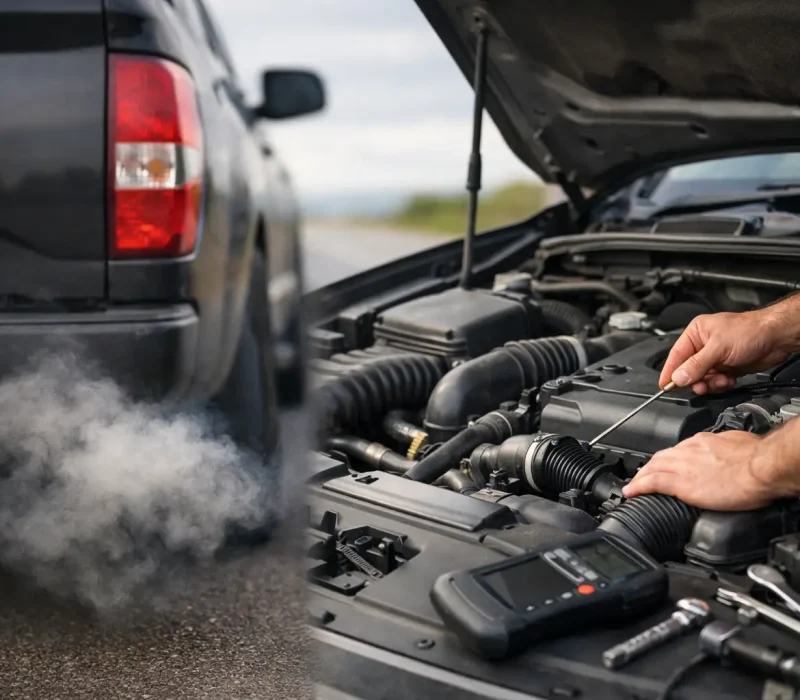



A flashing engine management light is not the car being fussy. It is the warning you pay attention to straight away.
When the light is steady, the fault may still need proper diagnosis, but you can often drive cautiously for a short time. When it starts flashing, the car is usually telling you there is an active misfire or another serious fault severe enough to risk damage if you keep going. Ignore it for too long and a repair that starts as a plug, coil or fuelling issue can turn into catalytic converter damage, DPF trouble, poor running and a much larger bill.
What causes engine light to flash?
In most cases, what causes engine light to flash is an engine misfire. That means one or more cylinders are not burning fuel properly. The unburnt fuel then passes into the exhaust, where it can overheat and damage components designed to deal with emissions.
On a petrol engine, the biggest concern is catalytic converter damage. On a diesel, the exact fault pattern can differ, but poor combustion, injector issues, air flow faults and blocked emissions systems can still trigger a flashing warning and reduced performance. Some vehicles will also drop into limp mode to protect the engine and exhaust system.
The important point is this: a flashing light usually means stop guessing and start diagnosing.
Why a flashing light is more serious than a steady one
A steady engine light often points to a fault that has been logged by the ECU but is not immediately destructive. That could be something like an emissions sensor reading out of range, an intermittent boost issue or an EGR-related fault.
A flashing light is different because the fault is active and severe enough that continued driving may cause immediate harm. The ECU is effectively warning you that combustion is unstable or that the engine is operating outside safe limits. You may notice rough idle, hesitation, lack of power, excessive smoke, hard starting or a strong fuel smell.
Sometimes the car still seems to drive well enough to get home. That is where owners get caught out. Modern engines can hide serious faults surprisingly well until the damage is already done.
The most common reasons behind a flashing engine light
Ignition faults
On petrol vehicles, faulty spark plugs and failing ignition coils are among the most common causes. If a coil pack weakens or a plug is worn, the cylinder may fire inconsistently or not at all under load. That creates the classic flashing light scenario, especially during acceleration or uphill driving.
This is often one of the cheaper fixes if caught early. Leave it too long, and repeated misfires can overheat the catalytic converter.
Fuel delivery problems
If the engine is getting too much fuel, too little fuel or poor atomisation from a faulty injector, combustion quality drops. Petrol and diesel engines can both suffer here, although the symptoms and fault codes vary.
A sticking injector may cause rough running at idle, hard starting or smoke from the exhaust. On diesels, injector imbalance can also increase soot output, which then adds pressure on the DPF.
Air intake and sensor faults
The engine depends on accurate air measurement to calculate fuelling. If the mass air flow sensor, MAP sensor, boost sensor or throttle-related components are giving poor data, the ECU can no longer control combustion accurately.
Vacuum leaks, split boost hoses and intake leaks can create similar symptoms. The result may be hesitation, surging, a lack of power and a flashing warning under load.
Emissions system issues
EGR faults, DPF restriction and heavy carbon build-up can all affect how the engine breathes and burns fuel. On modern diesels especially, these faults do not always start with dramatic symptoms. Sometimes the first signs are reduced economy, sluggish pickup and repeated warning lights.
If the DPF is heavily restricted, exhaust back pressure rises, regeneration becomes less effective and the engine may begin to run poorly enough to trigger additional faults. Carbon build-up around intake components can also disturb airflow and contribute to incomplete combustion.
Mechanical engine problems
Less commonly, a flashing light can be tied to compression loss, valve issues, timing problems or head gasket failure. These faults are more serious and usually come with other signs such as persistent rough running, coolant loss, overheating, excessive smoke or unusual engine noise.
This is why a code read on its own is not always enough. The fault code points you in a direction, but proper diagnosis still matters.
What causes engine light to flash on diesel cars?
Diesel vehicles can be slightly different because they do not use spark ignition in the same way as petrol engines. Even so, the root issue is still usually poor combustion, incorrect fuelling, restricted airflow or an emissions-related fault severe enough to affect engine operation.
Common diesel-specific causes include injector faults, glow plug or control issues during cold starts, boost leaks, sticking EGR valves, blocked DPFs and carbon contamination in the intake system. A diesel that is used mostly for short trips is more likely to suffer from soot-related faults because it does not get the consistent temperature and load needed for clean operation.
For high-mileage drivers, commuters and vans used around town, this matters. A flashing warning may not mean the engine itself is finished, but it often means the supporting systems are no longer coping properly.
What you should do when the light starts flashing
First, ease off the throttle and avoid hard acceleration. If the engine is running rough, shaking or clearly down on power, it is best to stop as soon as it is safe to do so. Continuing to drive aggressively is the quickest way to turn a manageable fault into expensive exhaust or engine damage.
If the car seems stable enough to move, keep the journey as short as possible and avoid motorway speeds or heavy loads. Do not assume the light will clear itself because it stopped flashing for a moment. Intermittent faults can still cause damage.
What you should not do is start replacing parts at random. Modern vehicles need live data, stored fault codes and proper fault tracing. A misfire code does not automatically mean plugs. A DPF code does not automatically mean the filter needs replacing. The right answer depends on what caused the warning in the first place.
Diagnosis matters more than guesswork
This is where many owners lose money. They fit a sensor because the internet suggested it, the light comes back, then they replace another part, and the original fault is still there.
A proper diagnostic approach checks fault codes, freeze-frame data, live readings and the real-world condition of the engine and emissions system. If the issue is combustion-related, you need to know why. If the DPF is restricted, you need to know what caused the soot loading. If the engine has carbon build-up, you need to assess how far it has progressed and whether it is affecting airflow and drivability.
For some vehicles, a targeted repair is enough. For others, especially diesels with repeat warning lights, the real fix may involve restoring airflow, addressing injector or EGR issues, and making sure the vehicle can regenerate properly again.
When it may be safe to drive – and when it is not
It depends on how the car is behaving.
If the engine light flashed briefly but the vehicle now runs normally, you may have an intermittent fault, but it still needs checking soon. If the light is flashing continuously, the engine is misfiring, there is a strong smell of fuel, there is visible smoke, or the car has entered limp mode, driving it further is a poor gamble.
Likewise, if you tow, carry tools for work, or rely on the vehicle daily, delaying diagnosis can cost more in downtime than the repair itself. For many drivers, convenience matters as much as the technical fix. That is why mobile diagnostics and on-site fault finding can make practical sense when the car is not healthy enough to justify a trip to a workshop.
Preventing the problem from coming back
Not every flashing engine light is preventable, but many are made worse by delay. Servicing on time, using the correct fuel and oil, and dealing with early warning signs such as rough running, smoke, poor MPG and sluggish throttle response can stop a minor issue escalating.
For diesel owners, regular longer runs help, but they do not solve everything. If the car already has carbon build-up, repeated short journeys, weak airflow or an underlying fuelling problem, motorway driving alone will not put it right. The same goes for DPF issues. A forced run is not a cure if the root cause is still present.
If your engine light is flashing, treat it as an active fault rather than an inconvenience. The sooner the cause is identified, the better the chance of keeping the repair simple, protecting the emissions system and getting the vehicle back to reliable running without unnecessary parts being thrown at it.
If you are dealing with a warning light, rough running or DPF-related symptoms and need a proper answer without the hassle of a workshop visit, High REVS Performance can carry out mobile diagnostics and specialist fault-related services at your home or workplace – which is often the quickest route to clarity when the car is already telling you something is wrong.