


DPF, AdBlue, EGR and NOx codes in plain English
Your diagnostic tool or the garage gave you a code and you want to know what it means? Below are the most common diesel emissions codes – DPF, AdBlue (SCR), EGR and NOx sensors – explained in plain English.
These are generic OBD-II codes, so they mean the same thing on Ford, VW, Audi, Skoda, Seat, BMW, Mercedes, Vauxhall, Peugeot and Citroën diesels. Some makes also store their own manufacturer codes alongside them.
A code points to a system, not always to the faulty part. A DPF code is very often caused by a pressure sensor, a split pipe or an EGR fault – not the filter itself. That’s why we diagnose before replacing or cleaning anything.
| Code | Meaning | Common causes |
|---|---|---|
| P0470 | Exhaust pressure sensor circuit | Blocked or split sensor pipe, failed sensor, damaged wiring. |
| P0471 | Exhaust pressure sensor range/performance | Blocked, cracked or loose sensor pipe; sensor reading drifting. |
| P2002 | DPF efficiency below threshold | The filter is not trapping soot: cracked or damaged DPF, a faulty pressure sensor or split pipe giving false readings, or an exhaust leak before the DPF. |
| P2463 | DPF restriction – soot accumulation | Filter clogged with soot: short journeys and failed regenerations – often with a pressure sensor, EGT sensor, EGR or injector fault behind it. |
| P242F | DPF restriction – ash accumulation | Ash build-up from high mileage or oil consumption. Ash does not burn off, so cleaning may only partly help. |
| P244A | DPF differential pressure too low | Split or disconnected pressure pipe, faulty sensor, or a damaged filter. |
| P244B | DPF differential pressure too high | Blocked filter, blocked sensor pipe or a faulty sensor. |
| P2452 | DPF pressure sensor A – circuit | Wiring or connector fault, failed differential pressure sensor. |
| P2453 | DPF pressure sensor A – range/performance | Pipes split, blocked or swapped round; sensor giving unrealistic readings. |
| P2454 | DPF pressure sensor A – circuit low | Wiring short or open circuit, failed sensor. |
| P2455 | DPF pressure sensor A – circuit high | Wiring fault, failed sensor. |
| P2458 | DPF regeneration duration | Regeneration not finishing: short journeys, faulty EGT or pressure sensor. |
| P2459 | DPF regeneration frequency | Regenerating too often: pressure sensor or pipe fault, or high soot from EGR, injector or boost-leak problems. |
| P2080 | Exhaust gas temperature sensor 1 – range/performance | Failed EGT sensor or wiring. Without a good temperature reading the car may refuse to regenerate. |
| P2084 | Exhaust gas temperature sensor 2 – range/performance | Failed EGT sensor or wiring – same effect on regeneration. |
| P20EE | SCR NOx catalyst efficiency below threshold | Poor or contaminated AdBlue, crystallised AdBlue injector, faulty NOx sensor. Common on VW, Audi and Skoda. |
| P20E8 | Reductant (AdBlue) pressure too low | Low or empty tank, leaking line, worn pump. |
| P204F | Reductant system performance | Dosing pump fault, blocked injector or line. |
| P203F | Reductant (AdBlue) level too low | AdBlue low. On many cars a start countdown follows – top up before it runs out. |
| P2047 | AdBlue injector circuit/open | Injector wiring or connector fault, failed injector. |
| P20B9 | AdBlue heater A – control circuit/open | Failed tank heater (often built into the pump/tank unit), wiring or connector. |
| P20BD | AdBlue heater B – control circuit/open | Second heater circuit (often the line heater): failed heater or wiring. |
| P2200 | NOx sensor circuit (bank 1) | Failed NOx sensor or its module, wiring damaged near the exhaust. |
| P2201 | NOx sensor range/performance (bank 1) | Contaminated or ageing sensor; also air leaks that upset the reading. |
| P229F | NOx sensor 2 (after the SCR) – range/performance | Failed downstream NOx sensor. A very common AdBlue-system code on VW, Audi and Skoda. |
| P0400 | EGR flow malfunction | EGR valve sticking, carbon-blocked passages. |
| P0401 | EGR flow insufficient | Carbon-blocked EGR valve, cooler or passages; sticking valve. |
| P0402 | EGR flow excessive | Valve stuck open, faulty position sensor. |
| P0403 | EGR control circuit | Wiring or connector fault, failed valve motor. |
| P0404 | EGR range/performance | Carbon making the valve stick, position sensor fault. |
| P0299 | Turbo underboost | Boost leak or split hose, sticking turbo vanes, boost control fault – usually limp mode. |
| P0234 | Turbo overboost | Sticking vanes or actuator, boost control fault – limp mode. |
| P0087 | Fuel rail pressure too low | Blocked fuel filter, low-pressure supply, pump or pressure regulator – can cause a no-start. |
No code found – send us the code on WhatsApp and we'll tell you what it means.
Got one of these codes?
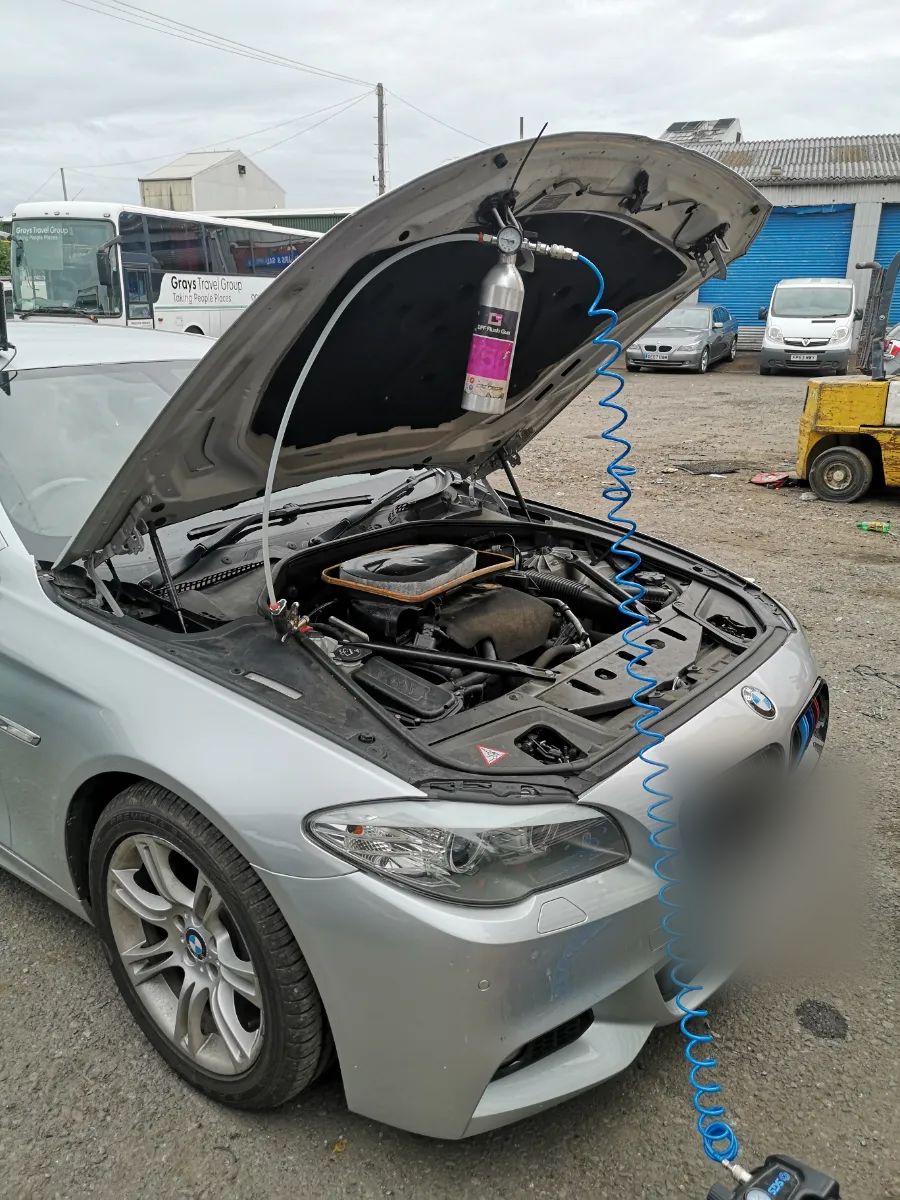
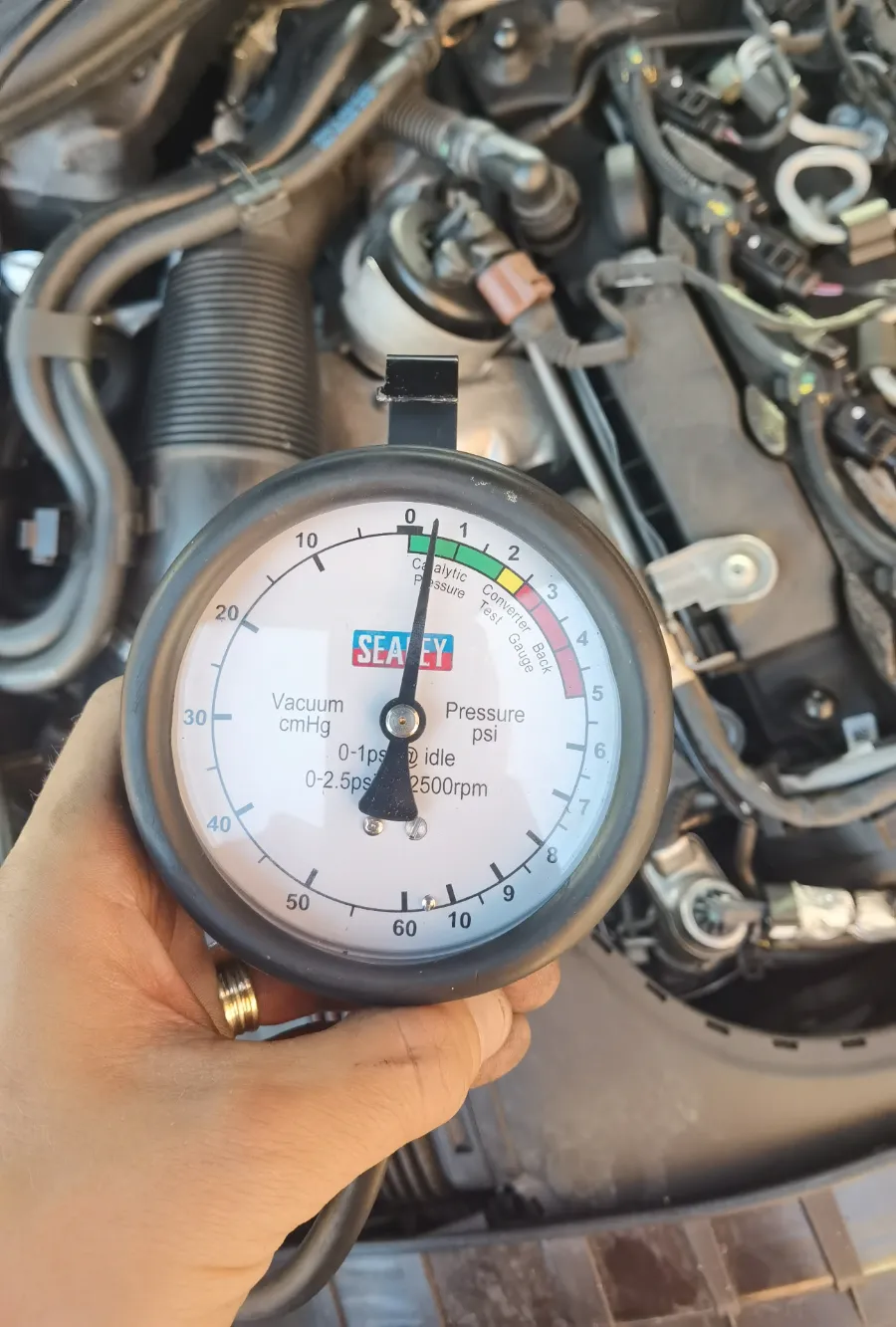
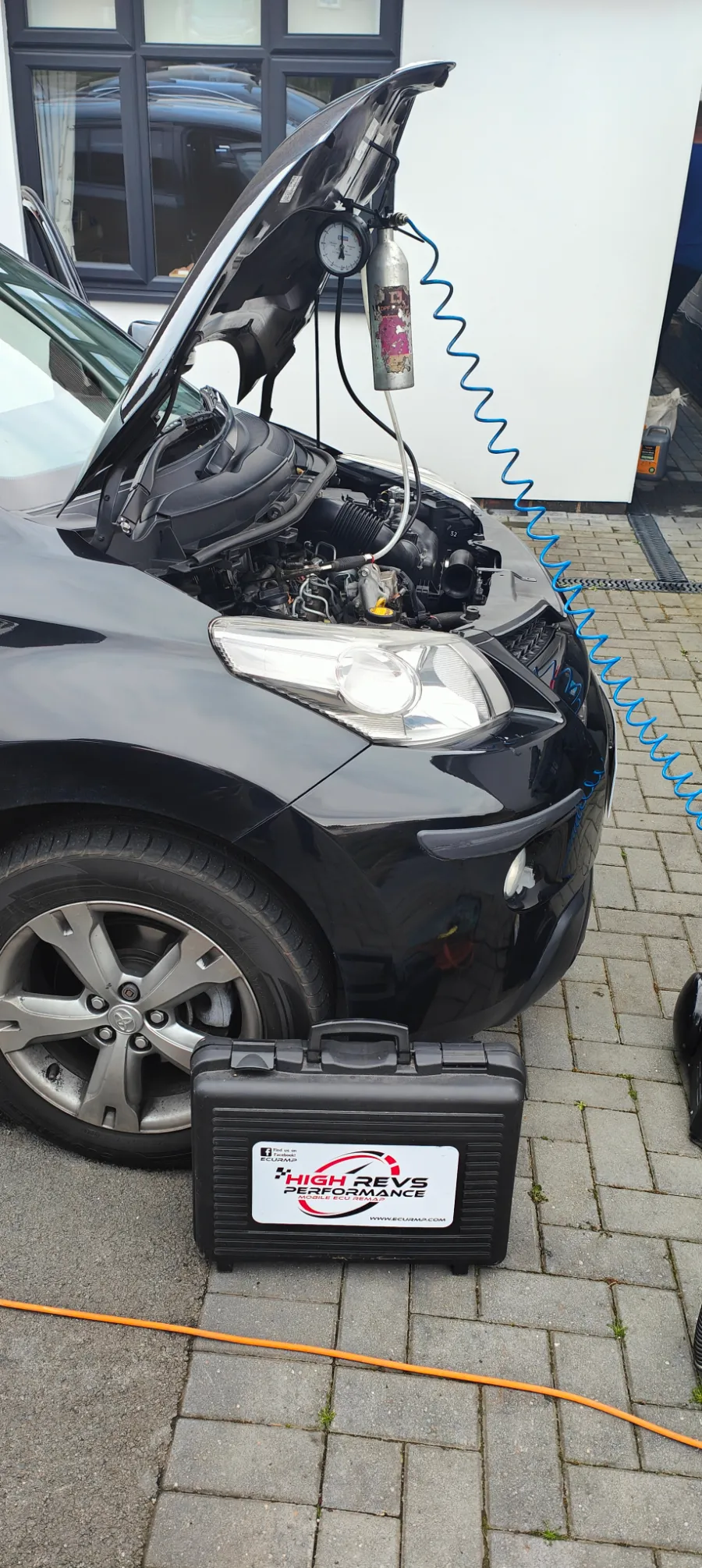
Send us the code and your car on WhatsApp and we’ll tell you honestly what it most likely is. We cover Tamworth and around 10 miles – see mobile DPF cleaning or engine carbon cleaning.