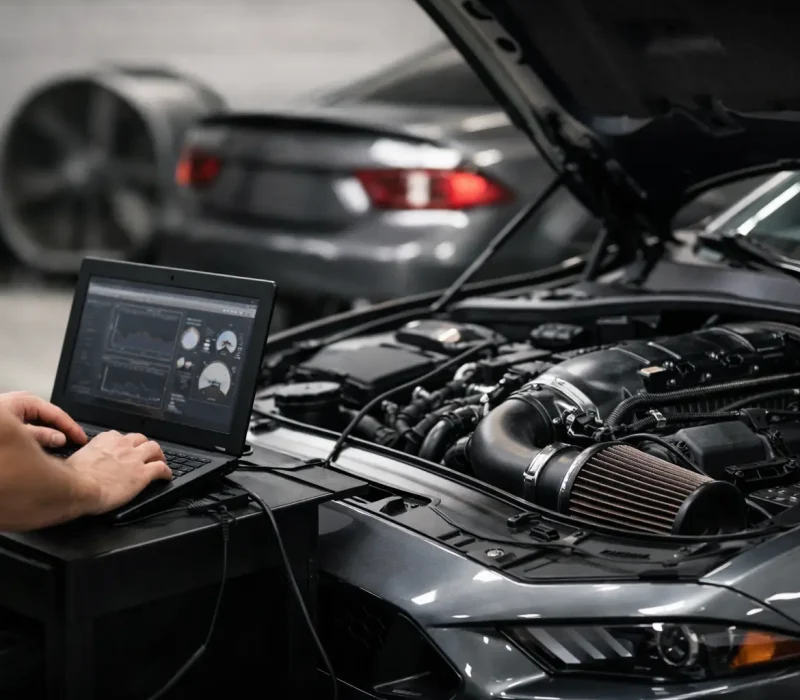



If you are considering an ECU remap, the first question is usually not how much power it makes. It is whether the process is safe, sensible and worth doing on your particular vehicle. That is the right place to start.
A proper remap is not just a file being loaded into a car and sent on its way. It is a controlled calibration process built around the condition of the vehicle, the software already on it, and what you actually want from it. Some drivers want stronger mid-range torque for overtaking or towing. Others want an Eco or Balanced setup to improve drivability and help reduce fuel spend. The remap process should reflect that.
A practical guide to ECU remap process basics
The ECU is the engine control unit. It manages key functions such as fuelling, boost pressure, ignition timing on petrol engines, torque requests, throttle behaviour and, on many modern vehicles, how various systems work together under load. A remap changes selected calibration data within that software.
That does not mean changing everything. A safe remap focuses on the maps that matter and keeps the vehicle within sensible operating limits. The best results come from custom-written calibrations based on the exact software version and hardware setup on the vehicle, not a generic one-size-fits-all file.
The process also depends on the car. Some ECUs can be read and written through the diagnostic port. Others may require bench or boot access. The method changes, but the principle stays the same – identify the software correctly, read the original data safely, adjust it with purpose, then write and verify the revised file.
Before any remap, the vehicle needs checking
This is the stage many people overlook, and it is where a professional service earns its keep. If a vehicle already has boost leaks, injector issues, airflow problems, DPF faults or stored engine codes, a remap will not fix those faults. In some cases, it can make existing weaknesses more obvious because the engine is being asked to work harder.
A proper pre-check usually includes a diagnostic scan, a review of fault codes, and a look at live data where needed. On diesel vehicles, DPF condition matters. On both petrol and diesel engines, the health of sensors, turbo control, EGR operation and fuel system performance can all affect the outcome.
This is also where the goal of the remap gets agreed. There is a big difference between an economy-focused calibration for a motorway commuter and a Stage 1 power remap for a driver who wants sharper response and more pulling power. A good tuner will ask how the vehicle is used, not just what badge is on the bonnet.
Reading the original ECU file
Once the vehicle is confirmed as suitable, the next step is reading the original software. This is the foundation of the whole job.
The original file is taken from the ECU using genuine tools and the correct protocol for that system. This matters because modern control units are sensitive. Rushing this stage or using poor-quality equipment can create avoidable problems. Professional-grade hardware is designed to communicate correctly with the ECU, maintain stability during reading and writing, and preserve the original data properly.
Keeping the original file is important for two reasons. First, it allows the calibration to be built from the exact software already on the vehicle. Second, it provides a reliable backup should the vehicle ever need to be returned to standard.
Editing the file for the vehicle and the driver
This is where remapping stops being a simple upload and becomes proper calibration work. The maps inside the file are identified and adjusted to suit the engine, gearbox where relevant, and the intended outcome.
For an Eco remap, the focus is often on usable torque lower down the rev range and more efficient delivery under normal driving. That can reduce the need for heavy throttle input and frequent downshifts. For a Balanced remap, the aim is a sensible mix of stronger performance and everyday efficiency. For a Stage 1 power remap, attention is usually on torque delivery, throttle response and stronger acceleration across the usable rev range.
The trade-off is that not every vehicle responds in exactly the same way. Manufacturer strategies vary, hardware condition varies, and driving style matters. One driver may see a noticeable MPG improvement because the extra torque means less effort is needed. Another may use the new performance more often and see little change in economy. That is why realistic advice matters more than headline claims.
A safe calibration also stays within sensible tolerances. More is not always better. Pushing boost, fuelling or torque targets too hard may make an impressive number on paper, but it can compromise reliability, drivability or component life. Good tuning is measured, not reckless.
Writing the remap back to the ECU
After the revised file is prepared, it is written back to the ECU using the appropriate method. Power supply stability is critical during this part of the process, because interruption during a write can cause software corruption.
Once the file has been flashed, the ECU may need a short settling period and system checks. Depending on the vehicle, the technician may clear adaptation values where appropriate, verify communication, and confirm there are no new fault codes. The process is not complete just because the write has finished.
This stage should be calm and controlled. If you ever get the impression a remap is being rushed, that is a warning sign. Good results come from procedure, not speed.
Testing and checking after the remap
A remap should always be followed by verification. The vehicle needs to be checked to make sure it is responding correctly and delivering the intended result.
That usually means a road test, along with further diagnostics and live data checks where needed. The technician is looking for clean power delivery, stable boost control, sensible fuelling behaviour, and the absence of warning lights or fault codes. If the target was improved drivability, that should be obvious in normal use, not only at full throttle.
This post-remap testing is also where experience shows. Some vehicles respond perfectly first time. Others may benefit from refinement if the driver wants the torque to come in differently or if the software strategy needs a small adjustment to improve smoothness. A professional approach leaves room for that.
What drivers usually notice first
Most customers do not talk about peak figures after a good remap. They talk about how the vehicle feels.
The first change is often stronger torque in the mid-range. The car or van pulls more cleanly from lower revs, feels less flat when joining faster roads, and needs fewer gear changes. On diesel vehicles, this can make everyday driving noticeably easier, especially for commuting, towing or carrying load. On petrol engines, the gains may feel more progressive, with sharper response and a stronger climb through the rev range.
For economy-focused remaps, the biggest benefit is often effort reduction rather than dramatic MPG overnight. If the engine works less hard to maintain speed, and if the driver uses that extra torque sensibly, fuel savings can follow.
When a remap is not the right next step
There are cases where the right advice is to hold off.
If a vehicle has unresolved DPF issues, intake carbon build-up, injector imbalance, boost leaks or recurring fault codes, those problems should be dealt with first. Likewise, if the clutch is already slipping or the automatic gearbox is showing signs of poor operation, extra torque may expose the issue sooner.
This is especially relevant on higher-mileage vehicles. Mileage alone does not rule out remapping, but condition matters more than enthusiasm. A healthy 120,000-mile vehicle can be a better candidate than a neglected 60,000-mile one.
Why mobile remapping suits many owners
For a lot of drivers, the most useful part of the process is not only the tune itself but how it is delivered. A mobile service allows the work to be carried out at home or at your workplace, which avoids losing time to garage visits and waiting around.
That convenience only has value if the technical standard stays high. The process still needs proper diagnostics, correct tooling, stable power management and methodical testing. Done properly, mobile remapping offers the same calibration discipline with far less disruption to your day. For drivers across Tamworth and Staffordshire, that practical side is often as important as the extra performance.
If you are choosing a remap service, look for clear answers rather than sales talk. Ask how the vehicle is checked first, whether the file is custom-written, what tools are used, and whether the calibration stays within safe limits. A remap should make the vehicle better to drive, not give you something new to worry about.
If the process is handled properly, an ECU remap is not a gamble. It is a measured upgrade built around how you use the vehicle and what the engine can safely deliver. That is where the real value sits – not in hype, but in a car or van that feels stronger, smoother and better suited to the miles ahead.