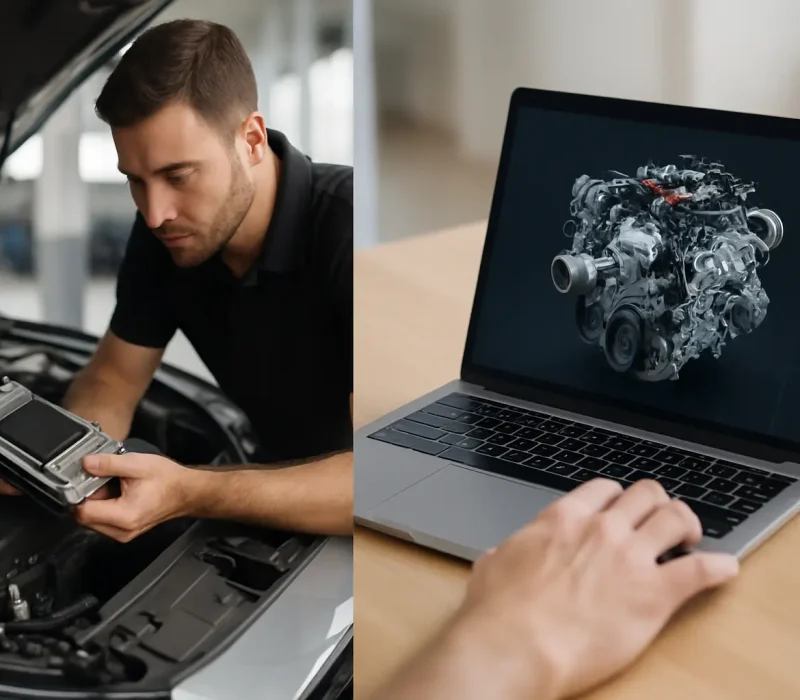



A mobile remap sounds ideal right up until you ask the obvious question – is it actually as good as taking the car to a tuning workshop? That is where a proper review mobile ECU remap service becomes useful. Convenience matters, but only if the calibration is safe, the tools are genuine, and the person arriving at your home or workplace knows exactly what they are doing.
For most drivers, the real decision is not mobile versus garage in the abstract. It is whether the service gives you measurable results without guesswork, downtime, or unnecessary risk. If you use your vehicle for commuting, motorway miles, towing, or day-to-day business, that balance matters more than sales talk.
What a mobile ECU remap service should actually deliver
A proper mobile remap service should do more than plug in a laptop, upload a file, and leave. The standard to look for is dealer-level process with on-site convenience. That means a health check first, a clear explanation of expected gains, safe calibration within manufacturer tolerances, and support if the vehicle has underlying faults that need attention before tuning.
The best mobile services are built around process clarity. The technician should assess how the vehicle is running now, identify any fault codes or warning signs, and explain whether remapping is appropriate. If the engine has boost leaks, DPF issues, carbon build-up, injector imbalance, or transmission concerns, a responsible tuner should say so. Remapping a car with unresolved faults does not create performance. It usually magnifies an existing problem.
That is the first thing any honest review of a mobile ECU remap service needs to cover. A remap is only as good as the condition of the vehicle receiving it.
Review mobile ECU remap service – what separates a good one from a risky one
There are mobile tuning providers who work to a high professional standard, and there are others relying on generic files and low-cost tools. From the customer side, the difference is not always obvious at first glance. Both may promise better power, stronger torque, and improved MPG. The detail underneath those claims is what matters.
A good service uses genuine tools, stable reading and writing equipment, and vehicle-specific calibration work. It should be able to explain whether your car suits an Eco remap, a Balanced map, or a Stage 1 Power setup based on how you actually drive. A high-mileage motorway user may want stronger mid-range torque and better fuel economy. A driver towing regularly may value smoother delivery and more usable pulling power. An enthusiast may want sharper response and stronger acceleration. The remap should fit the use case, not the other way round.
A weaker service tends to sound impressive but stay vague. If everything is described as a huge gain for every vehicle, that is usually a warning sign. Real tuning is more measured than that. Some engines respond very well. Others show modest but worthwhile improvements. Turbo petrol and turbo diesel vehicles often benefit more than naturally aspirated engines. Automatic gearboxes, clutch condition, emissions systems, and service history all affect what is sensible.
The real advantages of mobile remapping
Convenience is the obvious benefit, but it is not the only one. Having a technician come to your address means less disruption to your day. You do not need to sit in a waiting room, arrange lifts, or lose half a working day getting to and from a garage. For busy owners, tradespeople, and small fleets, that alone can make the service more practical.
There is also a more useful advantage – the vehicle is seen in its normal working environment. If you are using the car for short urban runs, long motorway commutes, towing, or local delivery work, that context can shape the conversation about what tune makes sense and whether related issues such as DPF loading or carbon build-up need attention first.
For diesel drivers especially, this matters. A vehicle that spends its life on short trips may not be a candidate for an aggressive performance map if the bigger issue is repeated DPF regeneration trouble. In that case, diagnostics and cleaning may deliver more value than extra power on paper.
Where mobile services can fall short
A balanced review mobile ECU remap service should also acknowledge the trade-offs. Mobile does not automatically mean better. It means more convenient, provided the operator is properly equipped and the job is suitable for on-site work.
Some vehicles require more involved investigation than a driveway appointment allows. If a car has intermittent faults, hardware issues, or signs of existing engine stress, workshop-based testing may still be the better route. The right service provider should be upfront about that rather than forcing every booking into the same model.
Weather, battery condition, and access can also affect on-site work. A professional mobile technician plans around those variables with battery support, stable equipment, and clear expectations, but customers should still understand that mobile tuning is not magic. It is professional work delivered outside a garage, not a shortcut around proper standards.
Safety matters more than headline gains
Most drivers asking about remapping are not chasing dyno-sheet bragging rights. They want the car to feel stronger, smoother, and more responsive without compromising reliability. That is why the safest remaps are rarely the most extreme ones.
A sensible Stage 1 calibration within the engine and gearbox limits can make a car noticeably better to drive. Torque arrives earlier, throttle response sharpens, and overtaking feels less laboured. In the right vehicle, an Eco or Balanced map can also improve efficiency by making the engine work less hard in normal driving. But all of that depends on the tune being written and applied with restraint.
Custom calibration within manufacturer tolerances is a far stronger sign of quality than inflated claims. If a provider cannot explain how they manage safety margins, or if they promise unrealistic gains from a small-capacity engine, caution is sensible.
What to ask before you book
If you are comparing providers, ask direct questions and pay attention to how direct the answers are. Ask what tools they use, whether the remap is vehicle-specific, whether diagnostics are included, and what happens if fault codes are already present. Ask whether they offer different remap options based on economy, all-round drivability, or power.
It is also worth asking what they will not do. Good technicians have limits. They will refuse to tune vehicles with serious faults, and they will not present every engine as suitable for the same level of modification. That sort of restraint is a positive sign, not a weakness.
Pricing should also be clear from the start. A low headline figure can become expensive if basic diagnostics, file writing, or follow-up are treated as extras. Transparent entry pricing is usually a better indicator of professionalism than bargain rates with vague inclusions.
Is mobile remapping good value?
In many cases, yes – especially if the vehicle is healthy and your priorities are straightforward. A safe remap that improves torque, drivability, and fuel economy can change how the car feels every day, not just on a single test drive. For drivers covering serious mileage, even modest MPG improvement can make the service pay for itself over time.
The value case is even stronger when mobile tuning avoids downtime. If your car is needed for work, school runs, site visits, or delivery use, convenience is not a luxury. It is part of the service value.
That said, value depends on suitability. If the car first needs DPF cleaning, carbon cleaning, or diagnostics to resolve warning lights and limp-mode issues, a remap may need to wait. A trustworthy service will tell you that. Sometimes the best outcome is restoring lost performance before trying to add more.
Who benefits most from a mobile ECU remap service?
Drivers who want practical gains usually get the most from it. That includes diesel owners who need more usable mid-range pull, motorway commuters chasing better efficiency, towing users who want easier load carrying, and small business operators who cannot afford workshop downtime.
Enthusiast drivers can benefit too, provided expectations are realistic. A Stage 1 remap on a healthy turbocharged vehicle often delivers the biggest smile-per-pound improvement available without major hardware changes. The key is making sure the vehicle is mechanically sound and the tune matches how it is used.
In Tamworth and across Staffordshire, where many drivers rely on their cars and vans daily rather than occasionally, that mobile convenience has genuine weight. When the technician, tools, and calibration quality are right, the service can be every bit as professional as a workshop visit, just without the wasted time.
High REVS Performance is built around that standard – on-site convenience backed by genuine tools, experienced diagnostics, and remaps written for the specific vehicle rather than guessed from a generic template.
A mobile ECU remap is worth booking when the service feels careful, not rushed. If the provider talks clearly about safety, vehicle condition, expected results, and the limits of what is sensible, you are usually dealing with the right kind of specialist.