

A car that hesitates when pulling away, feels flat joining a dual carriageway or struggles under load is not merely frustrating. It can be an early warning that the engine is not receiving the air, fuel or control inputs it needs. Knowing how to fix sluggish acceleration starts with identifying when the problem occurs, rather than guessing at parts or fitting a remap before the vehicle is healthy.
For a diesel used on short runs around town, a restricted DPF or carbon build-up may be the main cause. For a petrol car, ignition faults, intake leaks or fuel delivery can be more likely. Modern vehicles also use sensors and software to protect the engine, so a minor fault can reduce torque significantly without making the car completely undriveable.
Start by defining the loss of performance
Pay attention to the conditions in which the car feels slow. Is it weak from low revs, only when overtaking, when towing, or all the time? Does it improve once the engine is warm? Are there warning lights, excess smoke, poor fuel economy or an obvious whistle from the engine bay?
These details narrow the diagnosis. A gradual loss of power alongside reduced MPG often points towards restricted airflow, carbon deposits or DPF loading. A sudden change, especially with an engine management light, can indicate a sensor, boost-control or fuel-system fault. If the car has entered limp mode, it may feel as though it has lost most of its turbo assistance and will usually need fault-code diagnostics before anything else.
Do not assume that a warning light must be present. Stored fault codes and live data can reveal weak readings from air-flow, pressure and temperature sensors before a dashboard warning appears. Professional diagnostics compare requested boost, actual boost, fuelling and exhaust readings under realistic engine load. That is far more useful than clearing a code and hoping it stays away.
Fix the basics before chasing more power
A healthy engine responds better, uses less fuel and is safer to tune. Start with the service items that directly affect combustion and airflow. An overdue air filter can restrict the engine, while a blocked fuel filter can limit fuel supply when you ask for more torque. On diesel vehicles, both are inexpensive checks compared with replacing major components.
Inspect intake pipes, intercooler hoses and vacuum lines for splits, loose clips and oil staining. A small boost leak can make a turbocharged vehicle feel lethargic, particularly in the mid-range, yet may not be obvious at idle. A damaged hose can also cause the turbo to work harder than it should while failing to deliver the expected pressure.
For petrol engines, worn spark plugs or failing ignition coils often show up as hesitation under acceleration. The engine may idle reasonably well but misfire once cylinder pressure rises. Continuing to drive hard with a misfire risks damaging the catalytic converter, so this is a repair to deal with promptly.
Use the correct oil specification and keep servicing on schedule. This matters particularly for turbocharged engines and diesels with DPF systems, where the wrong low-quality oil can contribute to longer-term issues. A basic maintenance check does not replace diagnosis, but it prevents simple restrictions from being confused with a serious fault.
Check DPF loading on diesel vehicles
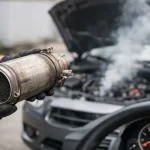
A diesel particulate filter is designed to trap soot, then burn it off during regeneration. Frequent short journeys, interrupted regeneration cycles, injector issues and engine faults can stop that process working properly. As soot loading rises, exhaust back pressure increases and the engine may reduce power to protect itself.
A motorway run can help only if the vehicle is otherwise capable of completing a regeneration. It will not solve an ash-filled filter, a failed pressure sensor, an EGR issue or a DPF that has already reached a critical loading level. Repeated forced regenerations without diagnosing the reason for blockage can also create unnecessary heat stress.
Proper diagnostics should assess differential pressure, soot loading, regeneration history and related fault codes. Where the filter is suitable for treatment, professional DPF chemical cleaning can remove deposits and restore exhaust flow without immediately resorting to costly replacement. The right route depends on the filter condition and the underlying cause. If a sensor, thermostat or injector problem created the blockage, that fault needs attention as well.
Restore airflow where carbon has built up
Modern diesels and direct-injection petrol engines can develop carbon deposits around the intake system. Exhaust gas recirculation and oil vapour can leave deposits in intake tracts, EGR components and inlet manifolds. Over time, this restricts the clean air available to the engine and dulls throttle response.
Typical signs include a flatter mid-range, uneven response at low revs, more smoke on a diesel and a noticeable drop in economy. Carbon cleaning is not a cure-all for every acceleration fault, but where deposits are affecting airflow it can restore the engine’s natural responsiveness. It is particularly relevant to vehicles that spend much of their life in stop-start traffic or on short commutes.
The key is to diagnose rather than sell a treatment by default. An engine with a boost leak will not regain full performance just because the intake has been cleaned. Equally, a clean DPF cannot compensate for a failing mass air-flow sensor. A measured inspection avoids paying for work that does not address the actual restriction.
Test turbo, sensor and fuel-system performance
Turbocharged cars depend on accurate control of boost pressure. Problems with the turbo actuator, boost solenoid, vacuum supply, variable vanes or pressure sensor can all cause sluggish acceleration. Some faults produce a clear underboost or overboost code; others appear only when live data is checked during a road test.
Fuel delivery also matters. A weak low-pressure supply, restricted filter, injector imbalance or high-pressure system issue may leave the vehicle short of torque when accelerating. On a diesel, smoke colour can provide clues, but it is not enough for a diagnosis on its own. Black smoke can suggest too much fuel or insufficient air, while a lack of smoke does not prove that fuelling is healthy.
This is why dealer-level diagnostic equipment and experienced interpretation matter. Replacing sensors at random is often more expensive than testing the system properly. A mobile diagnostic appointment can be especially practical when the car is in limp mode or when downtime affects a work vehicle, fleet car or towing vehicle.
When a safe ECU remap can help
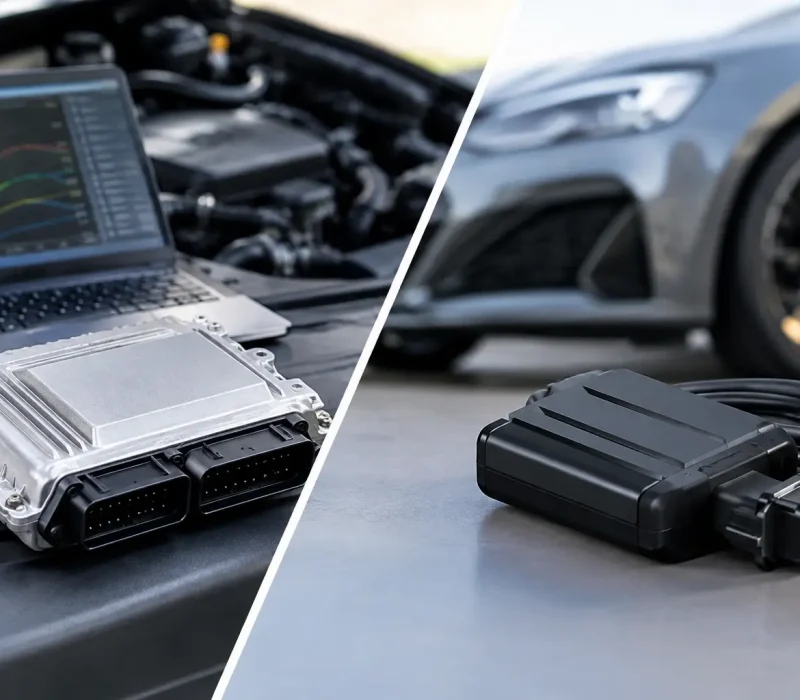
Once the vehicle is mechanically sound, a custom ECU remap can improve the way it delivers its available performance. Many factory calibrations leave a margin for different markets, fuel qualities and operating conditions. A carefully written calibration can improve torque, throttle response and usable mid-range pull while remaining within sensible manufacturer tolerances.
The best option depends on how you use the vehicle. An Eco remap may suit a high-mileage commuter or light commercial vehicle where stronger low-down torque can reduce the need for heavy throttle inputs. A Balanced remap is a sensible middle ground for drivers who want improved response and potential economy benefits. A Stage 1 Power remap is better suited to those who want a more engaging drive, confident overtaking and improved towing performance.
A remap should never be used to hide warning lights, bypass a mechanical fault or compensate for a blocked DPF. Generic files can also produce inconsistent results. The safer approach is a vehicle-specific calibration written with the car’s condition, engine limits and intended use in mind. This protects reliability while giving a noticeable improvement in everyday drivability.
A sensible next step
If acceleration has become slow, begin with fault-code reading and live-data diagnostics, then repair the cause before considering performance upgrades. For drivers in Tamworth and Staffordshire, High REVS Performance can carry out professional mobile diagnostics, DPF chemical cleaning, carbon cleaning and custom ECU remapping at your home or workplace. The useful outcome is not simply a faster car, but one that pulls cleanly, uses fuel properly and gives you confidence whenever you need the torque.