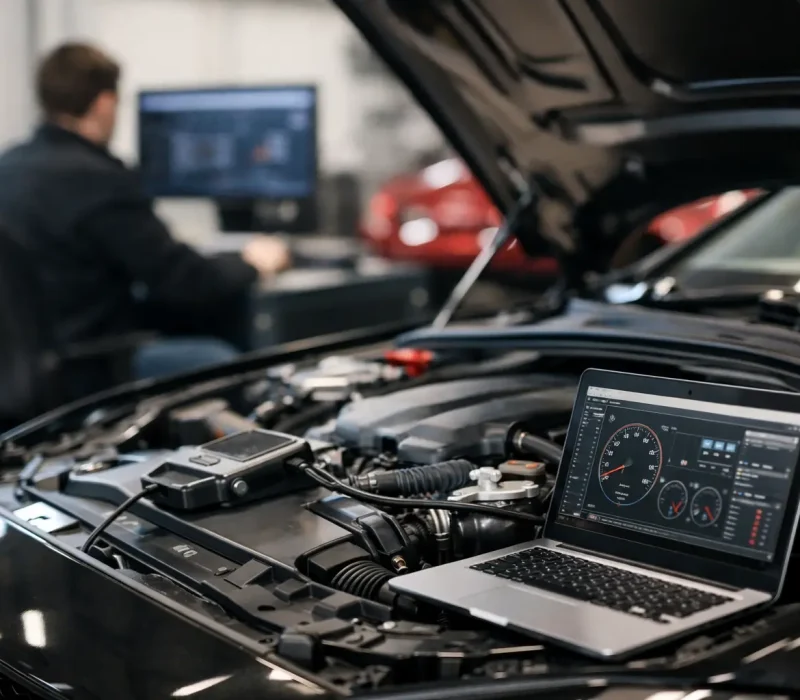



If you want better torque, sharper throttle response or improved fuel economy, knowing how to prepare car for remap properly matters more than most drivers realise. A remap can only work with the condition of the vehicle in front of it. If the engine already has faults, airflow issues or a struggling DPF, the software will not hide them – it will usually expose them faster.
That is why preparation is not a formality. It is the stage that helps you get the result you actually paid for, whether you want an Eco remap for motorway miles, a balanced setup for daily driving, or a Stage 1 file for stronger mid-range pull.
How to prepare car for remap before the appointment
The first thing to understand is that a healthy car remaps better than a neglected one. ECU calibration changes how the engine delivers power and torque, but it still relies on correct fuelling, stable boost control, clean airflow data and a sound drivetrain. If any of those are off, the best-case result is a disappointing improvement. The worst case is that existing faults become more noticeable.
Start with a basic question: is the car already running exactly as it should in standard form? If it hesitates, smokes excessively, drops into limp mode, shows warning lights or feels flat, those issues need attention first. A remap is not a repair service. It is a calibration upgrade built on top of a mechanically sound vehicle.
Make sure there are no active fault codes
This is the main one. If the engine management light is on, or if the car has stored fault codes relating to boost pressure, EGR performance, DPF loading, fuel pressure, airflow or intake temperature, those should be diagnosed before any tuning work starts.
Some drivers assume that because the car still starts and drives, a remap can go ahead. Sometimes it can, but that does not mean it should. A diesel with a partially blocked DPF or an air leak in the intake may still feel usable, yet it will not respond properly to tuning. The same applies to petrol vehicles with misfire history or weak ignition components. Good remapping starts with good diagnostics.
Be honest about recent running issues
If the car has recently gone into limp mode, regenerated more often than usual, used more fuel, produced more smoke, or felt inconsistent under load, say so. That information saves time and avoids poor outcomes.
This is especially relevant for diesel owners who mainly do short trips. A remap can improve drivability and efficiency, but it is not a cure for a DPF that is already overloaded or an intake system clogged with carbon. If the car needs DPF cleaning, carbon cleaning or fault diagnosis first, sorting that beforehand gives the remap a clean foundation.
Service condition matters more than people think
One of the simplest parts of how to prepare car for remap is making sure routine servicing is up to date. It sounds obvious, but many disappointing remap results come back to old filters, tired plugs or poor-quality oil.
An engine that is overdue a service may still run, but not at its best. Restricted air filters reduce airflow, dirty fuel filters affect delivery, and degraded oil matters when you are asking the engine and turbocharger to work harder through the mid-range.
Check the key service items
If your service is due soon, do it first rather than after the remap. Pay attention to the air filter, fuel filter, spark plugs on petrol engines, and the correct engine oil specification. On turbo diesel and turbo petrol vehicles, oil quality is particularly important because turbo health is non-negotiable.
If the clutch is already slipping under full load in a higher gear, deal with that before tuning. Extra torque often exposes a worn clutch quickly. The same goes for tired engine mounts, boost leaks and split hoses. These problems do not always stop a car from being remapped, but they do affect how well the vehicle handles the added demand.
Fuel quality, battery condition and driving habits
Preparation is not only about faults and servicing. There are a few practical details that make the appointment smoother and the result more consistent.
Try to arrive with decent fuel in the tank from a reliable filling station, especially on petrol turbo cars where fuel quality can affect knock control and performance consistency. On diesel vehicles, poor-quality fuel is not something you want in the system when assessing how cleanly the engine is running.
Battery voltage also matters during ECU programming. If the battery is weak, the process can become less stable than it should be. A professional setup will use the right support equipment, but if your battery is old, slow to crank or already causing start-stop issues, mention it. It is better to know in advance than during programming.
Give the car a proper run beforehand
A car that has only done a string of cold starts and school-run miles is not always in the best state for assessment. If possible, give it a normal drive beforehand so the engine reaches full operating temperature. That helps reveal how the vehicle is actually behaving when warm, especially with diesels that have DPF or EGR-related symptoms.
If the car is in the middle of an active regeneration or has recently shown DPF warnings, that should be checked before remapping. For many diesel owners, this is the point where preparation crosses over into maintenance. Fixing the root cause first usually saves money compared with forcing ahead and dealing with repeated issues later.
What to fix before a remap – and what can wait
This is where a bit of realism helps. Not every minor issue will stop a remap. A small cosmetic problem or a non-engine-related electrical quirk may have no bearing at all. But anything affecting combustion, airflow, fuel delivery, emissions control, boost control or drivetrain strength needs proper attention.
For example, a cracked trim panel can wait. A boost hose that seeps under load cannot. A worn cabin filter is irrelevant to the tune. A heavily restricted air filter is not. It depends on whether the issue changes how the engine makes power or how reliably the ECU can control it.
If you are unsure, ask for a pre-remap diagnostic check. That is often the most cost-effective step because it stops guesswork. It also tells you whether your vehicle is a good candidate for an Eco, Balanced or Stage 1 remap in its current condition.
Diesel cars need extra attention
Diesel remapping can deliver excellent gains in torque, drivability and economy, especially for commuting, towing and higher-mileage use. But diesels are also more likely to arrive with background issues that have built up gradually.
DPF loading, sticky EGR operation, carbon build-up and tired sensors can all blunt the result. Drivers often describe the car as sluggish rather than broken, which is exactly why these issues get missed. The vehicle may not feel bad enough to book into a garage, but it is not truly healthy either.
If your diesel has had repeated regenerations, reduced MPG, flat acceleration or intermittent warning lights, prepare the car by dealing with those signs first. A proper remap should improve the way the vehicle drives, not be used to work around maintenance problems.
Practical checks on the day
Before the appointment, make sure the car is accessible, can be parked safely and has enough charge and fuel to be assessed properly. If the remap is being carried out at home or at work, a straightforward setup saves time.
Have any service history or recent repair information to hand if it relates to running issues. If the vehicle has previously been tuned, say so immediately. That affects how the ECU is read and what can be safely written back to the vehicle. Transparency here is useful, not optional.
For mobile tuning, convenience is a major benefit, but the standards should still be the same as a workshop job. Whether the vehicle is on your drive or at your workplace, the process should begin with checks, not assumptions.
Choosing the right remap starts with the right preparation
Preparation also means being clear about what you want from the car. If you mainly cover motorway miles and want better economy with smoother torque delivery, an aggressive setup may not be the best fit. If you tow regularly, low-down torque and clean drivability matter more than headline numbers. If you want stronger performance for everyday road use, the vehicle still needs to be healthy enough to support it.
That is why custom work within manufacturer tolerances matters. A proper remap is written for the actual vehicle, its condition and the way it is used. At High REVS Performance, that practical approach is a big part of getting reliable results without wasting your time with a garage visit.
The best time to remap a car is not when a warning light appears or the engine starts feeling rough. It is when the vehicle is already running well and you want to improve how it delivers power, torque or economy. Get the basics right first, and the remap has every chance of feeling like money well spent rather than a shortcut that came too soon.