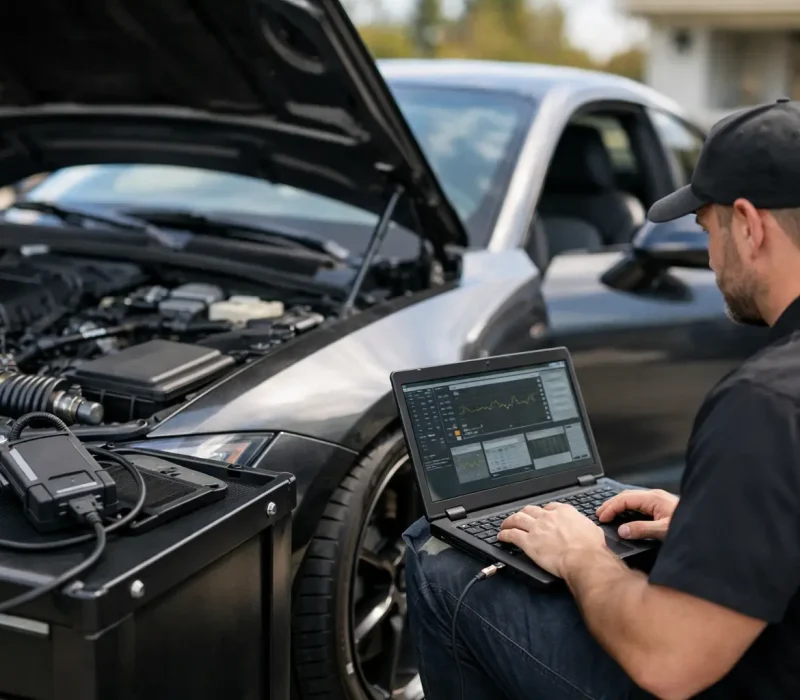



That amber DPF light rarely appears at a convenient time. For many diesel owners, it shows up just before work, during the school run, or when the van is needed for a full day on the road. When you start looking into dpf cleaning Staffordshire services, what matters most is simple – can the fault be dealt with properly, without wasting a day at a garage and without being pushed into an expensive replacement that may not be necessary?
For the right vehicle and the right level of blockage, professional DPF cleaning can restore flow, improve drivability, reduce warning lights and help avoid bigger repair bills. But it is not magic, and it is not the same in every case. A good result depends on accurate diagnosis first, the correct cleaning method, and understanding why the filter blocked up in the first place.
Why DPF problems are so common
Modern diesel engines are built to control soot and emissions far more tightly than older vehicles. The diesel particulate filter is there to trap soot before it leaves the exhaust. Over time, the vehicle burns that soot off through regeneration. When everything is working properly, this happens in the background and the driver barely notices.
The problem is that many vehicles do not get the conditions they need for a full regen. Short journeys, stop-start traffic, repeated cold starts and low-speed local driving can all interrupt the process. That is why commuters, school-run vehicles, delivery vans and diesel cars used mostly around town are often the ones that develop DPF issues.
Towing, heavy loads and worn components can add to the problem too. If an injector is not performing correctly, an EGR valve is sticking, or the engine has carbon build-up affecting combustion, the DPF may clog faster than it can clear itself. In those cases, cleaning the filter without checking the wider system only treats part of the issue.
DPF cleaning Staffordshire drivers usually need
When drivers search for DPF cleaning Staffordshire support, they are usually dealing with one of a few common symptoms. The engine management light may be on. The vehicle may feel flat, slow to respond or stuck in limp mode. Fuel economy often drops off, and some drivers notice the cooling fan running on after a journey or the engine trying repeated regens without success.
Small commercial vehicles are especially vulnerable because downtime costs money. If a van is off the road, missed jobs and delayed deliveries quickly matter more than the warning light itself. That is why a mobile service can be such a practical option. Having diagnostic and cleaning work carried out at home or at work saves time, and for many owners it removes the hassle of arranging transport around a garage booking.
What professional DPF cleaning should involve
A proper service starts with diagnostics, not chemicals. Before any cleaning begins, the technician should check fault codes, soot load, pressure readings and the broader condition of the engine system. If there is a sensor fault, boost leak or combustion issue behind the blockage, that needs identifying. Otherwise the warning light may clear briefly and return not long after.
Once the diagnosis supports cleaning, a chemical DPF clean can be a very effective solution for moderate soot build-up. The aim is to break down the soot and ash accumulation enough to restore exhaust flow and support normal regeneration again. When carried out with professional equipment and the right process, this can be a cost-effective alternative to replacing the filter.
That said, there are limits. If the DPF is physically damaged, cracked internally, heavily ash-loaded beyond recovery or contaminated by another engine fault, cleaning may not be the answer. A trustworthy technician should be clear about that rather than selling a service that is unlikely to last.
Mobile DPF cleaning versus garage booking
The main advantage of mobile work is convenience, but that only matters if the technical standard is still there. A proper mobile service should offer dealer-level diagnostics, professional-grade tools and a clear explanation of what is being done and why.
For many drivers in Tamworth and across the wider area, mobile support makes sense because DPF faults often appear when the vehicle is still driveable but already compromised. If the car is in reduced power mode, or if you are trying to keep a work van available, booking an on-site appointment can be the fastest route back to normal use.
It also gives the owner a clearer picture of the vehicle in its real-world use. A technician can discuss the actual driving pattern, recent warning signs and any history of poor MPG or repeated failed regens. That context matters because DPF issues are rarely random.
Signs your DPF needs attention now
Some symptoms can wait a little. Others should not be ignored. If the warning light is on and the vehicle still drives normally, there may be a short window to deal with the problem before it escalates. Once the car starts entering limp mode, refusing to complete regens or showing repeated fault codes, the risk of additional stress on the turbo, sensors and exhaust system increases.
Watch for sluggish acceleration, rising fuel consumption, frequent cooling fan operation, rougher running during regen attempts and a noticeable lack of torque. Diesel owners who do a lot of short trips often put these signs down to general age or poor fuel quality, when in reality the DPF is becoming more restricted.
The earlier it is diagnosed, the better the chance of avoiding replacement. Leaving it too long can turn a manageable cleaning job into a more expensive repair path.
What affects the result after cleaning
A successful clean is only part of the fix. The vehicle still needs the right operating conditions afterwards. If your driving remains mostly short urban trips, the DPF may start loading up again quickly. In some cases, changing the route once or twice a week to allow a proper sustained run can make a real difference.
Engine condition also matters. Excessive soot production often points to a wider issue such as injector imbalance, EGR problems, boost leaks or carbon build-up. These faults do not always trigger obvious symptoms at first, but they can shorten the life of the DPF and reduce fuel economy at the same time.
That is why experienced technicians look at the whole picture. At High REVS Performance, the practical goal is not just to clear a warning light. It is to restore reliable running, prevent repeat problems and keep the vehicle working as it should within safe manufacturer tolerances.
Is cleaning better than replacement?
In many cases, yes – but not always. Replacement DPF units can be costly, especially on newer diesels or commercial vehicles. If the filter structure is sound and the blockage is still recoverable, cleaning is often the sensible first option. It can save a substantial amount compared with fitting a new unit, while restoring performance and allowing the existing system to operate properly again.
The trade-off is that cleaning only works well when the diagnosis is accurate and the underlying cause is either minor or already addressed. If the engine is over-fuelling, if there is a persistent sensor issue, or if the filter is already too far gone, replacement may be unavoidable.
That is why blanket promises are a red flag. Good DPF work is based on evidence from the vehicle, not guesswork.
Choosing a DPF cleaning service in Staffordshire
Not every service is equal. If you are comparing options, look for clear technical process, proper diagnostics, experience with diesel systems and realistic advice on likely outcomes. Convenience matters, but not more than competence.
It is also worth choosing a provider who understands how DPF issues tie into wider engine performance. On many modern diesels, poor economy, carbon build-up, sluggish throttle response and repeated emission faults are connected. A specialist who can diagnose those links is far more useful than someone offering a one-size-fits-all clean.
For drivers who rely on their vehicle daily, the best service is the one that gives you a straight answer quickly. Sometimes that means cleaning is the right move. Sometimes it means another fault has to be dealt with first. Either way, clarity saves time and money.
If your diesel is showing early DPF symptoms, do not wait for it to force the issue. The sooner it is checked, the better the chance of restoring proper flow, keeping costs under control and getting back to reliable driving without losing a day to the workshop.