



That dashboard light rarely appears at a convenient moment. It comes on before work, before a long run on the motorway, or just as the car starts feeling flat, hesitant or stuck in limp mode. When people search for engine diagnostics near me, they usually do not want jargon – they want to know what is wrong, what it will cost to put right, and whether the vehicle is safe to keep using.
A proper diagnostic check should do more than plug in a scanner and read a fault code. Modern vehicles store a lot of information, but the code itself is only the starting point. The real job is understanding why the warning has appeared. That might mean tracing a boost issue, checking live sensor data, confirming whether a DPF problem is caused by repeated short journeys, or spotting the signs of carbon build-up that is slowly affecting airflow and performance.
What engine diagnostics near me should actually include
If you are comparing local options, the main difference is not whether someone owns a code reader. Plenty do. The difference is whether the diagnostic process is thorough enough to save you money and avoid unnecessary parts replacement.
A useful engine diagnostic appointment should begin with the symptoms, not the machine. If the vehicle has poor throttle response, increased fuel use, rough running, intermittent warning lights or reduced power under load, those details matter. They help narrow down whether the issue is likely to sit with air intake, fuelling, emissions control, sensors, turbo operation or software behaviour.
From there, proper diagnostics normally involve fault-code reading, live data analysis and basic system checks to match the electronic information with how the vehicle is behaving in the real world. For diesel owners in particular, this matters because one fault often creates another. A blocked DPF, weak EGR performance, tired sensor readings or excess soot from incomplete combustion can all trigger symptoms that overlap.
That is why a cheap scan can end up being expensive. If someone clears the warning light without identifying the cause, the problem usually comes back. Worse, the underlying issue may continue to damage performance, economy and reliability in the meantime.
Why warning lights are not always the full story
An engine management light can point to a clear fault, but it can also be the result of a wider running problem. This is where experience matters.
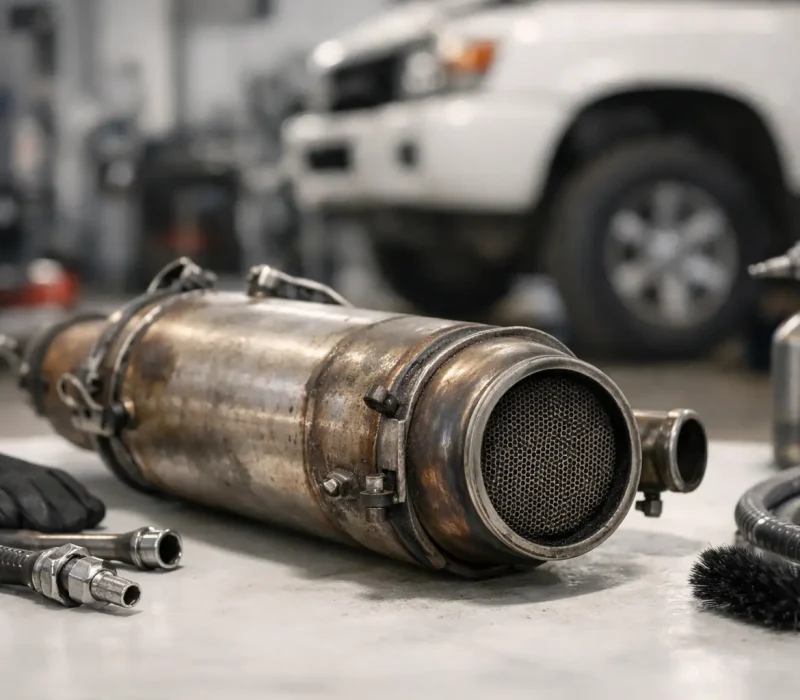
For example, a code linked to low boost pressure does not automatically mean the turbocharger has failed. It could be a split hose, a sticking actuator, a sensor issue or carbon-related restriction affecting airflow. A DPF warning may indicate genuine filter loading, but it can also be driven by the reason the filter is filling too quickly in the first place.
This is especially relevant for drivers who mainly do short local trips, regular stop-start commutes or mixed driving with towing and load carrying. Those patterns can create conditions where soot builds faster, regeneration struggles, and the car starts showing faults that look more dramatic than they are. The right diagnosis separates a serviceable issue from a major mechanical one.
Mobile diagnostics makes sense for most drivers
For many vehicle owners, convenience is not a bonus – it is the deciding factor. Taking time off, arranging lifts, waiting in reception and losing half a day to a garage visit is not ideal if the vehicle is still drivable and the issue needs checking quickly.
Mobile diagnostics changes that. Instead of adding disruption to an already inconvenient problem, the vehicle can be checked at home or at work. For commuters, parents, small businesses and light fleet operators, that usually means less downtime and faster decisions.
There is another practical advantage. Faults often show up in the environment where the vehicle is normally used. If a car struggles on cold starts outside your house, idles poorly on the driveway or shows repeat DPF and engine warnings during your usual journey pattern, a mobile visit can provide useful context that a workshop appointment sometimes misses.
In areas like Tamworth and across Staffordshire, where many drivers rely on their vehicle daily for commuting, site travel or commercial use, on-site diagnostics often solves the biggest problem first – lost time.
When engine diagnostics near me leads to the right fix
The best outcome from diagnostics is clarity. Not every fault needs the same next step, and that is where honest advice matters.
Sometimes the answer is a direct repair. A failed sensor, boost leak or electrical fault may need parts and fitting. Sometimes the issue points towards maintenance that has been left too long, such as intake contamination, excessive carbon deposits or DPF loading. In those cases, diagnostics is the stage that confirms the cause before money is spent.
There are also cases where performance and drivability problems are not down to a hard failure at all. A vehicle may feel sluggish because of carbon build-up, inefficient combustion or software calibration that does not suit the way it is used. If the engine is mechanically sound, those issues can often be improved without jumping straight to major component replacement.
That is particularly useful for drivers chasing better economy, stronger low-end torque or smoother response for motorway miles, towing or everyday use. The vehicle has to be healthy first. Diagnostics confirms that baseline.
Dealer-level results do not have to mean dealer inconvenience
A lot of drivers assume they must book with a main dealer to get meaningful answers from a warning light. Sometimes that is appropriate, particularly for warranty work or manufacturer campaigns. But once a vehicle is out of that network, most owners simply need competent fault finding using proper tools and good judgement.
Dealer-level diagnostics is really about process and equipment, not the badge over the door. Genuine tools, accurate software communication and the ability to interpret live vehicle data properly are what matter. So is knowing the difference between a one-off stored code and a repeat fault that indicates a deeper issue.
This is also where generic tuning and guesswork should be avoided. If a vehicle has an active engine issue, the priority is diagnosis and mechanical health. Any performance upgrade or remap should come afterwards, and only if the vehicle is in suitable condition. Safe calibration always starts with a sound engine, clean data and realistic tolerances.
Common signs you should book diagnostics soon
Some faults are obvious because the warning light is already on. Others build gradually, and drivers get used to them. That can lead to higher fuel use, reduced reliability and more expensive repairs later.
If your car has gone flat below the rev range where it used to pull well, if it hesitates when accelerating, smokes more than normal, regenerates too often, starts using more fuel, or drops into limp mode under load, it is worth getting it checked properly. The same applies if a fault has been cleared before and then returned.
Diesel drivers should be especially cautious with repeat DPF warnings. A forced regeneration may help in the short term, but if the underlying cause is not resolved, the cycle tends to repeat. Proper diagnostics helps determine whether the issue is driving pattern, sensor behaviour, soot load, airflow restriction or another engine-management fault feeding into the emissions system.
Choosing a local diagnostic service
When you are looking at local options, ask how the diagnosis is carried out and what happens after the scan. If the answer is vague, that is a warning in itself. You want a service that explains the fault clearly, relates it to the symptoms you have noticed, and gives you a practical next step.
That next step might be repair, cleaning, further testing or simply advice on how the vehicle is being used. It depends on the car, the engine type and the fault history. Good diagnostics is not about pushing the biggest bill. It is about getting to the root cause and protecting the engine from a problem that gets worse through delay.
High REVS Performance takes that approach because convenience only matters if the technical work is right. Mobile service should not mean cut corners. It should mean professional diagnostics delivered where your vehicle is, with the same focus on accuracy, safety and sensible recommendations you would expect from a specialist.
If your car is warning you that something is off, treat that early check as money well spent. A clear answer today is usually cheaper than a bigger repair next month.



Comment (01)