


That flat pull in the mid-range, slower turbo response, rising fuel use, and the occasional warning light usually do not happen overnight. Diesel engines tend to lose performance gradually, which is why many owners adapt to the decline without realising how much drivability, torque, and economy they have lost. If you are wondering how to restore diesel performance, the answer is rarely one single fix. It is usually a matter of identifying what is restricting airflow, fuelling, or regeneration – then correcting it properly.
Modern diesels are efficient and strong when everything is working as it should. They are also more sensitive than older systems. A partially blocked DPF, carbon build-up in the intake, a tired sensor, or a poor calibration can all leave the vehicle feeling heavy, hesitant, and less economical. The right approach is not guesswork. It is a structured process based on diagnostics, condition, and how the vehicle is actually used.
What causes diesel performance to drop?
Most diesel performance complaints come down to restriction, contamination, or incorrect control signals. The engine needs clean airflow, accurate sensor data, proper boost control, and an exhaust aftertreatment system that can regenerate as intended. If one part of that chain starts to drift, the whole vehicle can feel less responsive.
DPF loading is one of the most common causes. Short journeys, interrupted regeneration cycles, and low-speed driving can leave soot levels climbing until back pressure starts affecting performance. In more advanced cases, the vehicle may enter limp mode or trigger repeated warning lights. Owners often assume the engine itself is worn out when the real issue is that the exhaust system cannot breathe properly.
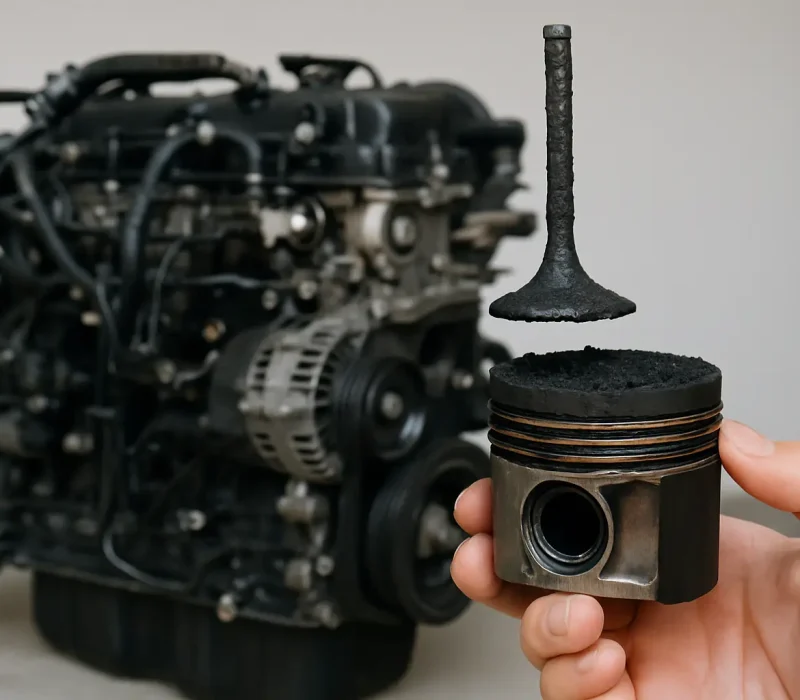
Carbon build-up is another major factor. Over time, soot and oil vapour can collect around the intake path, EGR system, and inlet manifold. That reduces airflow and upsets combustion efficiency. The result can be sluggish acceleration, rougher running, reduced MPG, and a noticeable lack of urgency when overtaking or towing.
Then there are sensor and control issues. A faulty MAF sensor, boost leak, sticking EGR valve, or weak actuator can all affect how the ECU manages fuelling and turbo pressure. In those cases, chasing performance with parts swapping usually costs more in the long run than carrying out proper diagnostics first.
How to restore diesel performance without wasting money
The most cost-effective route is to start with evidence, not assumptions. If a diesel feels down on power, the first job is to read fault codes, assess live data, and check whether the engine is achieving the requested air mass, boost pressure, and regeneration behaviour. That quickly separates a maintenance issue from a calibration issue.
A good diagnostic process should look at DPF soot load, differential pressure readings, EGR operation, intake performance, and sensor accuracy. It should also consider driving pattern. A diesel used mainly for school runs and local stop-start traffic will develop different problems from one used for motorway miles or towing.
This is where many owners lose money. They replace a sensor because of internet advice, book a generic forced regeneration, or fit parts that do not address the actual restriction. That may clear a symptom for a short time, but it will not restore proper performance if the underlying cause is still there.
Start with the DPF if the car feels strangled
If the engine feels reluctant to rev, fuel economy has worsened, and there are DPF warnings or regeneration issues, the DPF deserves attention early. A soot-loaded filter increases back pressure, which affects turbo efficiency and overall engine response. The vehicle can feel as though it is constantly towing weight.
A chemical DPF clean is often the sensible step when the filter is blocked but still structurally serviceable. Done correctly, it can reduce soot loading, improve exhaust flow, and help normal regeneration resume. That is often enough to restore lost torque and reduce the chances of an expensive replacement.
It depends on the condition of the filter. If the DPF has heavy ash accumulation, internal damage, or repeated failures caused by another fault such as injector issues or a boost leak, cleaning alone may not be enough. The point is to assess it properly rather than treating every DPF warning as the same problem.
Carbon build-up can quietly rob power
Not every diesel with poor performance will show a fault code. Carbon contamination is a good example. The engine may still run, but airflow is reduced and combustion quality suffers. Drivers often describe the vehicle as dull, lazy, or less willing from low revs.
Professional carbon cleaning can help restore airflow and improve how smoothly the engine responds. On diesel vehicles used for urban driving, this can make a noticeable difference to throttle response and general drivability. It can also support the wider system by reducing the conditions that contribute to poor combustion and excessive soot production.
Again, context matters. Carbon cleaning is not a substitute for fixing a mechanical or electrical fault. If the turbo system is leaking, the MAF is under-reading, or the EGR is stuck, those issues still need correcting. Cleaning works best as part of a proper restoration plan, not as a catch-all answer.
Sensors, boost leaks, and small faults make a big difference
Diesel engines rely heavily on accurate data. If a sensor is reading incorrectly, the ECU may limit fuelling, alter boost control, or trigger protective strategies. Even without a dashboard warning, that can leave the vehicle feeling noticeably weaker.
A common example is a split boost hose or minor air leak. The turbo may still spool, but the engine will not receive the pressure it is expecting. The result is poor pull under load, inconsistent acceleration, and sometimes increased smoke. The same applies to lazy airflow sensors and sticking EGR valves. They can drag performance down while looking like a bigger problem than they really are.
This is why dealer-level diagnostics matter. You need to compare requested values with actual values, not just read stored codes. Live data tells you whether the engine is breathing and boosting correctly, whether regeneration is happening as it should, and whether the fault is mechanical, electrical, or software-related.
When remapping is the right next step
Once the engine is healthy and underlying faults are sorted, calibration becomes the next conversation. Many diesel vehicles are delivered with conservative factory settings designed to cover wide fuel quality variations, climate conditions, and market requirements. That often leaves usable torque and efficiency on the table.
A safe, custom-written ECU remap can restore diesel performance in a way that feels natural rather than forced. The gains are not just about peak power figures. On a well-maintained diesel, the biggest improvement is often in the mid-range – stronger torque delivery, better throttle response, smoother overtaking, and less need to work the gearbox.
For some drivers, an economy-focused calibration makes the most sense. High-mileage commuters and fleet users may care more about improved MPG and reduced strain than outright pace. Others want a balanced setup that sharpens response while keeping everyday efficiency. If towing is part of the vehicle’s workload, torque delivery and drivability matter even more than headline bhp.
The important part is safety. Remapping should stay within manufacturer tolerances and be written for the specific vehicle, not loaded as a generic file. Done properly, it complements a healthy engine. Done badly, it can exaggerate existing faults.
How to keep restored diesel performance from slipping again
Once performance has been recovered, maintenance habits make the difference between a lasting result and a short-lived improvement. Diesel engines respond well to being used properly. That means giving the vehicle enough regular run time for full warm-up and regeneration, especially if most daily driving is local.
Good servicing matters as well. Correct oil specification, timely filter changes, and attention to early warning signs help prevent repeat issues. If the vehicle starts using more fuel, regenerating too often, or losing pull again, it is better to check it early than wait for limp mode.
Driving style also plays a role. Constant short trips with cold starts are harder on a modern diesel than steady mixed driving. That does not mean a diesel cannot cope with local use, but it does mean maintenance and system condition become more important.
A practical answer for local diesel owners
For drivers around Tamworth and Staffordshire, convenience matters almost as much as the technical fix itself. If your car, van, or light commercial vehicle is already short on power or showing DPF symptoms, losing another day at a workshop is not ideal. A mobile service with proper diagnostics, DPF cleaning capability, and safe custom remapping can solve that problem at home or work without cutting corners.
High REVS Performance works in exactly that space – restoring performance, economy, and drivability with a process-led approach rather than guesswork. That matters because the best result usually comes from combining the right diagnosis with the right treatment, not selling the same answer to every vehicle.
If your diesel feels slower than it used to, assume there is a reason for it and get that reason identified properly. Most performance loss starts small, but small diesel issues have a habit of turning into bigger bills when they are ignored.