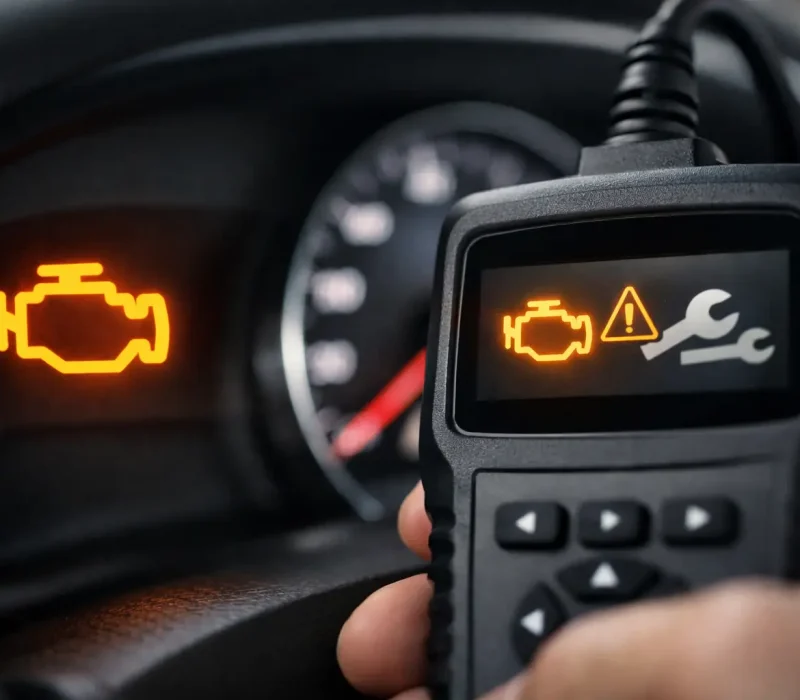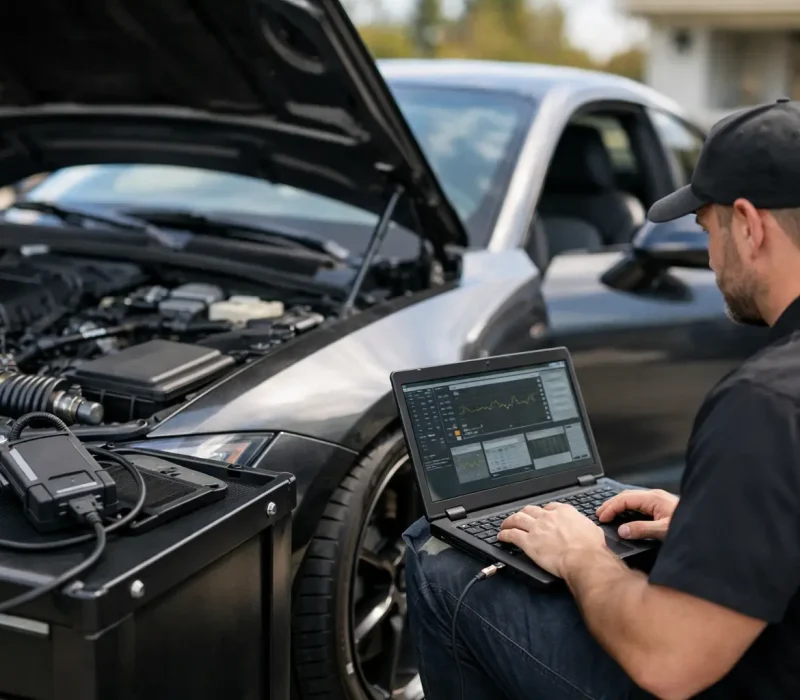



A diesel that suddenly loses power on the A5, will not pull properly uphill or refuses to rev beyond a set point is not always facing a major mechanical failure. At High REVS Performance, our mobile diagnostics work across Tamworth and Staffordshire regularly finds that the top sensors causing limp mode are reporting figures the ECU cannot safely trust. The ECU then limits boost, fuel or engine speed to protect the engine, turbocharger and emissions system.
Limp mode can feel alarming, particularly if you rely on the vehicle for commuting, towing or work. The sensible next step is not to fit parts on a guess or book a remap in the hope it will mask the fault. A proper on-site diagnostic session identifies what the ECU has seen, tests the live data behind the warning light and separates a failed sensor from a wiring, air-leak, DPF or mechanical issue.
What limp mode is protecting your diesel from
Modern diesel engines constantly compare readings from multiple sensors. The ECU expects airflow, boost pressure, exhaust temperature, fuel pressure and DPF readings to relate to one another. If one figure is implausible, outside a safe range or fails to change when it should, the ECU can store a fault code and apply reduced-power mode.
That protection is useful. Continuing to demand full torque with uncontrolled boost, excessive exhaust temperatures or a badly restricted DPF can turn a manageable fault into an expensive repair. The trade-off is that limp mode itself does not tell you which component is at fault. A dashboard message such as “Engine fault” or “Reduced performance” is only the starting point.
On many vehicles, switching the ignition off and back on may temporarily restore power. That does not mean the problem has fixed itself. It usually means the fault has not been detected again during the next drive cycle – until the same conditions return, often under hard acceleration, motorway speeds or when towing.
The top sensors causing limp mode
Mass airflow sensor – incorrect air measurement
The mass airflow sensor, commonly called the MAF, measures how much air enters the engine. The ECU uses it to calculate fuelling and to check whether the EGR system and turbocharger are behaving as expected.
A contaminated or failing MAF can under-read or over-read airflow. Typical signs include flat acceleration, poor economy, hesitation and a vehicle that enters limp mode when you ask for overtaking power. Carbon deposits in the intake and an EGR system that is not flowing correctly can create similar readings, which is why replacing the MAF without testing it can waste money.
During mobile diagnostics, we compare requested and actual airflow in live data, rather than relying on a generic code description alone. If airflow is genuinely restricted, an engine carbon-cleaning assessment may be more relevant than a new sensor.
MAP or boost-pressure sensor – turbo readings that do not add up
The manifold absolute pressure sensor, often called the MAP sensor, tells the ECU the pressure in the inlet system. It is one of the most common causes of limp mode on turbo diesel cars and vans because it is central to boost control.
If the sensor is coated in oil and soot, reads inaccurately or has an electrical fault, the ECU may believe the turbo is producing too much or too little boost. It will then limit power. However, a boost-pressure fault code does not automatically condemn the sensor. Split intercooler hoses, sticking turbo actuator mechanisms, vacuum-control faults and leaks in the charge-air system can all produce the same complaint.
This is where live data matters. We look at commanded boost against actual boost while the fault conditions are reproduced safely. That gives a much clearer answer than fitting a sensor because the code contains the word “pressure”.
DPF differential-pressure sensor – a common issue on short-run diesels
The DPF differential-pressure sensor measures the pressure before and after the diesel particulate filter. From this, the ECU estimates soot loading and decides when regeneration is needed. If it sees excessive pressure, it may reduce performance to prevent exhaust temperatures and back-pressure rising further.
The sensor itself can fail, its pressure pipes can block with soot or crack, and the DPF may genuinely be heavily loaded. Those are three very different repairs. Treating a blocked pressure pipe as though it needs a replacement DPF is an avoidable expense; ignoring a genuinely restricted DPF can leave the vehicle repeatedly in limp mode.
For drivers doing short local trips, this issue is especially common. A DPF needs the right conditions to regenerate, and interrupted runs can allow soot loading to build. Our diagnostic checks establish whether the pressure reading is credible, whether regeneration has been inhibited and whether a mobile DPF chemical clean is appropriate. Chemical cleaning is not a substitute for correcting a failed sensor, but it can restore a serviceable filter when excessive soot is the underlying problem.
Exhaust gas temperature sensors – heat protection at work
Exhaust gas temperature, or EGT, sensors protect the turbocharger, DPF and catalytic components from excessive heat. A failed sensor may report a temperature that is implausibly high, implausibly low or static when the exhaust is clearly warming up.
Because the ECU cannot safely manage regeneration or turbo protection without dependable temperature data, it may disable active regeneration and introduce limp mode. This can then lead to a secondary DPF loading issue. On a diesel with both an EGT code and a DPF warning, the order of diagnosis matters. Clearing the code and forcing a regeneration before resolving inaccurate temperature data is not a professional repair path.
Fuel-rail pressure sensor – power demand without enough fuel pressure
The fuel-rail pressure sensor monitors the high-pressure fuel system. If actual rail pressure cannot meet the ECU’s requested figure under load, the vehicle may lose power or stop altogether. Drivers often notice the problem during a hard pull in a higher gear, when joining a dual carriageway or with a loaded van.
The sensor may be the issue, but so can a fuel filter restriction, wiring fault, pressure-control valve, injector leak-back or fuel-supply problem. Diagnostic live data shows whether requested and actual pressure are separating and when it happens. That prevents a simple filter or supply fault being misdiagnosed as an expensive high-pressure pump failure.
Crankshaft and camshaft position sensors – timing signals the ECU cannot lose
Crankshaft and camshaft sensors tell the ECU where the engine is in its cycle. Their faults often cause difficult starting, cutting out, a no-start condition or an intermittent limp mode rather than a straightforward loss of turbo power.
Heat-related failures are particularly frustrating. A vehicle may drive normally from cold, then cut power after a longer journey and restart once it has cooled. Stored fault codes, signal synchronisation data and wiring checks are needed before the sensor is blamed. An intermittent connector issue can look exactly like a failing sensor.
A realistic mobile diagnostic example
A common call-out is a 2.0-litre diesel Volkswagen Transporter used by a Tamworth tradesperson. It drives acceptably around town, but after joining the M42 with tools in the back, the glow-plug light flashes and the van loses most of its pull. Restarting it at the next stop restores power, only for the same problem to return under load.
That symptom is often described as “the turbo has gone”. On-site diagnostics may instead show actual boost exceeding the ECU target, alongside a MAP reading that does not respond consistently. From there, the technician checks the sensor condition, boost-control data, hoses and actuator operation. If the fault is sensor-related, replacing the correct component and verifying the repair is far better than guessing at a turbocharger.
The same visit can also identify whether the van has DPF soot loading or intake carbon build-up contributing to the complaint. For a working vehicle, that means less downtime and no need to arrange a separate trip to a garage simply to establish what is wrong.
Why diagnosis comes before a Stage 1 remap
A healthy diesel can respond very well to a custom-written Stage 1 remap, with stronger torque, sharper response and potentially improved economy when driven sensibly. But a remap should never be used to work around limp mode, boost codes or DPF faults.
Before any ECU calibration work, the engine needs to be operating correctly within manufacturer tolerances. A sensor fault can distort the information used to control fuelling, boost and emissions. Fix the cause first, confirm stable readings and then assess whether an Eco, Balanced or Stage 1 Power remap suits how you use the vehicle.
If your diesel is losing power, flashing warning lights or repeatedly returning to limp mode around Tamworth or Staffordshire, book a mobile diagnostic appointment with High REVS Performance. We can test the sensor data at your home or workplace, identify the fault properly and advise whether the next step is a repair, DPF chemical clean or, once the vehicle is healthy, a safe custom ECU remap.