


A loaded caravan or work trailer exposes every weak point in a vehicle’s drivability. The aim is not simply to make more peak power. To improve towing torque safely, the priority is stronger, more controlled pulling power at the engine speeds you actually use, without exceeding the limits of the engine, gearbox, clutch, cooling system or legal towing capacity.
For many diesel owners, a well-calibrated ECU remap can make towing feel considerably easier. Hills require fewer downchanges, pulling away is smoother and motorway overtakes need less planning. But those gains only count when the vehicle is healthy, the calibration is written for that vehicle, and the driver continues to tow within the limits set by the manufacturer.
What towing torque really changes
Torque is the twisting force the engine produces. In practical terms, it is what helps a vehicle move a heavy load from low revs and maintain speed on an incline. Peak figures can look impressive, but the shape of the torque curve matters far more when towing.
A useful towing calibration brings torque in progressively through the mid-range, rather than delivering a sharp surge that overwhelms traction or puts unnecessary shock through the drivetrain. This is especially valuable in a manual vehicle, where excessive low-rev torque can shorten clutch and dual-mass flywheel life if the driver repeatedly pulls away under heavy load.
The best result depends on the vehicle and what it tows. A family SUV towing a caravan may benefit from smoother response and stronger mid-range flexibility. A van or pickup used for equipment may need controlled torque delivery for frequent loaded starts. A lightly loaded trailer does not require the same approach as a car regularly operating close to its permitted train weight.
Start with the limits, not the tuning figures
No remap changes the legal maximum trailer weight, gross vehicle weight, gross train weight, towball nose weight or axle limits. These figures are set by the vehicle manufacturer and appear in the handbook, VIN plate or approved technical data. Staying within them is fundamental, regardless of how capable the engine feels after tuning.
It is also worth checking your driving licence entitlement, trailer brakes, tyre load ratings and the condition of the towbar. Extra engine torque cannot compensate for an overloaded trailer, poor weight distribution or an unstable caravan. A safe outfit should be correctly loaded, with weight kept low and close to the trailer axle, while remaining within the permitted nose weight.
Towing can also increase heat load. Long climbs, stop-start traffic and hot weather place greater demand on the cooling system, transmission and engine oil. If a vehicle already struggles with high coolant temperatures, gearbox warnings or reduced-power mode, more torque is not the first answer. The fault needs diagnosing first.
Check vehicle health before adding torque
A safe performance improvement begins with a proper assessment. Modern engines adjust fuelling, boost and torque continuously using sensor information. If airflow readings are inaccurate, a DPF is restricted or the turbo control system is not operating correctly, a generic performance file can hide the problem temporarily while making the underlying issue worse.
Before tuning a regular tow vehicle, checks should include fault codes, live data, boost control, intake condition and service status. On diesel vehicles, DPF soot loading and regeneration history are particularly relevant. A DPF that is struggling to regenerate can cause poor response and limp mode under load. Towing-related exhaust temperatures may then add to the problem.
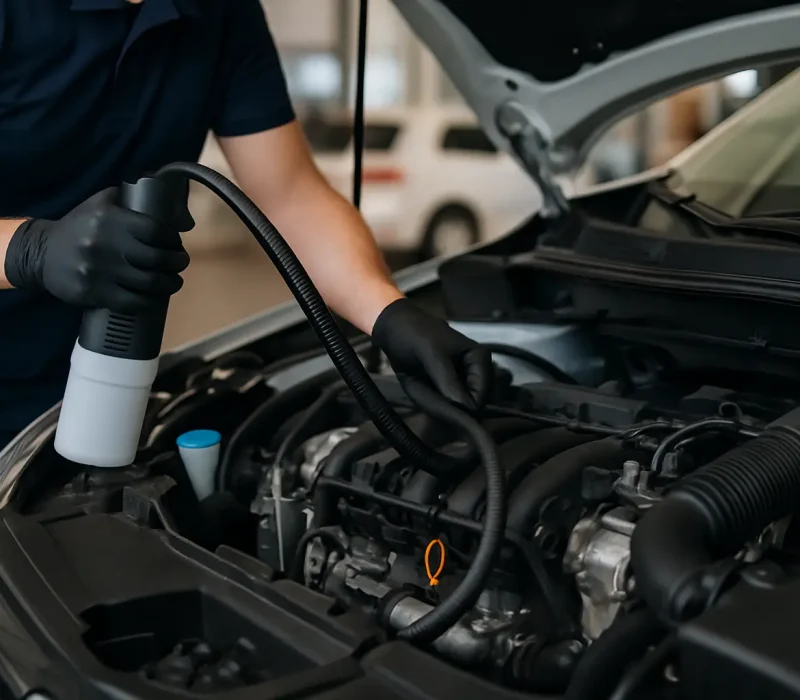
Carbon build-up is another common issue on many modern diesel engines. Deposits in the intake system can restrict airflow and make a vehicle feel flat, hesitant or smoky under acceleration. Addressing the cause and restoring airflow before remapping gives the calibration a sound foundation.
Pay attention to the clutch or gearbox as well. If a manual vehicle slips under hard acceleration before any tuning, it will not cope better with additional torque. An automatic gearbox should change cleanly and show no signs of overheating, shunting or delayed engagement. In these cases, repair and maintenance come before performance work.
How to improve towing torque safely with an ECU remap
A quality Stage 1 or balanced remap should be custom-written for the engine, ECU software and intended use. It is not a case of loading the same file into every vehicle with the same badge. Factory engines can have different software versions, drivetrain specifications and states of health.
For towing, the focus should be on usable mid-range torque, clean combustion and sensible torque management. Fuel, boost, injection timing and torque limiters must work together. The calibration should remain within sensible manufacturer tolerances, respecting protective strategies rather than disabling them for the sake of a headline number.
This approach can improve throttle response and reduce the need to work the engine hard to maintain momentum. On a diesel, it may also allow the vehicle to hold a higher gear on moderate gradients, provided the engine is not being laboured. The result should feel composed, not aggressive.
There is a trade-off. The largest possible torque increase is not automatically the best choice for a vehicle that regularly tows. A moderate, progressive calibration is often the more sensible option for clutch life, transmission durability and predictable traction. Drivers who tow occasionally may prefer a Balanced remap, while high-mileage users may value an Eco-focused calibration that improves low-down flexibility without chasing maximum output.
At High REVS Performance, this is why tuning starts with vehicle-specific diagnostics and custom calibration rather than a one-size-fits-all file. The goal is to improve real-world drivability while protecting the systems that make the vehicle dependable.
Do not use tuning to mask a fault
Avoid any service that promises to remove warnings by switching off DPF, EGR, emissions or engine protection functions. Apart from the legal and MOT implications, these systems often point to a fault that needs resolving. A vehicle used on the road must remain emissions-compliant, and a responsible calibration retains the safeguards designed to protect the engine.
If a warning light is present, diagnose it. If the DPF is blocked, deal with the restriction. If a boost leak or sensor issue is reducing torque, repair it. Restored performance from a healthy engine is more valuable than an apparent gain built on a developing fault.
Supporting maintenance matters when you tow
A remap cannot replace routine maintenance, and towing gives neglected components less room for error. Use the correct engine oil specification and do not stretch service intervals simply because the vehicle still feels fine. Oil quality is vital for turbocharger protection, particularly where the engine works hard on long journeys.
Cooling system checks deserve the same attention. Confirm coolant level and condition, inspect for leaks, and investigate any history of overheating. Check intercooler hoses and intake pipework for splits or loose connections, as these can cause a loss of boost when the engine is under sustained load.
Tyres affect towing safety as much as engine output. Set pressures according to the manufacturer’s loaded guidance, inspect sidewalls and tread, and do not overlook the trailer tyres. Brakes, wheel bearings, trailer lights and breakaway equipment should all be checked before a long journey.
Drive the extra torque with mechanical sympathy
Improved torque makes towing easier, but it should not encourage harsh use. On a manual vehicle, avoid flooring the throttle at very low revs in a high gear. This puts high cylinder pressure and drivetrain load through the engine while leaving the turbo and gearbox working inefficiently. Select a lower gear and let the engine operate in its useful torque band.
With an automatic, use the appropriate towing mode if fitted. It can hold gears longer, reduce unnecessary shifting and help manage transmission temperatures. On long descents, use engine braking rather than relying entirely on the trailer and vehicle brakes.
Give the engine a moment to settle after a demanding climb or motorway run before switching off, especially on turbocharged vehicles. You do not need to idle for long periods, but avoiding an immediate shut-off after sustained high load is sensible practice.
Insurance, warranty and disclosure
An ECU remap is a vehicle modification and should be declared to your insurer. Failure to do so can affect cover if you need to make a claim. Check the policy position before work is carried out, particularly if you use the vehicle for business, carry tools or tow commercially.
If the vehicle is under manufacturer or dealer warranty, speak to the warranty provider first. Tuning may affect warranty cover, and the answer can vary by vehicle, policy and the nature of a future claim. Clear information upfront is better than an unpleasant surprise later.
The most satisfying towing upgrade is one you barely have to think about: a healthy vehicle that pulls cleanly, holds speed with less effort and remains calm under load. Build that result around correct weights, professional diagnostics, a measured calibration and proper maintenance, and every journey starts with a stronger margin of confidence.