

A turbo underboost repair example is most useful when it reflects the way the fault appears in real driving: a van that suddenly feels flat joining the A5, an engine-management light after towing, or limp mode halfway through a working day. High REVS Performance provides mobile diagnostics across Tamworth and Staffordshire, so the first job is to establish why the ECU is seeing too little boost pressure at your home or workplace, rather than fitting expensive parts on a guess.
For many diesel owners, the relevant code is P0299, usually described as turbocharger or supercharger underboost. That wording can make the turbo itself sound guilty. Sometimes it is, but a split boost hose, a sticking actuator, a vacuum control fault, an intake leak or excessive exhaust restriction can all produce the same complaint. The correct repair starts with evidence from the vehicle.
What an underboost fault feels like
Underboost means the actual boost pressure has failed to reach the level requested by the ECU under certain conditions. On a modern diesel, that normally shows up when the engine is under load rather than when it is idling on the drive.
You may notice weak acceleration, a delayed response when pulling away, poor overtaking performance, reduced MPG, or a vehicle that drops into limp mode until the ignition is cycled. A loaded van, a car used for regular motorway commuting or a vehicle towing a caravan will often expose the issue sooner because the turbo is being asked to work harder.
The warning light matters, but the driving pattern matters too. If power disappears only on a hard uphill pull, that points the diagnostic process in a different direction from a constant lack of response at all engine speeds.
Turbo underboost repair example: a Transporter with P0299
Consider a typical mobile diagnostic booking: a 2017 Volkswagen Transporter 2.0 TDI used by a Tamworth tradesperson. The van drives acceptably around town, but loses power at about 2,500rpm when carrying tools or joining the dual carriageway. The engine-management light appears, and a basic code reader reports P0299.
The owner assumes the turbo has failed. Replacing it would be a costly move, and in this case it would not fix the van.
At the appointment, the diagnostic session begins with a full vehicle scan, not just clearing the stored code. Freeze-frame information shows the engine load, revs and pressure readings at the moment the fault was logged. Live data during a controlled road test then compares requested boost pressure with actual boost pressure. This tells us whether the system is consistently falling short and when it happens.
A visual inspection finds light oil mist around the lower intercooler hose connection. A small amount of oil film is normal in many turbo diesel intake systems, but fresh mist around a joint is a useful clue. The hose clip has loosened and the sealing ring has begun to leak under higher boost pressure. At gentle throttle openings it remains almost unnoticed. Under load, charged air escapes, actual boost drops below target and the ECU limits power to protect the engine.
The repair is the hose connection and seal, followed by a check that the pipework is correctly seated and secure. The fault code is cleared only after the repair, and another road test confirms that requested and actual boost now track closely. Power returns, throttle response improves and the van can get back to work without an unnecessary turbo replacement.
That is a realistic turbo underboost repair example because it shows why fault codes are starting points, not parts lists.
How mobile diagnostics narrow down the cause
A proper on-site diagnostic appointment works through the boost system in a logical order. The aim is to identify the failed component or restriction while the vehicle is where you need it, saving the time and inconvenience of arranging a garage visit for an initial investigation.
Charge-air leaks and damaged hoses
Turbo hoses, intercooler joints and plastic boost pipes live with heat, vibration and pressure. A small split underneath a pipe, a worn seal or a loose clip can be difficult to spot without inspecting the system properly. Oil staining, a hissing noise under acceleration and a pressure shortfall on live data all support this diagnosis.
These faults are often far more economical to rectify than a turbocharger, but leaving them unresolved can make the turbo work harder and make the vehicle feel increasingly sluggish.
Vacuum lines, boost solenoids and actuators
Many variable-geometry diesel turbos use vacuum control or an electronic actuator to move the vane mechanism. If a vacuum hose cracks, a control solenoid performs poorly or the actuator cannot reach its commanded position, the turbo may not generate the boost requested by the ECU.
Live readings and actuator tests help separate a control issue from a mechanical turbo problem. This is especially valuable on working vehicles, where replacing components at random creates avoidable downtime and cost.
Variable vanes and turbo condition
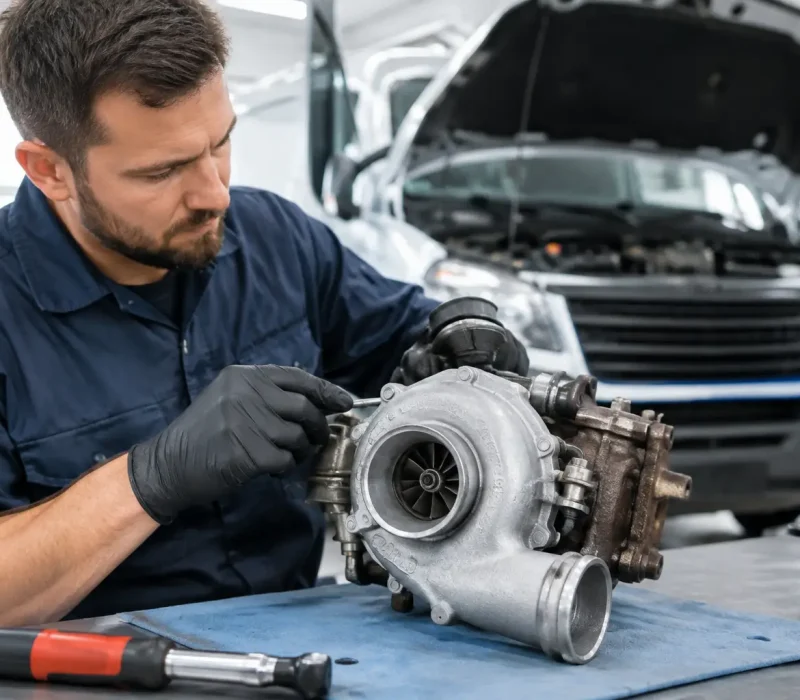
Short journeys, soot contamination and age can contribute to stiff variable vanes. Depending on the vehicle, the fault may be a turbo mechanism that does not move freely, excessive shaft play or an internal turbo issue. The evidence needs to be clear before recommending a turbo repair or replacement.
A vehicle with genuine turbo wear may also produce unusual whistling, smoke, oil consumption or recurring underboost despite sound pipework and controls. Those symptoms deserve a more careful assessment than simply loading a stronger calibration.
DPF restriction and exhaust-side problems
The DPF is part of the underboost conversation on many modern diesels. If exhaust back pressure is excessive because the filter is heavily loaded or unable to regenerate properly, exhaust flow through the turbo is affected. The result can be reduced performance, poor economy and fault codes that appear to blame the boost system.
This does not mean every P0299 code needs a DPF clean. Diagnostic values such as differential pressure, soot load, regeneration history and supporting fault codes determine whether the DPF is contributing. Where it is, High REVS Performance’s mobile DPF chemical cleaning service can address the restriction without immediately moving to the cost of DPF replacement.
Why clearing the code is not a repair
Clearing P0299 may restore full power for a short period, particularly if the ECU has put the vehicle into limp mode. It does not restore a leaking hose, free off a sticking actuator or reduce a blocked DPF. The code usually returns as soon as the same driving conditions occur.
The same applies to fitting a tuning box or requesting a remap to mask the issue. A healthy engine can benefit from a custom-written Stage 1 remap within manufacturer tolerances, with stronger torque and more responsive acceleration. A vehicle with unresolved boost control faults should be repaired first. Increasing demand on a system that cannot achieve standard boost pressure is not a sensible performance upgrade.
Once the fault is resolved and verified, a Stage 1 calibration can be considered on its own merits. For a Transporter, Transit, BMW diesel or family SUV, the right option depends on how the vehicle is used – daily commuting, towing, carrying equipment or simply improving overtaking response. The calibration should suit the specific vehicle and its condition, not compensate for a warning light.
What to have ready for a mobile appointment
The fastest route to a useful diagnosis is to describe exactly what has happened. Say whether the light appeared under acceleration, whether the vehicle enters limp mode, whether work has recently been carried out, and whether there are smoke, noise or DPF warning symptoms. If you have a code from a handheld reader, keep it, but do not rely on the description alone.
Avoid repeatedly pushing the vehicle hard to see if the fault returns. If it is losing power badly, smoking or making a pronounced siren-like turbo noise, reduce use until it can be assessed. This protects the vehicle and gives the technician a clearer picture of the original fault.
A mobile diagnosis is particularly practical for vans and busy drivers because the inspection, scan data and initial checks can be completed at your premises. Where a repair requires parts or further work, you have an evidence-based explanation of the next step rather than an invoice for an unproven turbo.
If your diesel has a P0299 code, intermittent limp mode or weak acceleration under load, book a mobile diagnostic appointment with High REVS Performance. We can assess the boost system at your Tamworth or Staffordshire location, identify whether the cause is a leak, control fault, turbo issue or DPF restriction, and advise the right repair before discussing a safe Stage 1 remap.