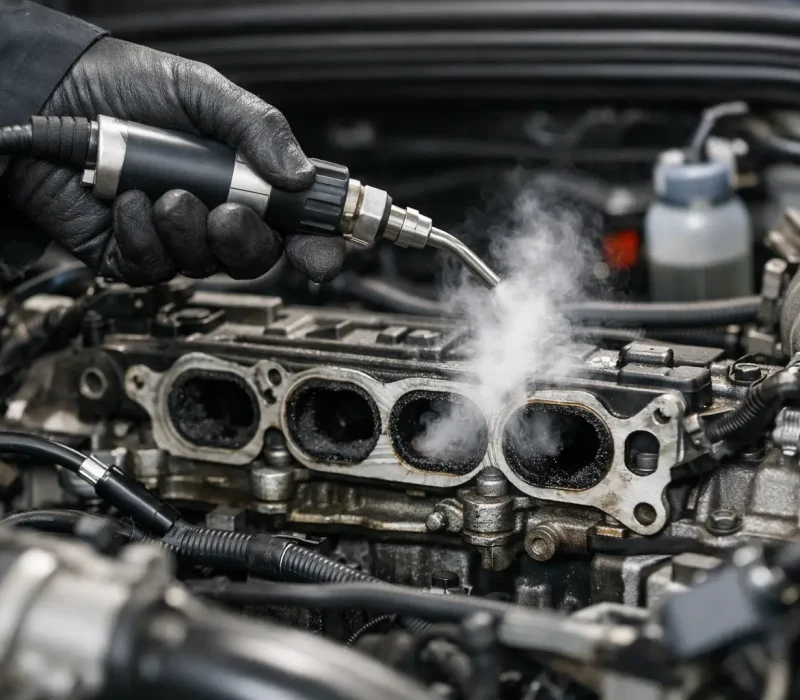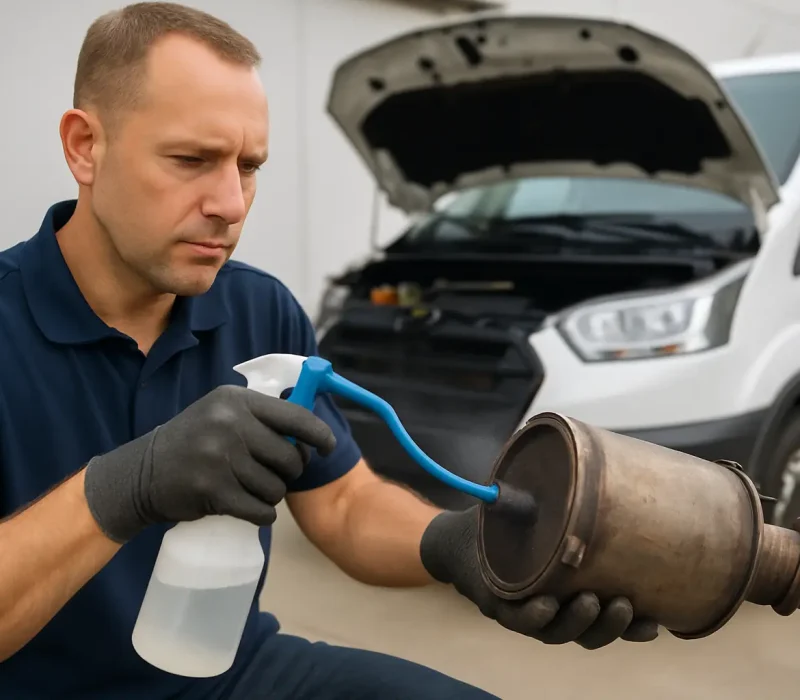



A DPF warning light rarely appears without a reason. Through High REVS Performance’s mobile work across Tamworth and Staffordshire, we see that drivers who avoid DPF pressure build-up usually act on early changes in fuel economy, regeneration behaviour and engine response – before a routine soot load becomes a limp-mode fault.
The diesel particulate filter is designed to trap soot, then burn it away during regeneration. When the filter cannot complete that process often enough, exhaust back-pressure rises. The engine may feel flat, use more fuel and eventually restrict power to protect itself. A motorway run can help in the right circumstances, but it is not a reliable cure for every DPF problem.
What DPF pressure buildup actually means
Your vehicle monitors the pressure difference before and after the DPF. A small difference is normal because exhaust gas has to pass through the filter. As soot accumulates, the restriction increases and the differential pressure reading climbs. The ECU then requests an active regeneration, using extra fuel and higher exhaust temperatures to burn soot into a much smaller amount of ash.
Soot can be removed by a successful regeneration. Ash cannot. It is the non-combustible residue left from normal engine oil additives and long-term use, and it gradually reduces the filter’s capacity. That distinction matters when choosing the right repair: a vehicle interrupted mid-regeneration may need the cause addressed and a controlled clean, while a high-ash, high-mileage filter needs a more thorough assessment.
Pressure readings can also be misleading. A split pressure hose, blocked sensor pipe or failing differential pressure sensor can report a problem that is not truly present. Equally, a sensor that under-reads can allow a real restriction to get worse before the dashboard gives you a useful warning.
Early signs to act on before the warning light
DPF trouble does not always start with a message on the dash. Many drivers first notice the cooling fan running after the ignition is switched off, a sharper hot smell after stopping, an unsettled idle or a temporary increase in fuel consumption. These can be signs that the car is trying to regenerate.
If that pattern happens regularly but the journeys remain short, the regeneration is repeatedly interrupted. Other signs worth investigating include reduced pull under load, more frequent start-stop unavailability, a rising oil level on some diesel engines, and a DPF or engine-management warning. Do not ignore a flashing DPF light or continue forcing the vehicle along in limp mode. Excessive restriction can place extra strain on the turbocharger and exhaust system.
A typical local call-out: the commute that stopped the car regenerating
A common example is a 2017 Volkswagen Passat 2.0 TDI used for a daily school run and a short commute around Tamworth, with only occasional longer trips on the A5. The owner noticed that fuel economy had fallen and the fan was running after nearly every journey. A week later, the car felt reluctant to accelerate onto a dual carriageway and displayed a DPF warning.
That is not automatically a case for replacing the filter. An on-site diagnostic check can compare live differential pressure data, soot-load calculations, exhaust temperature sensor values and the record of failed regenerations. If the readings confirm a loaded but serviceable DPF, a professional chemical clean can remove the soot restriction and restore exhaust flow. The job must still include checking why the filter became overloaded in the first place, otherwise the warning is likely to return.
How mobile diagnostics prevent unnecessary DPF work
A proper diagnosis is more useful than guessing from a fault code. A code can tell us that the ECU has detected excessive DPF loading, but not always whether the root cause is journey type, an EGR issue, a boost leak, a temperature sensor, injector performance or a pressure-sensor fault.
During a mobile diagnostic appointment, we assess live data rather than relying on the dashboard message alone. That includes the pressure across the DPF at idle and under revs, calculated soot and ash figures where available, regeneration status, engine coolant temperature and exhaust gas temperature readings. We also look for stored fault codes that could stop a regeneration from taking place safely.
This protects you from spending money on a clean that will not last. If the DPF is too heavily blocked, physically damaged or contaminated with oil, chemical cleaning may not be the correct next step. Clear findings allow the repair to be planned properly, rather than using a bottle additive and hoping the light stays off.
Practical ways to avoid DPF pressure buildup
The most effective habit is to give a diesel vehicle the type of journey it was designed for. If your use is mainly short local driving, build in a regular uninterrupted run once the engine is fully warm. A steady drive at normal road speeds gives the vehicle the best chance of completing a regeneration, provided there are no existing faults stopping it.
Avoid switching the engine off when you can tell a regeneration is underway, especially if the fan is running and idle speed has changed. You will not always know, and you should never leave a vehicle running unattended, but extending a journey where practical can make a difference. Repeatedly cutting short active regenerations sends extra fuel into the process without allowing the soot to clear.
Use the correct low-SAPS engine oil specified for your vehicle. The wrong oil can increase ash accumulation inside the DPF, which no amount of motorway driving will burn away. Keep servicing on schedule too, particularly on working vans, towing vehicles and high-mileage diesels where the engine spends more time under load.
Pay attention to changes rather than waiting for a warning light. A diesel that starts regenerating more often, loses MPG or feels less responsive is asking for investigation. Sorting a minor sensor, thermostat or airflow issue early is normally far cheaper than allowing the DPF to become severely restricted.
Where remapping fits – and where it does not
A Stage 1 remap should never be used to hide a DPF fault, disable emissions equipment or bypass the vehicle’s protection strategies. Before any custom calibration, the engine needs to be healthy, with no unresolved DPF pressure issue or relevant fault codes. That is part of keeping a remap safe and within sensible manufacturer tolerances.
Once the vehicle is running correctly, a custom-written remap can be matched to how you use it. For a high-mileage driver, an Eco or Balanced calibration can improve torque delivery and reduce the need to work the engine hard in everyday driving. For towing or performance-focused use, a Stage 1 Power remap can offer stronger mid-range pull. It is not a substitute for DPF maintenance, but a healthy engine, correct servicing and a calibration suited to the vehicle make a better long-term combination.
If your diesel is regenerating too often, has lost power or has brought up a DPF warning, book a mobile DPF diagnostic or chemical cleaning appointment with High REVS Performance before pressure build-up turns into an expensive replacement bill.