

A P0401 warning does not usually mean your engine is about to fail, but simply clearing it and carrying on can leave the real restriction building in the background. At High REVS Performance, our mobile diagnostic service across Tamworth and Staffordshire is built for exactly this situation: finding why the ECU has detected insufficient EGR flow, then dealing with the cause at your home or workplace rather than asking you to lose a day at a garage.
P0401 is a common code on modern diesel vehicles, particularly those used for short commutes, school runs and stop-start local work. It often arrives with a management light, reduced response at lower revs, rougher running or occasional limp mode. On some vehicles, you may notice little more than the warning light at first. That is precisely why a proper diagnosis matters before the fault becomes a more expensive carbon, EGR or DPF-related job.
What the P0401 fault code actually means
P0401 translates to “EGR flow insufficient detected”. The exhaust gas recirculation system sends a controlled amount of exhaust gas back into the inlet system under certain driving conditions. This helps manage combustion temperatures and emissions. The ECU expects to see a particular change in airflow or pressure when it commands EGR operation. If that change is too small, it stores P0401.
The code does not automatically condemn the EGR valve. It tells us that the expected gas flow has not been achieved. On a diesel, the restriction may be caused by carbon deposits in the EGR valve or cooler, a blocked inlet passage, a split or blocked vacuum line on older systems, an airflow sensor reading incorrectly, or an electrical issue affecting the valve itself.
That distinction protects you from replacing parts on a guess. An EGR valve can move perfectly well but still be unable to pass enough gas through a carboned-up passage. Equally, a valve packed with soot may need attention even though the rest of the system tests correctly.
How to clear P0401 fault code properly
You can clear P0401 with a capable diagnostic tool once the ignition conditions are met, but deleting the code is the final check, not the repair. If the restriction or sensor issue remains, the ECU will usually run its EGR monitor again over the next few journeys and bring the warning light back.
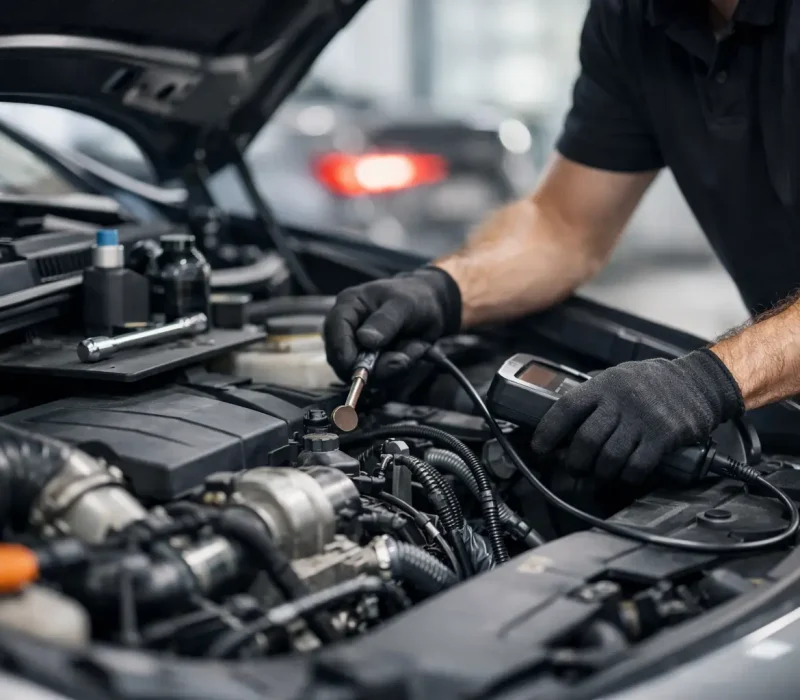
A correct mobile diagnostic appointment starts by reading the stored code, any supporting codes and the freeze-frame data. Freeze-frame information shows the engine conditions present when the fault was logged, such as engine speed, coolant temperature and calculated airflow. It gives a far more useful starting point than plugging in a basic reader, pressing clear and hoping the light stays off.
We then compare requested EGR movement with actual values where the vehicle supports live data, check mass air flow readings and assess related intake and boost information. On electronically controlled valves, actuator tests can help establish whether the valve responds as commanded. The exact test routine depends on the vehicle. A VAG diesel, Ford Transit Custom and BMW diesel can all flag P0401, but their systems, accessible live data and common failure points differ.
Once the cause is identified and repaired or cleaned, the code can be cleared properly. A road test or monitored drive cycle may be needed before the system confirms that EGR flow is back within range. That is the difference between a cleared dashboard light and a verified repair.
Why clearing the light first can cost more
Repeatedly clearing the code can make the symptom harder to track and may delay a necessary clean or repair. If an EGR restriction is affecting combustion, it can also contribute to increased soot output. More soot puts extra demand on the DPF, particularly when the vehicle does mainly short runs and rarely completes a clean regeneration.
P0401 is not itself a DPF blockage diagnosis. Treating it as one and forcing a DPF clean without evidence would be poor practice. However, where diagnostic data shows carbon contamination alongside poor DPF loading behaviour, a targeted plan can address both the airflow issue and the filtration system before it develops into limp mode or a costly replacement conversation.
A typical P0401 job at a customer’s driveway
A realistic example is a 2017 Volkswagen Transporter 2.0 TDI used by a local tradesperson around Tamworth. The van runs well enough on the motorway but feels flat pulling away from roundabouts, with an intermittent engine management light. A basic code reader shows P0401, and the owner has already cleared it twice. Each time, it returns after several days of local calls.
At the vehicle, a full diagnostic scan may show P0401 as the main stored fault, with live air-mass readings that do not react as expected when the ECU requests EGR flow. Inspection and test results can point towards carbon restriction around the EGR path rather than a failed turbocharger or an immediate DPF replacement. That avoids the common and expensive habit of changing components before proving the fault.
Depending on the evidence, the next step might be arranging the appropriate EGR and intake carbon cleaning work, checking associated sensors and then verifying the repair through live data and a post-repair scan. If DPF soot loading is also high, mobile DPF chemical cleaning may be the sensible complementary service. The van can be assessed at the customer’s address, reducing downtime for someone who relies on it for work.
When P0401 needs urgent attention
Book diagnostics promptly if the vehicle has entered limp mode, loses power under load, smokes excessively, struggles to regenerate its DPF or displays multiple engine and emissions warnings. Do not keep driving a vehicle that is severely down on power, particularly if it is used for towing, carrying tools or regular motorway miles. A restricted airflow or emissions issue can turn a manageable diagnosis into several linked faults if it is ignored.
If the warning light is on but the vehicle feels normal, it is still worth investigating before an MOT test or a long trip. Intermittent faults often become consistent after more local driving, colder weather or a period of heavier use. Early diagnosis is usually cheaper than waiting for a second fault code to appear.
Could a remap clear or prevent P0401?
A professional ECU remap is not a fix for a P0401 fault. The underlying EGR system must operate correctly before any calibration work is considered. Clearing emissions faults through software, disabling monitored systems or fitting a generic file is not the standard High REVS Performance works to.
Once a vehicle is healthy, a custom-written Eco, Balanced or Stage 1 Power remap can improve usable torque, throttle response and, in the right driving pattern, fuel economy. But the order matters. We first make sure the engine is operating as it should, particularly on diesels with DPF and EGR systems. Then, if a remap suits how you drive or work the vehicle, it can be calibrated within safe manufacturer tolerances for that specific vehicle.
That approach matters for commuters who want better MPG, van owners carrying equipment and drivers looking for stronger overtaking response. Better drivability starts with sound diagnostic foundations, not a warning light being hidden.
What to have ready for a mobile diagnosis
When booking, tell us the make, model, engine, registration year and exactly when the light appears. Mention whether the vehicle is used for short runs, motorway commuting, towing or commercial work, and whether any previous work has been carried out on the EGR, DPF or intake system. Those details help us arrive prepared and make the on-site visit more efficient.
Avoid disconnecting the battery to erase the warning before the appointment if possible. It can remove useful stored data that helps identify why P0401 was set. A dashboard photograph and any scan results you already have are useful, but they are not a substitute for checking live data on the vehicle.
If you need to clear P0401 fault code and want to know why it appeared, book a mobile diagnostic appointment with High REVS Performance. We can assess the fault at your Tamworth or Staffordshire home or workplace, advise whether carbon cleaning or DPF chemical cleaning is justified, and make sure the warning is cleared only after the system has been properly checked.