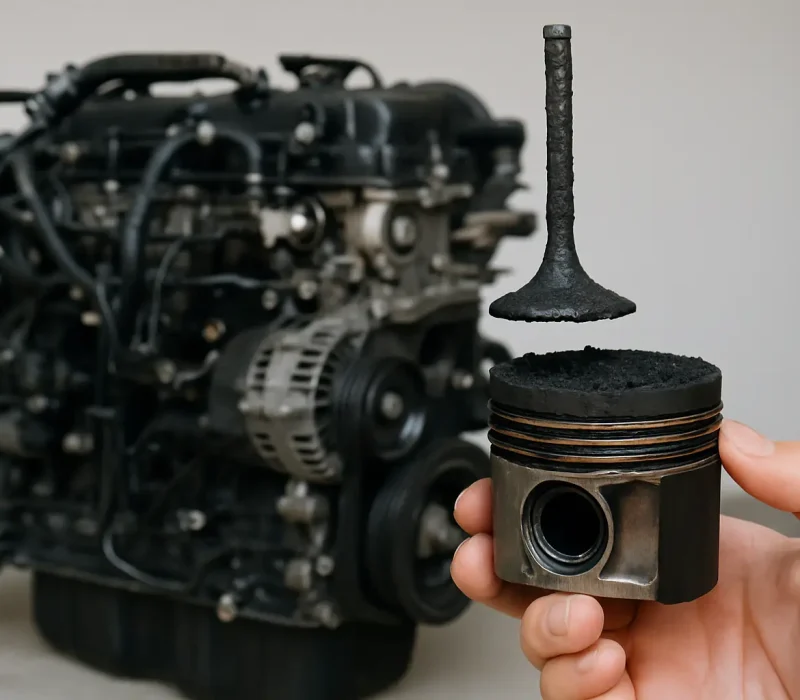



A diesel can feel perfectly normal right up to the point it does not. One week it is pulling cleanly on the motorway, the next it is sluggish, showing a warning light, burning more fuel or dropping into limp mode. When drivers ask about the top causes of DPF blockage, the answer is rarely just one thing. In most cases, it is a pattern of use, a supporting fault, or missed maintenance that has slowly pushed the filter beyond what normal regeneration can handle.
What a blocked DPF is really telling you
The diesel particulate filter is there to trap soot before it leaves the exhaust. That part is simple. The complication is that the filter has to clear itself by running a regeneration cycle hot enough to burn off that soot. If the vehicle cannot complete that process properly, soot load rises until the system starts to struggle.
That is why a blocked DPF is often a symptom as much as a fault in its own right. The filter may be full, but the real cause could be short journeys, a weak sensor, an EGR issue, poor combustion or an engine that is producing more soot than it should. Treating the blockage without identifying the reason it happened usually means the same problem returns.
7 top causes of DPF blockage
1. Too many short journeys
This is one of the most common causes by far. If your diesel is mainly used for school runs, local errands, stop-start commuting or short urban trips, exhaust temperatures often stay too low for effective regeneration. The DPF keeps collecting soot, but the car never gets the conditions it needs to clear it properly.
Some vehicles try active regeneration by injecting extra fuel to raise exhaust temperature, but even that can fail if the journey ends too soon. One interrupted regen is not normally a disaster. Repeated interruptions are where the problem starts.
2. Failed or incomplete regeneration
A regeneration cycle needs the right conditions. Engine temperature must be correct, the exhaust system has to reach enough heat, and the vehicle often needs to be driven at a steady speed for long enough. If the cycle starts and is then interrupted several times, soot load climbs quickly.
Drivers do not always realise this is happening. The vehicle may feel slightly different, the idle may change, cooling fans may stay on, or fuel use may rise. If the engine is switched off mid-cycle again and again, the DPF can go from partially loaded to heavily blocked far faster than expected.
3. Faulty sensors and pressure readings
Modern diesels rely on accurate data to manage the DPF system. Differential pressure sensors, exhaust gas temperature sensors and related wiring all help the ECU work out soot load and control regeneration. If one of these is reading incorrectly, the car can make poor decisions.
Sometimes the system thinks the DPF is fuller than it is and overreacts. In other cases, it fails to trigger regeneration when needed. Either way, the filter ends up suffering. This is why proper diagnostics matter. Clearing codes without checking live data is guesswork, and guesswork gets expensive.
4. EGR valve problems and carbon buildup
The EGR system recirculates a portion of exhaust gases back into the engine to reduce emissions. When it starts sticking or operating poorly, combustion quality can suffer. That often leads to increased soot production, which sends more particulate matter into the DPF than the system was designed to manage under normal running.
Carbon buildup elsewhere in the intake path can make the situation worse. Restricted airflow means dirtier combustion, and dirtier combustion means more soot. You then get a knock-on effect where the DPF is not just failing to clear itself – it is being overloaded in the first place.
5. Injector or turbo issues causing poor combustion
A diesel engine that is fuelling badly will usually make more soot. Worn injectors, incorrect spray patterns, boost leaks, underperforming turbos or air metering issues can all upset the air-fuel balance. The result is incomplete combustion and heavier soot output.
This is where a lot of owners get caught out. They focus on the DPF warning because that is the obvious fault, but the blockage is only the end result. If the engine is producing excessive soot due to another issue, cleaning the DPF alone may give only temporary relief.
6. The wrong oil or poor maintenance standards
Not every blockage is purely soot-related. Ash also builds up in a DPF over time, and unlike soot, ash does not burn away during regeneration. Using the wrong engine oil, especially oil that is not low-SAPS approved for DPF-equipped vehicles, can increase ash accumulation and shorten the usable life of the filter.
Poor servicing standards also contribute. Delayed oil changes, ignored warning lights and unresolved running issues all add pressure to the emissions system. A diesel that is regularly maintained to the correct specification usually has a better chance of keeping the DPF healthy for longer.
7. Driving with an existing fault for too long
This is the point where a manageable issue turns into a bigger bill. A DPF warning light appearing once does not always mean the filter is beyond recovery. But continuing to drive while ignoring repeated warnings, limp mode, hard regeneration requests or obvious loss of performance can push the system past the point where a straightforward solution is possible.
The longer the soot load stays high, the higher the exhaust backpressure becomes. That affects drivability and can put stress on other components. Leave it long enough and what might have been solved with diagnostics and targeted cleaning can become a much more serious repair.
Why the top causes of DPF blockage often overlap
Real-world cases are rarely neat. A vehicle might be doing mostly short trips, while also having a lazy EGR valve and a failed pressure sensor. Another might be mechanically sound but used for interrupted town driving every day. That is why two vehicles with the same warning light can need completely different solutions.
The trade-off is simple. If you only treat the symptom, you may get the car back on the road quickly, but the fault often returns. If you diagnose the full chain properly, the fix usually lasts longer and helps protect fuel economy, performance and reliability.
Signs your DPF problem is getting worse
Most drivers notice the same pattern. Fuel consumption creeps up, the engine feels flatter lower down, the radiator fan may run more than usual, and eventually the dashboard starts asking for attention. On some vehicles, you may also notice a stronger exhaust smell, rougher regeneration behaviour or repeated attempts to clear the filter.
Once limp mode arrives, the car is effectively protecting itself. That is not the stage to hope it sorts itself out on the next drive. It needs proper assessment, especially if fault codes, sensor readings or soot load values suggest there is another underlying issue.
What actually helps prevent blockage
The best prevention is matching the car to the way it is used. If you own a diesel, it needs regular runs that allow the exhaust system to get properly hot. That does not mean thrashing it. It means giving the vehicle enough consistent load and time to complete regeneration when required.
Servicing also matters more than many people realise. Correct oil, timely maintenance and early attention to EGR, turbo and injector faults all reduce soot loading. If a warning light appears, dealing with it early is usually far cheaper than waiting for the filter to become heavily restricted.
For drivers around Tamworth and Staffordshire who rely on their vehicle for commuting, towing or light commercial work, uptime matters just as much as repair cost. That is where proper mobile diagnostics and professional DPF cleaning can make sense – especially when the goal is not just clearing a fault code, but preventing the same issue from coming back.
When cleaning is sensible and when it is not
Chemical DPF cleaning can be very effective, but only when used in the right situation. If the filter is blocked with soot and the core is structurally sound, cleaning can restore flow and help avoid replacement. If the DPF is cracked, melted, heavily ash-loaded or the engine is still producing excessive soot, cleaning alone will not be the full answer.
That is why a proper assessment comes first. You need to know whether the blockage is recoverable, what caused it, and whether any supporting faults still need to be fixed. Done properly, that approach protects the vehicle and saves guesswork.
A blocked DPF is frustrating, but it is also useful information. It tells you the vehicle is no longer able to manage soot the way it should – and catching that early gives you the best chance of restoring performance, economy and reliability before a warning light becomes a replacement bill.