


Limp mode rarely starts at a convenient time. It shows up when you are overtaking, towing, heading to work or halfway through a delivery round, and suddenly the vehicle cuts power to protect itself. If you are looking for the best ways to reduce limp mode, the right approach is not guessing or clearing codes and hoping for the best. It is finding the root cause early, fixing the restriction or fault properly, and reducing the conditions that trigger it again.
Limp mode is not a fault in itself. It is a protective strategy built into the ECU when engine, turbo, emissions or transmission values move outside safe limits. Modern diesels are especially prone because DPF loading, EGR issues, boost leaks, sensor drift and carbon build-up can all feed into the same result – reduced power and warning lights.
What usually triggers limp mode
In practice, most limp mode complaints come down to airflow, fuelling, boost control or emissions faults. A partially blocked DPF can raise exhaust back pressure. Carbon deposits can upset airflow through the intake and EGR system. A split boost hose can stop the turbo from reaching target pressure. Even a tired sensor can send implausible readings that make the ECU step in.
That matters because the fix depends on the pattern. A car stuck in limp mode only under load is different from one that drops power on short urban trips, and both are different again from a van that goes into protection while towing. The fault memory, live data and the way the vehicle drives all need to line up.
Best ways to reduce limp mode before it becomes routine
1. Get a proper diagnostic check, not a generic code read
This is the starting point because limp mode is a symptom, not a diagnosis. A basic handheld reader may show one fault code, but it often misses the context. Dealer-level diagnostics or equivalent professional equipment can show live boost figures, DPF pressure values, EGR behaviour, sensor plausibility and regeneration history.
That is how you avoid wasting money on parts the vehicle did not need. Replacing a boost sensor because of an underboost code will not help if the real issue is a split hose, sticking turbo actuator or blocked DPF. Good diagnostics shorten downtime and keep the repair targeted.
2. Keep the DPF working as intended
A struggling DPF is one of the most common reasons diesel vehicles drop into limp mode. Short trips, interrupted regenerations and repeated low-speed driving can all increase soot loading. Once back pressure rises too far, the ECU may restrict performance to protect the engine and emissions system.
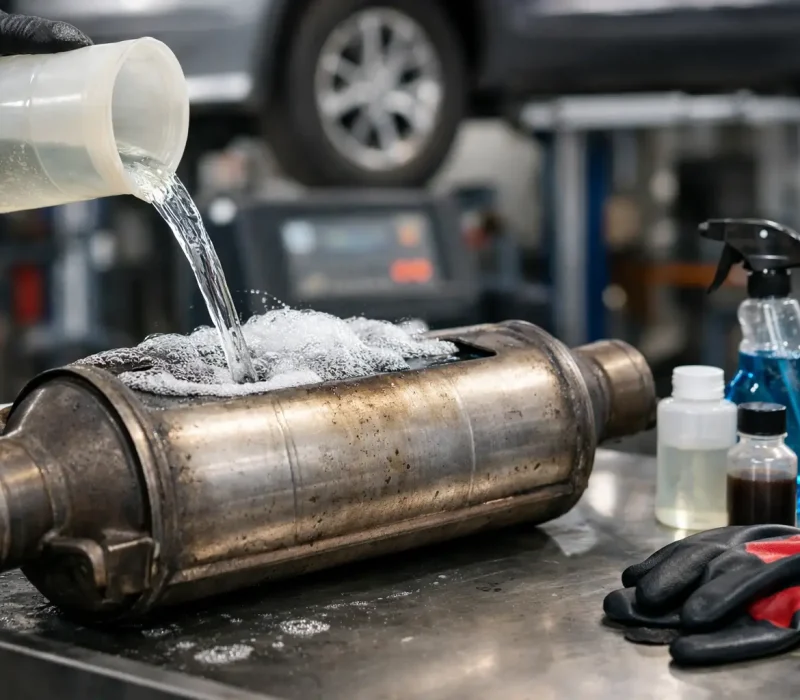
The practical fix depends on how blocked the filter is. Sometimes a forced regeneration is enough, but not always. If the ash and soot load are too high, or if the cause of the blockage is still present, the problem comes back. Professional DPF chemical cleaning is often the better route when the filter is restricted but still recoverable, because it addresses the blockage more thoroughly and can prevent the cost of replacement.
It also helps to adjust how the vehicle is used. A diesel that only sees school runs and short commutes will always be more vulnerable than one regularly driven long enough for proper regeneration.
3. Deal with carbon build-up in the intake and EGR system
Carbon build-up gradually strangles airflow. On many modern engines, especially diesels, deposits around the intake path and EGR system reduce efficiency and upset the air-fuel balance. The result can be sluggish response, poor economy, fault codes and eventually limp mode.
This is one of those faults that often builds quietly. Drivers notice flat spots, hesitation or more frequent warning lights before the vehicle finally limits power. Engine carbon cleaning can restore airflow and improve how consistently the engine breathes, which in turn helps reduce the conditions that trigger limp mode.
There is a trade-off here. Carbon cleaning is not a magic cure for every underlying fault. If a valve, sensor or actuator has already failed, cleaning alone will not fix it. But where deposits are the main restriction, it can make a clear difference in drivability and reliability.
4. Check boost leaks and turbo control faults early
If the ECU requests a certain boost level and the engine cannot achieve it, limp mode is often the result. Common causes include split intercooler hoses, loose pipework, sticking variable vanes, weak actuators and boost control solenoid issues.
These faults are easy to misread because they can feel like fuel starvation or a general lack of power. Under load, though, the pattern becomes clearer. The vehicle may pull normally at low throttle, then lose power sharply when you ask for more.
Catching this early matters. A small boost leak is cheaper to fix than the secondary problems that follow when the turbo system is working harder to compensate. Smoke, poor MPG and DPF loading often get worse when boost control is off.
The best ways to reduce limp mode long term
5. Replace weak or drifting sensors before they create bigger faults
Modern engines rely heavily on accurate data. MAF, MAP, exhaust pressure, temperature and NOx-related readings all affect how the ECU manages fuelling, boost and emissions. When a sensor starts to drift, the vehicle may still run, but not correctly.
This is where proper testing matters more than parts-swapping. A sensor can be electrically alive yet still reporting implausible values. Live data comparison is what separates a genuine fault from guesswork.
Long term, healthy sensors help the engine stay within safe operating limits. That means fewer false triggers, better regeneration control and less chance of repeated limp mode episodes.
6. Use the right remap, or avoid the wrong one
Not every software calibration helps reliability. Poorly written files can push boost, torque and emissions systems beyond sensible limits, especially on vehicles that already have mileage, soot loading or marginal hardware. That can make limp mode more frequent, not less.
A safe, custom-written remap within manufacturer tolerances is different. On the right vehicle, it can improve drivability, torque delivery and efficiency without forcing stressed components to work outside their comfort zone. The key is that the vehicle must be mechanically sound first.
If a car is already showing DPF, boost or sensor faults, remapping is not the starting point. Fix the underlying issue, verify the data, then consider calibration. Done in the right order, software supports the vehicle. Done in the wrong order, it masks problems for a short time and then makes them more expensive.
7. Match your driving pattern to the engine you own
This sounds obvious, but it is often where limp mode starts. Diesel vehicles used mainly for stop-start local driving are far more likely to suffer DPF and EGR-related faults than those used for longer motorway runs. Likewise, vehicles that tow regularly need maintenance to reflect the added thermal and load stress.
If your driving is mostly short distance, it helps to give the vehicle regular runs long enough for full operating temperature and DPF regeneration. If you do high mileage, stay ahead of servicing rather than waiting for warning lights. If you tow or run a light commercial vehicle hard, pay close attention to boost hoses, intake condition and service intervals.
The point is not that one engine type is bad. It is that the usage needs to fit the hardware. When it does not, limp mode becomes a recurring warning rather than a one-off event.
8. Do not keep clearing fault codes and carrying on
This is one of the most expensive habits drivers fall into. Clearing the warning may restore power briefly, but if the root cause remains, the ECU will usually put the vehicle straight back into protection once the same condition is detected.
Repeatedly driving through limp mode can also turn a manageable issue into a larger repair. A heavily restricted DPF, for example, can push exhaust temperatures and back pressure in the wrong direction. A boost fault can increase soot production. A fuelling issue can affect the DPF and turbo together.
Temporary relief is not the same as a fix. If limp mode returns, the vehicle is telling you the fault is still active.
When limp mode needs urgent attention
Some cases can wait for a booked diagnostic appointment. Others should not. If the vehicle is smoking heavily, making unusual turbo noises, struggling to restart, overheating, or losing power dramatically in traffic, stop using it until it has been checked properly.
That is especially true for vans, towing vehicles and high-mileage diesels where downtime quickly becomes lost income. A mobile diagnostic service can be a practical option in those cases because it avoids the extra hassle of getting a compromised vehicle to a workshop.
A sensible way to approach it
The most effective fixes are rarely dramatic. They are methodical. Start with proper diagnostics, confirm the fault with live data, repair the actual cause, and then address the maintenance issues that helped create it – whether that is DPF loading, carbon build-up, poor driving pattern or unsuitable software.
For drivers around Tamworth and Staffordshire, that usually means less time off the road, fewer repeat warning lights and a vehicle that feels normal again under load. Limp mode is the ECU trying to prevent damage. Treat it as an early warning, and you usually keep the repair smaller than it would have been a few weeks later.
A vehicle that keeps entering limp mode is not asking for a reset. It is asking for a proper diagnosis before a protectable fault turns into a costly one.