


Poor diesel acceleration usually shows up before a warning light forces the issue. The car feels flat pulling away, overtaking takes more planning than it should, or it loses urgency under load with a trailer, tools, or passengers on board. If you are wondering how to fix poor diesel acceleration, the right starting point is not guesswork. It is proper diagnosis, because modern diesels can feel sluggish for several different reasons and the fix depends on which system is actually holding the engine back.
Why diesel acceleration drops off
A diesel engine makes its best work through torque, airflow and correct fuelling. When one part of that balance slips, acceleration suffers quickly. Sometimes the change is gradual enough that drivers adapt to it without realising. Other times it feels sudden, especially if the vehicle has gone into a reduced-power strategy to protect the engine or emissions system.
The most common causes are DPF restriction, carbon build-up in the intake, boost leaks, tired sensors, fuel delivery problems and software or fault-code related derating. On higher-mileage vehicles, more than one issue can be present at the same time. That matters, because replacing a single part without confirming the root cause often wastes money and leaves the original problem in place.
How to fix poor diesel acceleration without guessing
The best approach is to work from evidence. A proper diagnostic session should look at live data, stored fault codes, boost pressure, airflow readings and the condition of the intake and exhaust systems. On a modern diesel, poor acceleration is often the symptom, not the fault itself.
If the vehicle is struggling below 2,000 rpm, hesitating as the turbo should come in, or refusing to pull properly on hills, start by looking at whether it is breathing and boosting correctly. If it feels restricted all the way through the rev range, then exhaust backpressure or fuelling becomes more likely. The key is to avoid treating it like an old mechanical diesel when the engine management system now controls so much of the way it delivers torque.
Check for DPF restriction first
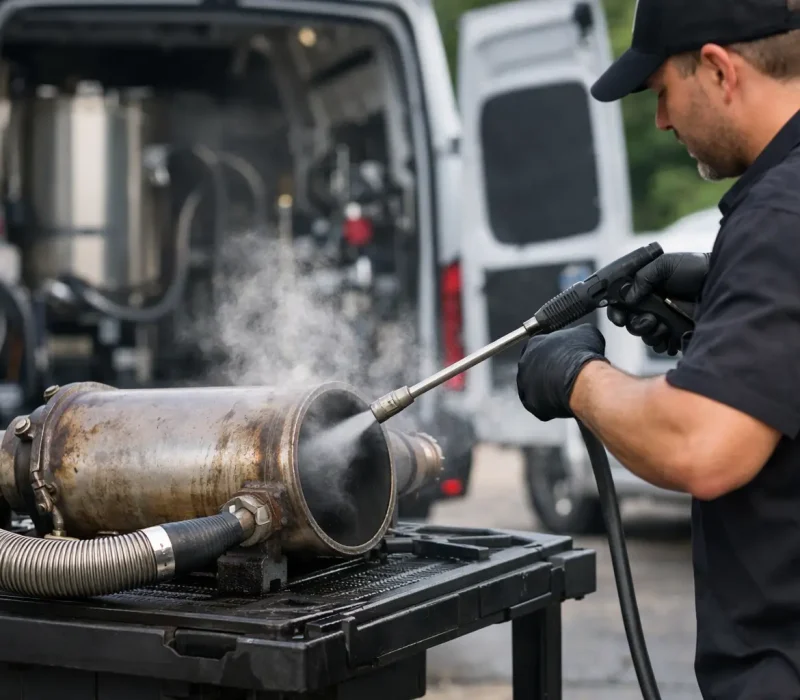
A partially blocked diesel particulate filter is one of the biggest reasons a diesel feels strangled. You may still be able to drive it, but acceleration becomes lazy because the engine cannot clear exhaust gases properly. In some cases, the car will try to regenerate more often. In others, it will switch on the DPF light or engine management light and reduce performance.
This is especially common on cars used for short trips, stop-start commutes and low-speed local driving. The driver notices poor pickup, rising fuel use and a feeling that the engine is working harder than it should. A forced regeneration can help in the right circumstances, but not every blocked DPF should be dealt with that way. If ash loading is high or the filter is heavily contaminated, a proper chemical clean is often the more reliable route.
Ignoring DPF restriction tends to make the problem more expensive. Extra backpressure can affect turbo performance, increase heat and lead to repeated warning lights. If acceleration has dropped off and the DPF values are out of range, sorting that first often restores a surprising amount of drivability.
Inspect carbon build-up in the intake
Diesel engines are prone to carbon deposits in the intake tract, EGR system and inlet manifold. Over time, this narrows airflow and disrupts the engine’s ability to breathe cleanly. The result is a sluggish throttle response, weaker low-end pull and uneven power delivery.
Carbon-related issues are common on vehicles that spend a lot of time in town or rarely get driven under sustained load. If the intake path is coated and the EGR valve is not operating cleanly, the engine will not respond the way it should even if there are no major warning lights on the dash.
This is where carbon cleaning and intake inspection become useful rather than cosmetic. On the right vehicle, restoring airflow can sharpen response, improve torque delivery and reduce the flat feeling that many drivers assume is simply age.
Airflow and turbo faults that make a diesel feel flat
A turbo diesel depends on accurate airflow measurement and stable boost pressure. When either goes wrong, acceleration suffers fast. A split boost hose, leaking intercooler, sticky actuator or weak vacuum control can all prevent the turbo from building pressure properly.
The tricky part is that not every boost problem is dramatic. Some leaks only show under load, which means the car may idle and cruise reasonably well but feel lifeless when you ask for more. That is why live data matters. Requested boost and actual boost should be compared properly, not guessed at from how the car feels on one short drive.
Mass airflow sensors can also drift out of range without failing completely. The engine still runs, but fuelling and boost control are no longer as accurate as they should be. The same applies to manifold pressure sensors contaminated by oil mist and soot. Replacing sensors blindly is not good practice, but neither is ignoring them because there is no obvious fault code.
Fuel delivery can be part of the problem
Poor diesel acceleration is not always air-related. Restricted fuel filters, injector issues and low fuel pressure can all cut performance. If the engine hesitates under load, feels rough when climbing through the revs, or struggles more when hot, fuelling should be checked alongside airflow.
This is one of those areas where it depends on the symptoms. A fuel filter is a sensible service item and can cause real restriction if overdue, particularly on vehicles covering high mileage or using uncertain fuel sources. Injectors are more expensive and should be tested properly before assumptions are made. Good diagnostics separate a simple maintenance issue from a more serious fault.
When the ECU is limiting performance
Modern diesels do not always give you full power just because the engine starts and drives. If the ECU sees readings outside expected limits, it may reduce torque output to protect the engine, turbo or emissions system. That can happen with DPF issues, EGR faults, overboost or underboost conditions, sensor disagreements and various emissions-related problems.
Sometimes the vehicle is in obvious limp mode. Sometimes it is not. It may simply feel dull and unwilling compared with how it used to drive. Reading the fault codes is only the beginning. The better question is why those codes are present and whether the data supports them.
On some vehicles, a safe, custom-written ECU calibration can improve drivability once the mechanical condition is confirmed. That is not a substitute for fixing faults. It is an optimisation step after the engine is healthy, not a way to mask a blocked DPF or boost leak. Done properly, within manufacturer tolerances, remapping can improve torque delivery and response in a way that feels far more natural for daily driving, towing and motorway use.
The practical order to diagnose poor acceleration
If you want a sensible path on how to fix poor diesel acceleration, start with the basics and move toward the more technical checks. Confirm there are no service items overdue, especially the air and fuel filters. Then scan for fault codes and review live data rather than clearing codes and hoping for the best.
After that, inspect the intake and boost pipework for leaks, check DPF loading and regeneration history, and assess whether carbon build-up is likely restricting airflow. If the data shows fuelling or sensor issues, test those components before replacing them. This order matters because a diesel with restricted exhaust flow or a boost leak can mimic other faults very convincingly.
For drivers around Tamworth and Staffordshire, mobile diagnostics can make this process far more practical. You do not have to lose half a day taking the vehicle to a workshop just to establish whether the issue is DPF-related, airflow-related or software-controlled. A proper on-site assessment gives you clarity first, which is usually the cheapest part of the job in the long run.
When not to keep driving it
A mildly sluggish diesel is one thing. A diesel with flashing warning lights, repeated regeneration attempts, heavy smoke, or severe loss of power is another. If the turbo is not building pressure correctly or the DPF is heavily restricted, continuing to drive can increase the chance of a larger failure.
The same goes for vehicles used for work. If your van or light commercial is carrying weight every day, poor acceleration is more than an annoyance. It affects drivability, fuel costs and downtime. Sorting the fault early is usually far cheaper than waiting for the vehicle to force the decision.
There is also a safety angle. Flat acceleration when joining faster roads or overtaking is not just frustrating. It reduces the margin you expect the vehicle to have.
The fix is usually simpler once the cause is clear
Most diesel acceleration problems come back to one of a few systems: air in, exhaust out, correct boost, correct fuelling and sensible ECU control. The reason they become expensive is not because every repair is major, but because the wrong parts get replaced first.
A diesel should pull cleanly, build torque early and feel settled under load. If yours does not, there is usually a measurable reason for it. Get the data, fix the actual restriction or fault, and only then think about performance improvements. When the engine is working as it should, the difference is obvious from the first proper pull up the road.