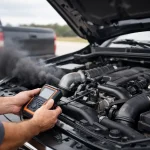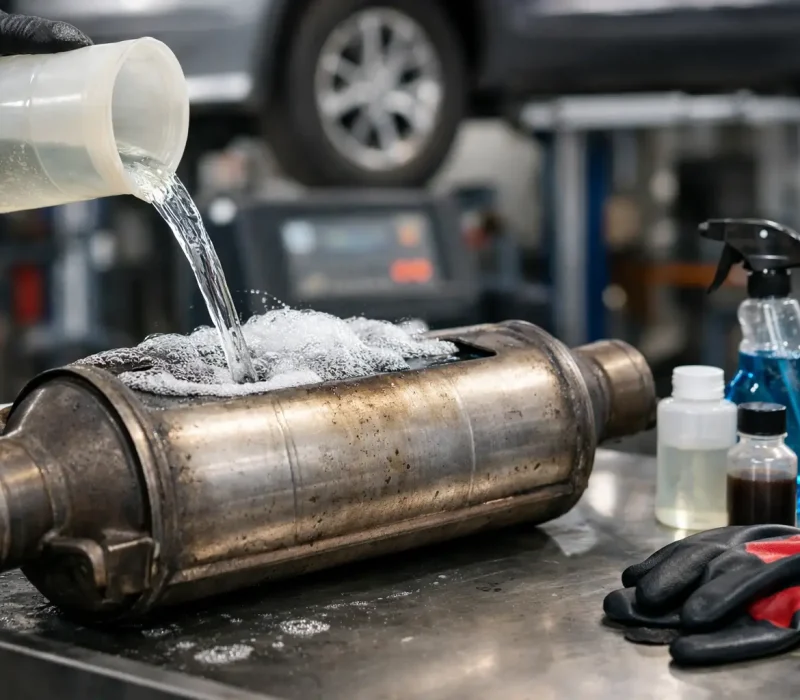



That amber engine symbol rarely appears at a convenient time. One day the car feels normal, the next it is down on power, using more fuel, or dropping into limp mode on the school run or motorway commute. Common engine light fault codes can point to anything from a minor sensor issue to a problem that will quickly affect drivability, emissions, and long-term reliability.
The key thing is this: a fault code is a starting point, not a complete diagnosis. Modern vehicles monitor dozens of systems at once, and the code stored in the ECU tells you where the car has seen a problem, but not always why it happened. That distinction matters, because replacing parts based on the code alone often wastes money and leaves the real fault untouched.
What common engine light fault codes actually tell you
An engine management code usually begins with the letter P, followed by four numbers. The P stands for powertrain, which covers the engine, fuelling, emissions systems, and in some cases transmission-related faults. Generic codes are standard across most manufacturers, while manufacturer-specific codes can vary depending on the make and model.
If your vehicle shows a code reader result such as P0401 or P2002, that is the ECU reporting a condition outside its expected range. It might be low EGR flow, poor DPF efficiency, a boost issue, or a sensor reading that no longer makes sense compared with the rest of the data. Good diagnostics look beyond the code itself and compare live readings, fault history, and how the vehicle behaves under load.
That is especially important on diesel vehicles, where a blocked DPF, sticking EGR valve, split boost hose, or carbon buildup can trigger several related faults at once. In petrol cars, misfires, mixture issues, ignition faults, and catalyst efficiency codes are also common. The code matters, but the pattern matters more.
Common engine light fault codes drivers see most often
P0401 and P0402 – EGR flow problems
These codes relate to the exhaust gas recirculation system. P0401 usually means insufficient EGR flow, while P0402 points to excessive flow. In plain terms, the ECU expects a certain amount of exhaust gas to be redirected back into the intake under specific conditions, and it is not seeing the result it expects.
Typical causes include a carboned-up EGR valve, blocked passages, wiring faults, or a control issue. On the road, you might notice rough running, hesitation, poor fuel economy, or increased smoke on diesel vehicles. Left too long, EGR faults can contribute to further carbon buildup and wider drivability issues.
P2002 – DPF efficiency below threshold
This is one of the most common diesel fault codes, particularly for drivers doing regular short trips. P2002 generally means the diesel particulate filter is not trapping or burning soot effectively enough. The cause may be a heavily loaded DPF, failed regeneration, pressure sensor issues, or an underlying engine problem causing excessive soot production.
Some owners assume the DPF itself has failed, but that is not always the case. If the root cause is poor combustion, injector imbalance, an EGR fault, or repeated interrupted regens, replacing the filter alone may not solve it. Proper diagnosis is what prevents an expensive guess.
P2463 and P2458 – DPF soot accumulation and regeneration faults
P2463 often indicates excessive soot accumulation in the DPF. P2458 relates to regeneration duration, meaning the car has tried to clean the filter but the process has taken too long or failed to complete properly.
These codes often appear together with warning lights, reduced performance, or limp mode. For high-mileage drivers and diesel vans, this can quickly become a downtime issue rather than a minor warning. The right fix depends on how blocked the system is and whether the vehicle has another fault preventing successful regeneration.
P0299 – turbo underboost
P0299 means the engine is not reaching the boost pressure the ECU is requesting. This can be caused by a boost leak, split hose, sticking actuator, vacuum problem, carbon-related restriction, or turbo wear.
Drivers usually feel this one. The vehicle becomes flat, sluggish, and noticeably weaker under acceleration, especially when overtaking or towing. Because low boost can also affect fuelling and emissions, this code often appears alongside others. Treating it early is usually far cheaper than ignoring it.
P0101, P0106 and airflow-related faults
Codes around the mass airflow sensor and manifold pressure sensor are very common. P0101 typically points to a mass airflow reading outside its expected range, while P0106 often relates to the manifold absolute pressure sensor.
These sensors help the ECU calculate air mass, fuelling, and boost demand. If they are contaminated, damaged, or reading inaccurately because of carbon buildup or an intake leak, the engine can run poorly without an obvious mechanical noise. Symptoms can include hesitant throttle response, smoky running on diesels, poor MPG, and inconsistent power delivery.
P0300 to P0304 – misfire faults
Misfire codes are more common on petrol engines, though they can appear on diesel vehicles too. P0300 indicates a random misfire, while P0301 to P0304 identify a specific cylinder.
The cause could be ignition coils, spark plugs, injector issues, compression loss, vacuum leaks, or fuelling problems. The risk with misfires is that continued driving can damage the catalytic converter if unburnt fuel passes through the exhaust. If the engine light is flashing rather than steady, that usually means stop using the vehicle until it is checked.
Why one code can have several causes
This is where many cheap fixes go wrong. A code reader might show an oxygen sensor fault, but the sensor itself may only be reporting a mixture problem caused by an air leak, injector fault, or weak combustion. The same applies to DPF and EGR codes. The ECU reports what it can see, not what a technician can prove.
That is why professional diagnostics should include fault memory, live data, actuator tests where possible, and a look at the vehicle’s usage pattern. A diesel used mainly for local stop-start journeys will have different likely causes from one doing long motorway miles. A car that has recently lost fuel economy and developed a hesitation tells a different story from one that runs normally but has an occasional warning lamp.
When you can keep driving and when you should stop
A steady engine management light with no change in performance does not always mean immediate danger, but it should not be ignored. The safest approach is to book diagnostics before a minor fault becomes a larger one. A sensor reading slightly out of range today can turn into limp mode, failed regeneration, or poor starting next week.
If the car is misfiring badly, smoking heavily, lacks power suddenly, or shows a flashing engine light, stop using it unless absolutely necessary. Continuing to drive in that condition can increase repair costs quickly. The same applies if the vehicle repeatedly attempts DPF regeneration and fails, as soot loading can rise to the point where a standard road regen is no longer enough.
What proper diagnostics should look like
Reading and clearing codes is not diagnostics. It is the first two minutes of diagnostics. The real value comes from understanding why the code appeared and whether it is the main fault or a knock-on effect.
A proper diagnostic process should assess stored and pending codes, check live sensor data, and compare requested values against actual values. On modern diesel vehicles, that often means checking DPF pressure readings, EGR operation, boost control, intake airflow, temperature sensors, and regeneration history. On petrol vehicles, ignition performance, fuel trims, and lambda readings may be just as important.
For drivers who rely on their vehicle daily, mobile diagnostics can make practical sense. Having the fault assessed at home or work saves the usual garage logistics and gets you to an answer faster, particularly if the car is in reduced-power mode or you are managing a small fleet with limited spare time.
The most cost-effective approach to engine light warnings
The cheapest route is rarely the first part someone suggests replacing. It is identifying the root cause early and dealing with it before related systems are affected. A boost leak caught early is very different from months of underboost leading to poor running and extra soot load. A DPF issue identified at the first warning stage is usually easier to resolve than one left until the vehicle is forced into limp mode.
For many owners, the real cost is not only the repair bill. It is lost time, missed work, poor fuel economy, and the uncertainty of not knowing whether the car will complete the next trip without another warning light. Clear, accurate diagnostics remove that guesswork.
If your engine light has come on, treat the code as useful information, not a verdict. The right diagnosis can mean the difference between a straightforward fix and a chain of unnecessary parts. Get the fault checked properly, get the cause confirmed, and let the vehicle tell the full story before you spend money on the wrong repair.