


If you have ever wondered how mobile ECU tuning works, the short answer is this: the software that controls your engine is read from the car, adjusted to suit the vehicle and your goals, then written back in safely – all at your home or workplace. Done properly, it is not guesswork and it is not a generic plug-in gadget. It is a structured process built around vehicle checks, genuine tools, and a calibration that stays within safe operating limits.
For most drivers, the appeal is obvious. You get the same kind of technical process you would expect from a tuning specialist, without losing half a day taking the car to a workshop. Whether you want better fuel economy for commuting, stronger mid-range torque for towing, or a cleaner Stage 1 power increase for everyday driving, the mobile part changes the convenience, not the technical standard.
How mobile ECU tuning works in practice
Modern vehicles are controlled by an ECU – the engine control unit. This is the computer that manages fuelling, boost pressure, ignition timing, torque limits, throttle response and a range of protection strategies. Manufacturers often leave a margin in the calibration to cover different markets, fuel qualities, climate conditions and model variants. ECU tuning changes parts of that calibration so the engine delivers power more effectively for the way the vehicle is actually used.
In a mobile appointment, the first step is not the remap itself. It is checking that the vehicle is a good candidate. A proper tuner will look at fault codes, assess how the engine is running, and confirm that there are no existing problems that a remap would simply expose more quickly. If an engine already has boost leaks, injector issues, DPF problems or sensor faults, tuning it first is the wrong order.
That matters because a good remap improves a healthy vehicle. It does not repair a neglected one.
The vehicle health check comes first
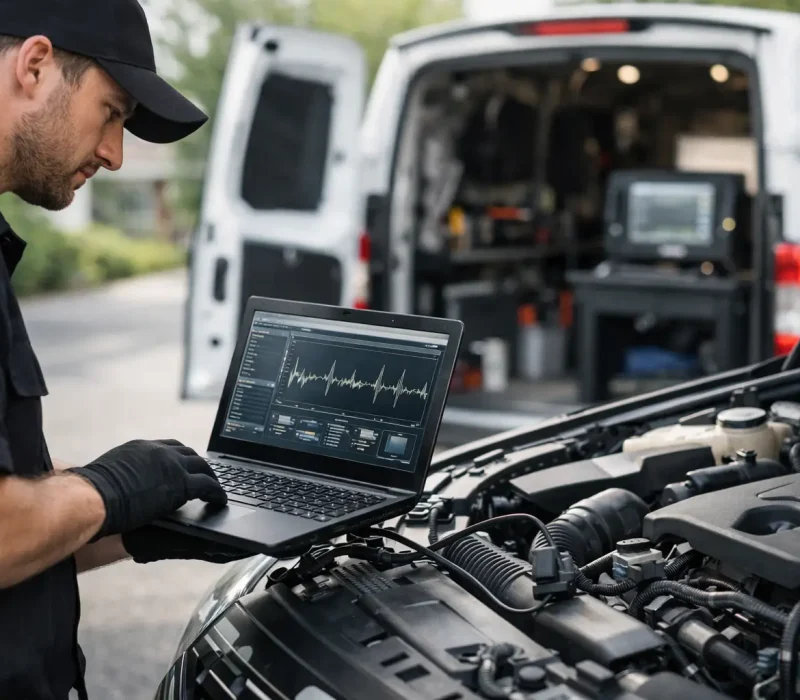
Before any software is read, basic condition checks help establish whether the car is ready. This often includes scanning for diagnostic trouble codes, checking live data where needed, confirming battery voltage is stable, and discussing how the vehicle is used. A diesel doing short stop-start trips has different needs from a motorway commuter. A van carrying tools every day has different priorities from a weekend hot hatch.
This is where mobile tuning should feel professional rather than rushed. The right file for one driver may be the wrong file for another, even on the same engine. An economy-focused remap usually aims to improve low-down efficiency and part-throttle behaviour. A balanced remap tries to give stronger drivability without pushing too far in one direction. A Stage 1 power remap is more focused on torque delivery, throttle response and usable performance.
The phrase custom-written matters here. Some operators load a one-size-fits-all file and move on. A proper process starts with the exact software on your vehicle and works from there.
Reading the ECU data safely
Once the car passes the initial checks, the original ECU software is read. In many cases this is done through the diagnostic port, using professional tools designed for that ECU type. On some vehicles, depending on the manufacturer and ECU security level, bench or boot access may be required instead. That sounds dramatic, but in the hands of an experienced technician it is simply the correct method for that unit.
The original file is important for two reasons. First, it shows the starting point for your specific car, not just the model in general. Second, it gives a backup, so the vehicle can be returned to standard software if needed.
Stable voltage during reading and writing is critical. That is why professional tuners use proper support equipment and follow a controlled process. Interruptions during programming are something to avoid at all costs, which is another reason experience and genuine hardware matter.
What actually changes in a remap
When people ask how mobile ECU tuning works, what they usually mean is what the tuner is changing inside the software. The answer depends on the engine, gearbox and tuning goal, but the main areas are usually fuel delivery, boost control, torque request, throttle mapping, ignition timing on petrol engines, and limiters that shape how the engine responds.
On a turbo diesel, for example, a well-written remap may increase torque in the mid-range, improve response when pulling away, and smooth out flat spots. On a turbo petrol, calibration changes may sharpen power delivery and improve how the engine builds boost through the rev range. In both cases, the aim should be usable performance rather than headline numbers alone.
There is always a trade-off to manage. More aggressive settings can chase bigger gains, but they may also increase stress, heat and smoke, or reduce the smoothness that makes a car pleasant to drive every day. Staying within manufacturer tolerances is not a marketing line. It is what separates a safe, road-focused remap from software that causes problems later.
Why mobile tuning is not a lesser option
Some drivers still assume mobile tuning means a stripped-back service compared with visiting a tuning workshop. In reality, if the technician arrives with the right tools, stable power support, proper diagnostics and a calibration process built around the vehicle, the location is largely irrelevant. The ECU does not know whether the car is on your drive, outside your office, or in a unit.
What changes is convenience. You avoid travel, waiting rooms and workshop scheduling. For busy households, commuters and small business operators, that is a genuine advantage. If your van is part of your working day, having tuning or diagnostics handled on site means less downtime. That practical benefit is a big reason mobile ECU work suits both private drivers and light commercial users.
Custom remaps versus generic files
This is one of the most important distinctions in tuning. A generic file may be based on the same engine type, but it does not account for your exact software version, mileage, condition or use case. It may work, but it may also deliver power too abruptly, ignore known weak points, or fail to suit supporting components that are not performing perfectly.
A custom approach is more measured. It starts with the car in front of the technician. If you want better economy on long runs, the calibration can be shaped with that in mind. If you regularly tow or carry weight, stronger low-to-mid-range torque may matter more than top-end figures. If your priority is simply a better all-round drive, a balanced setup usually makes more sense than chasing maximum output.
That is also why honest tuners sometimes say no. Not every vehicle should be remapped immediately, and not every driver needs the same level of tune.
What results should you expect?
Realistic results depend on the engine, the factory tune, and the vehicle’s condition. Turbocharged engines usually respond best because software changes can make more use of the existing hardware. Naturally aspirated engines tend to show smaller gains, so the value is often more about throttle behaviour and drivability than outright power.
For many road cars, the biggest difference is not the peak number. It is how the vehicle feels in normal use. Overtaking often needs less planning. Hills require fewer downshifts. Towing feels less laboured. Automatic gearboxes may hold onto the right ratio more confidently because the engine is producing stronger torque in the range you actually use.
Economy improvements are also possible, but they depend heavily on driving style. A remap can make the engine more efficient under load and improve torque at lower revs. If you then drive in the same measured way, MPG may improve. If you use the extra performance all the time, fuel savings are less likely.
Is mobile ECU tuning safe?
It can be, provided the process is right. Safe tuning is about more than modest numbers on a quote. It means using genuine tools, reading the vehicle properly, checking for faults first, writing software that respects the limits of the engine and transmission, and refusing to tune around unresolved mechanical issues.
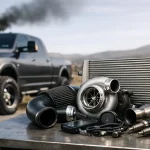
It also means being clear about what tuning cannot do. It cannot fix a blocked DPF, a failing turbo actuator, worn injectors or heavy carbon build-up by itself. In some cases, those issues need addressing first so the remap can deliver the result safely and consistently.
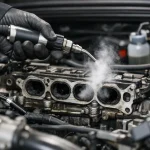
That joined-up thinking is where an experienced mobile specialist adds value. If the car needs diagnostics, carbon cleaning or DPF attention before tuning, sorting the cause first often saves money and frustration later.
For drivers around Tamworth and wider Staffordshire, that practical, on-site approach makes a lot of sense. You get specialist work carried out where the vehicle already is, with less disruption and a clearer view of whether the car is genuinely ready to be tuned.
The best way to look at mobile ECU tuning is not as a shortcut, but as specialist calibration delivered more conveniently. When the checks are thorough and the software is written properly, the result should feel like the car always had this potential – just now it is using it more effectively.