


A remap does not need a ramp, a waiting room or a day without your vehicle. It does need the right diagnostic equipment, stable power, proven tuning tools and a technician who understands the engine in front of them. So, can mobile mechanics remap cars? Yes – provided the work is carried out professionally and the vehicle is suitable for tuning in the first place.
For drivers who commute, cover motorway miles, tow regularly or rely on a van for work, a mobile remap can make practical sense. The technician comes to your home or workplace, carries out the required checks, reads the ECU and installs a calibration designed for your specific vehicle. You keep the convenience of an on-site appointment without compromising on the technical process.
Can mobile mechanics remap cars safely?
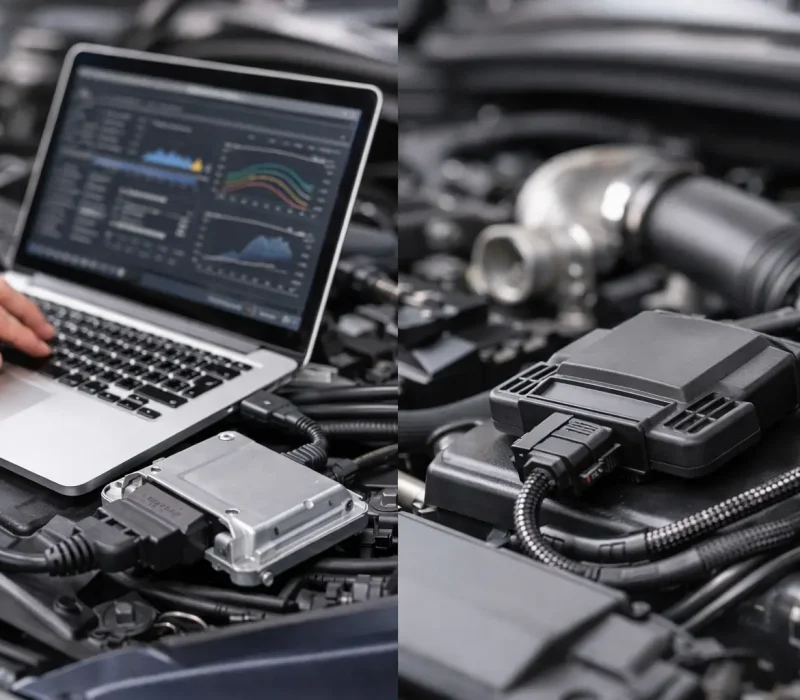
A professional mobile remap follows the same core principles as one completed in a tuning workshop. Modern engine control units can usually be accessed through the vehicle’s diagnostic port, although some ECUs require a bench or boot-mode procedure. Where an on-board read and write is appropriate, the work can be completed safely on your driveway or at your place of work.
The location is not the deciding factor. Preparation and equipment are. The vehicle must have a healthy battery or be connected to a suitable stabilised power supply, because an interruption while the ECU is being written can cause serious problems. The technician also needs genuine, professional-grade tools that communicate correctly with the ECU and preserve the original file.
Just as importantly, the engine needs to be in a fit state to tune. A remap cannot repair a split boost hose, a blocked DPF, a failing injector or an active sensor fault. Adding torque to a vehicle with an unresolved mechanical issue can make the symptoms more noticeable and may create avoidable expense later.
That is why a proper appointment begins with diagnostics, not with plugging in a generic file and hoping for the best.
What happens during a mobile ECU remap?
The exact process varies by make, model, engine and ECU type, but a reputable mobile technician should be clear about what they are doing and why. First, the vehicle is identified and scanned for stored fault codes. This gives a useful picture of engine health and highlights faults that should be repaired before tuning.
The original ECU software is then read and saved. Keeping this file matters. It provides a record of the vehicle’s factory calibration and allows a return to standard software if required in future. The calibration is assessed before changes are made to key maps controlling fuel delivery, boost pressure, torque limiters, throttle response and other engine management strategies.
For many vehicles, the revised file can be written through the OBD port. The ignition must remain stable, the battery voltage must be protected and the vehicle must not be disturbed during the writing process. Once complete, the technician checks that the ECU communicates correctly, clears any temporary programming codes and carries out post-installation checks.
A road test may be appropriate where conditions allow, but it is not simply about chasing a dramatic acceleration run. The aim is to confirm smooth power delivery, sensible throttle response and normal operation across the rev range. On a diesel, the result should feel stronger and more usable rather than harsh or overly aggressive.
The difference between a mobile specialist and a general mechanic
Not every mobile mechanic offers ECU remapping, and not every business advertising remaps has the equipment or knowledge to do it correctly. General servicing skills are valuable, but ECU calibration is a specialist discipline. It involves understanding vehicle software, engine limits, common weak points and the difference between a safe improvement and an unrealistic claim.
A quality mobile remap service should use genuine tuning hardware, take a full ECU read where possible and work from a custom-written calibration suited to the vehicle. It should also be prepared to say no when a car is not suitable.
Be cautious if a provider offers the same claimed gains for every engine, cannot explain how they check vehicle health or will not discuss what happens to your original file. A cheap, generic tune may alter headline figures, but it can ignore the condition, usage and factory tolerances of your particular vehicle.
At High REVS Performance, remaps are written within sensible manufacturer tolerances and matched to the driver’s aim, whether that is improved economy, a balanced daily-drive upgrade or stronger Stage 1 performance.
Which vehicles are suitable for a mobile remap?
Most modern petrol and diesel cars, vans and light commercial vehicles can be assessed for mobile ECU tuning. Turbocharged engines often respond particularly well because the calibration can refine torque delivery, boost control and fuelling within safe operating limits.
A diesel family car used for long motorway journeys may suit an Eco remap, designed to improve low-down torque and help reduce the effort needed to maintain speed. A driver covering mixed commuting miles may prefer a Balanced remap that improves response while keeping economy firmly in view. For an enthusiast or a towing vehicle, a Stage 1 Power remap can provide a more substantial increase in usable torque and mid-range pull.
Suitability is not only about the engine. Mileage alone does not rule a vehicle out, but condition matters more as miles increase. Before remapping, it is sensible to address warning lights, poor starting, smoke, hesitation, coolant loss, clutch slip or unusual noises. A worn clutch, for example, may cope with standard torque but reveal its weakness after a torque increase.
Diesel owners should also consider the condition of the DPF and intake system. If the vehicle has frequent regenerations, reduced power, limp mode or a DPF warning light, chemical DPF cleaning and diagnostics may be the correct first step. Likewise, carbon build-up in the intake can restrict airflow and leave an engine feeling flat. Restoring airflow before a remap gives the calibration a healthier foundation.
Mobile remapping: convenience without cutting corners
The real benefit of a mobile service is not that it is faster at the expense of care. It is that the technical work comes to you. You avoid arranging lifts, spending time in a workshop reception or taking a working vehicle off the road for longer than necessary.
For a self-employed driver, a small fleet or a household with one essential car, that can be significant. An appointment at home means the vehicle remains where you need it. A workplace visit can reduce downtime while you get on with the day, subject to safe access and permission from the site.
There are occasions when mobile work is not appropriate. Some ECUs require removal and specialist bench programming. Severe faults may need workshop repair before any tuning is considered. Poor weather, unsafe parking, limited access or a weak battery can also mean rearranging the appointment is the sensible decision. A professional technician will explain this rather than force a job through.
What a remap can and cannot do
A well-calibrated remap can improve torque, throttle response and overtaking performance. Depending on the vehicle and the chosen package, it may also support improved MPG when driven sensibly. More torque at lower revs can mean fewer downshifts, less throttle input and a more relaxed drive on longer runs.
However, fuel savings are never guaranteed. Driving style, traffic, journey length, load, tyre pressures and vehicle condition all affect real-world economy. If you use the extra performance more often, fuel consumption may stay the same or increase.
A remap also does not make a poorly maintained vehicle reliable. Regular servicing, the correct oil specification, healthy filters and prompt attention to fault codes remain essential. The best results come from combining sound maintenance with a calibration that suits how the vehicle is actually used.
Insurance, MOTs and sensible ownership
In the UK, you should tell your insurer about an ECU remap. It is a vehicle modification, even where the changes are focused on economy or drivability. Failing to declare it could affect cover if you need to make a claim.
A correctly functioning, roadworthy vehicle can still pass its MOT after a remap, but it must continue to meet the relevant emissions requirements. No professional service should remove or disable emissions-control equipment for road use. If there is a DPF, EGR or engine-management fault, diagnose and repair the cause rather than mask it in software.
Manufacturer warranty and finance agreement terms can also be relevant, particularly on newer vehicles. Ask the right questions before booking, keep service records up to date and choose a provider who is transparent about the work being completed.
The right mobile remap should feel like a considered improvement, not a gamble. If your vehicle is healthy, your goals are realistic and the technician starts with proper diagnostics, professional tuning can be carried out where your car is parked – leaving you with stronger, smoother performance and no unnecessary trip to a workshop.