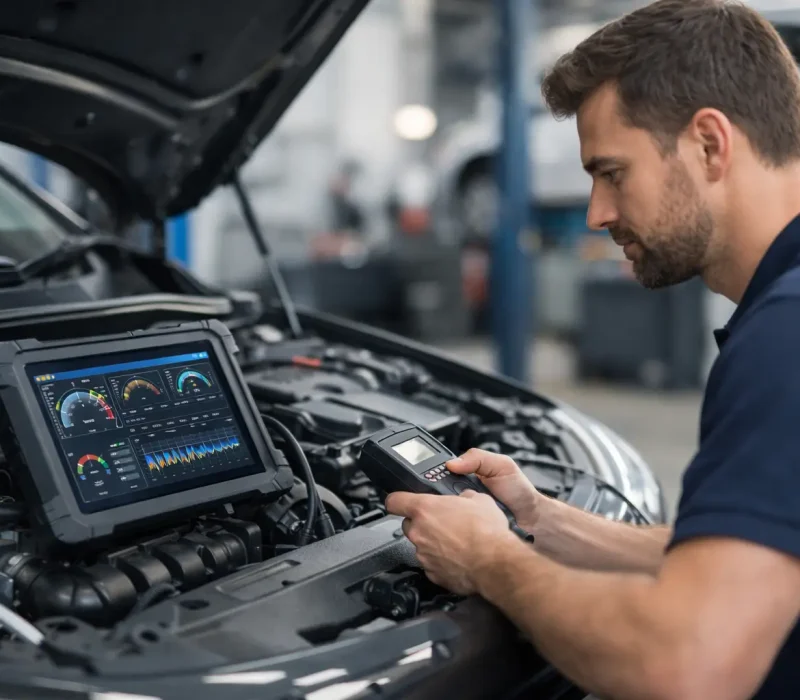



A manufacturer tolerance ECU remap is not about chasing the biggest headline figure from your engine. It is about improving the way your vehicle delivers power and torque while respecting the limits of its engine, turbocharger, fuel system, gearbox and emissions equipment. For most drivers, that means a stronger, smoother vehicle that is easier to live with every day – not a car that feels aggressive for the sake of it.
At High REVS Performance, remaps are custom-written for the individual vehicle, then applied at your home or workplace using professional tuning equipment. The starting point is always the same: understand the vehicle’s condition, how it is used and what you want it to do better.
What does manufacturer tolerance mean in ECU remapping?
The engine control unit, or ECU, manages far more than fuel quantity. It controls boost pressure, torque demand, injection timing, throttle behaviour, rail pressure, temperature protection and a range of torque limiters. Vehicle manufacturers set these parameters conservatively enough to cover different markets, fuels, climates, service histories and driving styles.
A manufacturer tolerance ECU remap works within sensible mechanical and thermal margins rather than simply pushing every value upwards. The calibration is adjusted in a controlled way so the engine can make use of its available potential without asking supporting components to operate beyond an appropriate level.
That distinction matters. A generic file may produce a peak power claim, but it cannot account properly for a particular vehicle’s mileage, clutch condition, DPF loading, fault history or intended use. A well-planned remap considers the whole vehicle, not just one number on a graph.
There is no single official percentage that applies to every make and model. A safe increase for one 2.0-litre diesel may be unsuitable for another engine with a different turbo, injector specification, transmission or cooling arrangement. Manufacturer tolerances are therefore a calibration principle, not a marketing shortcut.
Why manufacturers leave performance on the table
Manufacturers often use one engine across several models and power outputs. The same basic unit may appear in a family hatchback, SUV, van or light commercial vehicle, each with different drivetrain components and factory software. It also needs to perform reliably in very cold and very hot conditions, on varying fuel quality and with owners who may not follow the same maintenance schedule.
Factory calibration is designed for those broad conditions. It must balance emissions, economy, refinement, durability, tax bands and product positioning across an entire model range. That leaves scope, on suitable vehicles, to improve torque delivery and throttle response through a carefully written Stage 1 calibration.
For a commuter, the benefit is often less gear changing and more effortless motorway overtaking. For a diesel owner towing a caravan, trailer or work equipment, stronger mid-range torque can make hills and junction pull-outs more controlled. For a small fleet, an Eco or Balanced remap can make everyday driving more relaxed and may support improved fuel economy when driven sensibly.
The safe remapping process starts before programming
An ECU remap should never be used to hide a mechanical problem. If an engine already has a boost leak, injector issue, slipping clutch, blocked DPF or recurring warning light, adding torque can make the underlying fault more obvious and, in some cases, more expensive.
That is why proper diagnostics are part of responsible tuning. Before any calibration is considered, fault codes should be checked and the vehicle assessed for issues that could affect reliability or results. Live data can help identify concerns with airflow, boost control, intake temperatures, fuel pressure and emissions-system operation.
A healthy service history is equally valuable. Correct oil specification, timely oil changes, quality filters and attention to cooling-system issues all matter. On a diesel, the DPF must be able to regenerate correctly. If it is excessively loaded with soot or ash, a chemical DPF clean or repair may be the sensible first step rather than a remap.
The same applies to carbon build-up. Restricted intake airflow can leave a vehicle feeling flat, hesitant or poor on fuel. Carbon cleaning may restore lost response on affected engines, but it is not a substitute for diagnosing the reason deposits have accumulated.
How a manufacturer tolerance ECU remap feels on the road
A good calibration should feel measured rather than dramatic. The most noticeable change is commonly torque in the middle of the rev range. Instead of needing to press the accelerator harder or change down as often, the vehicle responds more readily from normal road speeds.
Throttle response can be sharper, but it should remain predictable in traffic and on wet roads. Power delivery should be smooth, with no sudden surge that unsettles the tyres, clutch or drivetrain. On automatic vehicles, torque management is particularly important because the engine and gearbox must work together as designed.
Results vary by vehicle. Turbo-diesel engines often respond especially well because controlled changes to boost and fuelling can provide a useful increase in mid-range pulling power. Naturally aspirated petrol engines usually have less scope for major gains, although throttle response and drivability may still improve depending on the model.
Fuel economy also depends on how the vehicle is driven. Extra torque can allow earlier upshifts and lighter throttle openings, which may help MPG on regular journeys. However, using the added performance frequently, towing heavier loads or driving at higher speeds will use more fuel. An Eco remap is not a guarantee of savings, but it can support them where driving patterns are suitable.
Choosing Eco, Balanced or Stage 1 Power
The right remap depends on the outcome you value most. An Eco calibration is aimed at drivers who cover regular mileage and want usable torque without making performance the priority. It can suit motorway commuters, business users and vehicles that spend much of their time at steady speeds.
A Balanced remap sits between economy and performance. It is often a practical choice for drivers who want a more responsive vehicle for daily use, school runs, country roads and longer trips, while still keeping fuel efficiency in mind.
A Stage 1 Power remap is for drivers who want the strongest safe improvement available from a standard, healthy vehicle. It can transform overtaking response and in-gear acceleration, but it also places greater demand on the clutch, tyres and drivetrain when the extra torque is used. The vehicle’s condition and transmission type must guide the final calibration.
No package should be treated as a one-size-fits-all file. Two identical-looking vehicles can have very different needs because of mileage, maintenance, modifications and how they are driven.
What a careful remap does not do
Staying within sensible tolerances does not remove every ownership responsibility. A remap cannot repair worn components, reverse poor servicing or make an unsuitable vehicle suitable for continuous heavy loading. It also does not mean that an older clutch or automatic gearbox will suddenly have the same capacity as a new, stronger unit.
It should never involve disabling emissions equipment to cover up faults. DPF, EGR and engine-management warnings need correct diagnosis. Removing or tampering with road-going emissions controls can create legal, MOT, insurance and reliability problems. A professional approach is to find the cause, repair or clean what is required, then tune a healthy vehicle.
You should also tell your insurer about any ECU remap. Insurance terms differ, and declaring modifications helps avoid uncertainty if you need to make a claim. For vehicles still covered by a manufacturer warranty, check the warranty terms before arranging any software modification.
Mobile tuning without the workshop inconvenience
Convenience should not mean cutting corners. A mobile service allows the ECU to be read, checked and programmed at your home or workplace, saving time away from work or family commitments. It is particularly useful for busy drivers, vans and light commercial vehicles where downtime has a direct cost.
The important part is the standard of the work, not the postcode where it happens. Genuine professional tools, a stable programming process and a custom calibration are what protect the vehicle during the job. The technician should be able to explain the expected gains, the limitations and whether your vehicle is a suitable candidate before any work begins.
For drivers in Tamworth and across Staffordshire, the sensible question is not simply, “How much more power can I get?” Ask how the vehicle will be checked, how torque will be managed and whether the calibration fits the miles, loads and roads you actually drive. The best remap is the one that makes every journey easier while leaving you confident in the vehicle beneath your right foot.