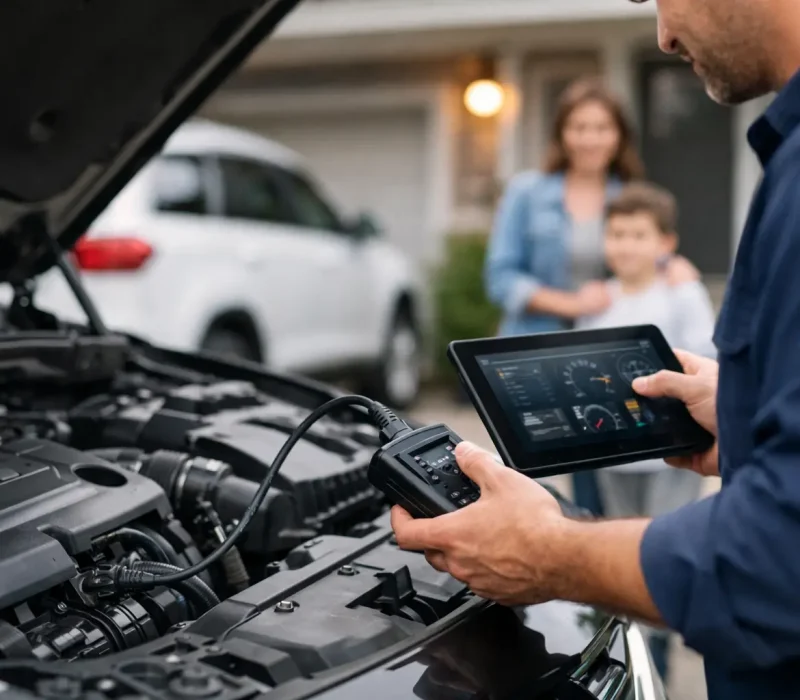



A remap does not need to mean arranging lifts, losing a working day or sitting in a waiting room. With at home car remapping, a qualified technician can carry out professional ECU calibration on your driveway or at your workplace, provided the vehicle is suitable and the process is approached properly.
For many drivers, the appeal is simple. A diesel estate that feels flat when loaded, a van that spends its life on the motorway, or a family car that needs stronger overtaking response can be improved without the inconvenience of visiting a workshop. The key is distinguishing a custom, safety-led mobile service from a cheap file upload with no assessment behind it.
What at home car remapping actually involves
Car remapping changes the calibration data within the engine control unit, or ECU. The ECU manages parameters including fuel delivery, boost pressure, torque limits, throttle response and, on many vehicles, gearbox torque requests. Manufacturers commonly use a broad calibration to cover different markets, fuel quality, climates and operating conditions. A carefully written remap can optimise suitable vehicles within sensible manufacturer tolerances.
Mobile remapping uses the same professional approach as a workshop-based job. The difference is where the appointment happens. The technician connects genuine tuning and diagnostic equipment to the vehicle, reads the original software, carries out pre-tuning checks, applies the appropriate custom calibration and verifies that the vehicle is operating as expected afterwards.
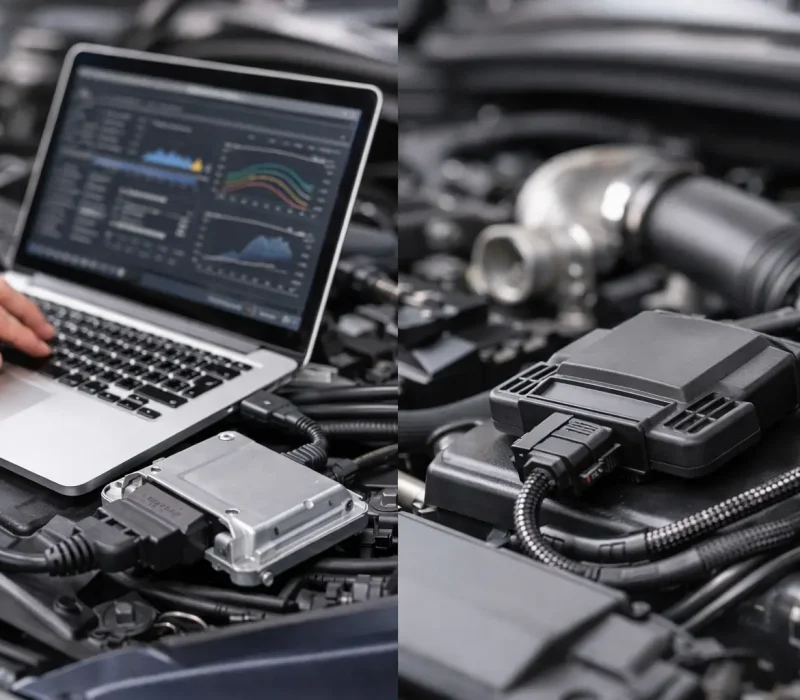
It is not the same as plugging in a generic performance box. A tuning box usually alters selected signals sent to the ECU. A proper remap works with the ECU calibration itself and should be tailored to the exact vehicle, engine variant and intended use.
Why drivers choose a mobile remap
Convenience is the obvious benefit, but it is not the only one. Mobile work allows the owner to be present, discuss how the vehicle is used and get clear answers before any changes are made. That matters because the right calibration for a high-mileage commuter is not always the right one for a vehicle used to tow a caravan, carry tools or provide quicker weekend driving.
An Eco remap is generally aimed at improving low- and mid-range torque delivery so the engine does not need to work as hard in normal driving. A Balanced remap provides a measured blend of improved response and potential fuel-saving benefits. A Stage 1 Power remap places more emphasis on performance, with stronger torque and more confident acceleration while retaining sensible safety limits.
Real-world results depend on the car and the driver. Improved torque can make a vehicle easier to drive at lower revs and reduce unnecessary gearchanges. That may help fuel economy on regular motorway and A-road journeys. However, using the extra performance frequently will use more fuel. A remap creates the potential for better efficiency; it does not override driving style, traffic conditions or mechanical condition.
Is at home car remapping safe?
It can be safe when the vehicle is healthy, the calibration is written correctly and the technician uses proper equipment. It is not a suitable shortcut around existing faults, poor servicing or worn components.
Before work begins, a professional technician should establish whether there are stored fault codes, warning lights, running issues or signs of reduced performance. Battery voltage also matters. The vehicle needs stable power throughout the programming process, as interrupted communication can cause serious ECU problems. A suitable mobile setup accounts for this rather than treating the remap as a five-minute task.
A responsible service should also be willing to say no. If diagnostics show a boost leak, DPF fault, injector concern, clutch slip or another underlying issue, it should be investigated before a performance calibration is installed. More torque can expose a component that was already near the end of its service life. The remap did not necessarily create the weakness, but it may make it impossible to ignore.
For that reason, custom-written software within manufacturer tolerances is a better long-term choice than an aggressive generic file. The biggest advertised figures are rarely the full story. Smooth torque delivery, predictable throttle response and calibration appropriate to the engine, drivetrain and intended use are what make a vehicle enjoyable day after day.
What should be checked before a mobile remap?
A good appointment begins with a conversation. Be clear about whether you mainly commute, cover high motorway mileage, tow, carry heavy loads or simply want sharper performance. That information helps determine whether an Eco, Balanced or Stage 1 Power calibration is appropriate.
The vehicle should be serviced to schedule, with correct oil and filters, and should not have unresolved engine management warnings. Diesel owners should pay particular attention to DPF health. A blocked or heavily loaded DPF, failed sensor or incomplete regeneration issue will not be solved by remapping. In fact, tuning a vehicle before dealing with a genuine emissions-system fault can create further problems.
If the car feels sluggish, regularly enters limp mode, produces excessive smoke or has inconsistent power delivery, diagnostics come first. Carbon build-up, EGR-related issues, split boost hoses, injector faults and DPF restrictions all affect how an engine performs. Resolving the cause gives the remap a sound mechanical base.
There are four practical things to have ready for the appointment:
- A safe, accessible place to park with room for the technician to work.
- The vehicle keys, locking wheel nut key if relevant, and details of recent fault messages.
- A reasonably charged battery and no unnecessary electrical loads running.
- An honest outline of how the vehicle is used, including towing, commercial work and typical mileage.
These simple checks help make the visit efficient and reduce the chance of surprises during the process.
What happens on the day?
The technician will normally confirm the vehicle details and carry out diagnostic checks before reading the existing ECU data. The original software is retained, which is important for traceability and for situations where the vehicle may later need returning to standard.
Once the vehicle has been assessed, the calibration is prepared for its engine and requirements. The ECU is then programmed using professional-grade equipment, with voltage and communication monitored throughout. After programming, fault codes are checked again and the vehicle is assessed for correct operation.
The exact appointment time varies by vehicle and ECU type. Some cars can be completed relatively quickly, while others need more involved access or programming procedures. It is better to allow enough time for diagnostics and verification than to rush a process that affects how the engine operates.
The trade-offs to consider
A remap is a modification, so it is sensible to consider insurance, warranty and maintenance before booking. You should tell your insurer about any ECU remap, as non-disclosure can affect cover. If the vehicle is under a manufacturer or third-party warranty, check its terms as modifications may influence a future claim.
On manual vehicles, additional torque can reveal a marginal clutch or dual-mass flywheel. On automatic vehicles, the gearbox and its servicing history matter. The answer is not always to avoid remapping, but to choose a conservative calibration that respects the vehicle’s condition and use.
Emissions compliance matters too. A reputable service should not remove, bypass or disable emissions-control systems for road use. DPF, EGR and catalytic-converter faults should be diagnosed and repaired correctly. Chemical DPF cleaning or carbon cleaning may be appropriate where there is a genuine restriction or build-up issue, but each vehicle needs assessment rather than assumptions.
Choosing the right service for your vehicle
Ask how the vehicle will be checked before tuning, whether the software is custom-written, what tools are used and how the calibration is matched to your driving needs. Clear answers matter more than dramatic claims.
For drivers across Tamworth and Staffordshire, High REVS Performance provides mobile ECU remapping with diagnostics-led checks and calibrations selected around real use, whether that means economy-focused commuting, everyday flexibility or stronger Stage 1 performance. The aim is practical improvement without the unnecessary disruption of a garage visit.
The best result is rarely the largest number on a graph. It is a vehicle that pulls cleanly, responds when you need it to, remains reliable in normal use and suits the journeys you actually make. Start with the car’s condition, be realistic about your priorities and choose a technician prepared to put sound engineering before a quick sale.