


A car that hesitates when you pull away from a junction, feels flat when overtaking or takes too long to react to pedal input is more than frustrating. It can make towing, commuting and joining fast-moving traffic needlessly difficult. The best fixes for poor throttle response depend on why the engine is holding back – and that means identifying the cause before fitting parts or changing software.
Throttle response is not simply about peak horsepower. It is the speed and confidence with which the engine delivers torque when you ask for it. On modern petrol and diesel vehicles, that response is shaped by air flow, fuelling, turbo boost, emissions systems, sensors and ECU calibration. A restriction or fault in any one of these areas can make a capable vehicle feel reluctant.
Start with proper diagnostic checks
A warning light is useful, but its absence does not prove everything is working correctly. Many drivability faults begin as stored or pending fault codes, implausible sensor readings or values that are technically within range but no longer optimal under load.
Professional diagnostics should assess live data as well as fault codes. That includes requested versus actual boost pressure, air-mass readings, fuel pressure, throttle position, EGR operation, DPF soot loading and regeneration history where applicable. A road test may also be needed, because a vehicle can behave perfectly while stationary yet lose response when climbing a hill or accelerating in a higher gear.
This approach avoids the common mistake of replacing a sensor because it is suspected rather than proven faulty. It also prevents an ECU remap from being used to mask a mechanical or emissions-related issue. A healthy engine is the right starting point for any performance or economy improvement.
Best fixes for poor throttle response: restore air flow
Restricted air flow is one of the most frequent reasons for sluggish acceleration, particularly on direct-injection petrol engines and modern diesels. The engine needs accurate, unrestricted air delivery to create the torque the ECU is requesting.
Check the air filter and intake system
An overdue air filter can reduce available air, while damaged intake pipework can allow unmetered air in or let pressurised boost escape. Split intercooler hoses, loose clips and perished vacuum lines are especially worth checking on turbocharged vehicles. Even a small leak can cause slow spool-up, reduced pulling power and inconsistent response.
The mass air flow sensor also plays a central role. If it reports the wrong amount of incoming air, the ECU may limit fuelling or calculate boost incorrectly. The correct repair depends on diagnostic readings. Cleaning or replacing components without evidence can create more problems than it solves.
Remove carbon buildup where it affects performance
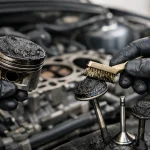
Carbon deposits can gradually narrow intake passages and affect the way air enters the engine. This is common on diesel engines with EGR systems, but direct-injection petrol engines can suffer too. Typical signs include a dull throttle pedal, uneven low-speed pull, poorer fuel economy and a vehicle that feels less willing under load than it used to.
Professional engine carbon cleaning can help restore air flow where deposits are contributing to restricted breathing. It is not a cure for every fault, and it will not repair a failed turbocharger or sensor. However, where the intake and combustion system are contaminated, it can be a practical way to restore smoother running and sharper response without replacing major components unnecessarily.
Deal with DPF and EGR problems early
For diesel owners, a loaded DPF can have a direct effect on response. As soot loading increases, exhaust back pressure rises. The ECU may then reduce power to protect the engine and emissions system, sometimes progressing to limp mode.
Short journeys, interrupted regenerations and regular urban driving make this more likely. A motorway run can support a normal regeneration only when the vehicle is otherwise healthy and the soot level is not already excessive. It cannot be relied on as a fix for a genuinely blocked filter, failed pressure sensor or underlying EGR, injector or boost fault.
DPF chemical cleaning is often a sensible option when diagnostics confirm the filter is restricted but still serviceable. Done correctly, it can restore exhaust flow and help avoid the cost of premature DPF replacement. The cause of the blockage still matters. If the car is over-fuelling, failing to reach operating temperature or unable to complete regeneration, those faults must be addressed or the DPF will load up again.
An EGR valve that is sticking open can also make an engine feel flat at low revs. Too much exhaust gas entering at the wrong time reduces the fresh oxygen available for combustion. Accurate diagnostics can distinguish an EGR issue from similar symptoms caused by a boost leak, carbon buildup or air-mass sensor fault.
Inspect turbo boost and fuel delivery
Turbocharged engines should build boost progressively and predictably. If response arrives late, disappears intermittently or is accompanied by a whistle, hiss or smoke, the boost system deserves close attention. Causes range from a split hose or sticking actuator to a vacuum-control issue, faulty boost sensor or worn turbocharger.
Fuel delivery is equally important. A clogged fuel filter, weak lift pump, injector imbalance or fuel-pressure fault can make the engine hesitate when demand rises. Diesel engines may feel especially rough or unwilling at lower revs, while petrol engines may misfire or stumble under acceleration.
These are not areas for guesswork. Live diagnostic data can show whether fuel pressure and boost are meeting the ECU’s requested targets. That gives the owner a clear basis for repair rather than an expensive chain of trial-and-error part replacements.
Make sure basic maintenance is not holding it back
Poor response is sometimes caused by the simple jobs that have been pushed back. Spark plugs on petrol vehicles, fuel filters on diesels, oil servicing and correct-grade lubricants all affect how consistently an engine performs. A worn plug may not trigger an immediate dashboard warning, but it can weaken combustion when accelerating hard.
It is also worth checking the brakes are not binding and that tyre pressures are correct. These issues do not change engine response at the pedal itself, but they can make a car feel unusually heavy and slow to gather speed. For high-mileage drivers and small fleets, keeping servicing on schedule is often the most cost-effective protection against reduced economy and avoidable downtime.
Consider ECU calibration only when the vehicle is healthy
Once the vehicle has been checked and any faults repaired, a custom ECU remap can be one of the most effective fixes for an engine that feels artificially restrained. Manufacturers often use conservative calibration settings across several markets, fuel grades and model variants. A carefully written map can improve the relationship between pedal input, torque delivery and boost control within safe manufacturer tolerances.
The right option depends on how the vehicle is used. An Eco remap can prioritise stronger low-to-mid-range torque and reduced throttle effort, which may help commuters and high-mileage drivers maintain momentum with less input. A Balanced remap suits owners who want a noticeable improvement in everyday response while retaining an economy focus. Stage 1 Power is generally better suited to drivers who want stronger acceleration, more confident overtaking and improved towing performance.
A remap is not a repair for a blocked DPF, worn clutch, boost leak or injector fault. In fact, adding torque to a vehicle with unresolved faults can expose the issue more quickly. Reputable tuning begins with a health check, uses genuine professional tools and applies a calibration written for the specific vehicle rather than a generic file loaded without assessment.
Choose the fix that matches the symptom
If the vehicle has become gradually slower and economy has worsened, carbon buildup, DPF restriction or overdue servicing may be more likely than a sudden electronic failure. If the problem is intermittent, accompanied by warning lights or occurs only under hard acceleration, diagnostics should take priority. If the car has always felt overly soft from the factory but is mechanically sound, a carefully planned ECU calibration may deliver the improvement you are looking for.
For drivers in Tamworth and Staffordshire, a mobile diagnostic and performance service removes the need to lose a day at a workshop. High REVS Performance can assess the vehicle at home or work, identify what is limiting response and recommend the appropriate route – maintenance, cleaning, repair or a safe custom remap.
The most useful next step is not to chase the biggest advertised power figure. Get the engine breathing, fuelling and controlling boost as it should, then choose improvements that suit the way you actually drive.