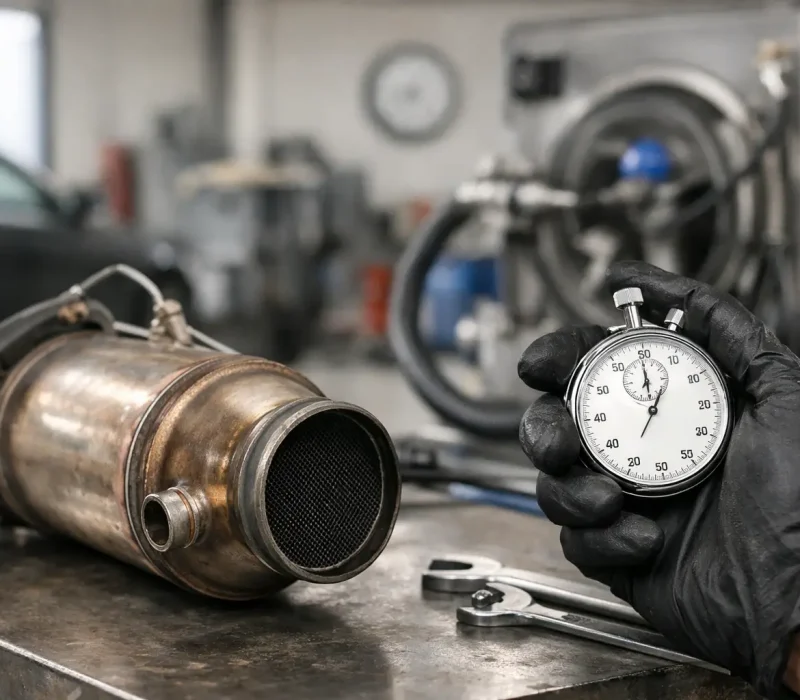



A car that has gradually become flat to drive rarely changes overnight. Throttle response softens, fuel economy slips, cold starts feel less settled and a diesel may spend more time trying to manage emissions. The best reasons to clean carbon deposits are not about chasing a quick performance figure. They are about restoring the airflow and combustion conditions your engine needs to run efficiently, reliably and as intended.
Carbon is a normal by-product of combustion. The issue begins when soot, oil vapour and exhaust gases collect where they should not – commonly around the intake system, EGR valve, inlet manifold, intake valves and turbocharger components. Short journeys, stop-start driving, low engine temperatures and long service intervals can all speed up the process, particularly on modern diesels.
Why carbon deposits affect modern engines
Modern engines are designed around precise airflow, fuelling and emissions control. When carbon narrows an intake passage or restricts an EGR valve, the engine management system has to work around conditions that are no longer correct. It may reduce power, increase fuelling in certain situations or trigger a fault code when sensor readings fall outside their expected range.
Diesel engines are especially prone because their EGR systems deliberately introduce a controlled amount of exhaust gas back into the intake to reduce NOx emissions. Combine that soot with oil mist from the breather system and a sticky, stubborn deposit can form. Direct-injection petrol engines can also suffer intake-valve deposits, as fuel does not wash over the back of the valves in the same way it does on many port-injected engines.
A professional carbon clean is therefore a maintenance decision, not a substitute for diagnosis. The correct approach depends on where the deposit is, how severe it is and whether an underlying fault is creating excess soot or oil contamination.
The best reasons to clean carbon deposits
Restore airflow and usable performance
An engine needs air just as much as it needs fuel. When carbon reduces the effective size of intake runners, contaminates sensors or causes an EGR valve to stick, the engine cannot breathe as freely as it should. The result can be a hesitant pull away from a junction, slower overtaking response or a noticeable lack of torque when towing.
Cleaning the affected system can restore the airflow path and help the engine respond more consistently. On a healthy vehicle with genuine carbon restriction, drivers often notice smoother acceleration and a stronger mid-range rather than an exaggerated peak-power transformation. That matters far more on day-to-day Staffordshire roads, where usable torque makes commuting, carrying tools or joining faster traffic less effortful.
Improve fuel economy when deposits are the cause
Poor MPG has several possible causes: tyre pressures, driving pattern, brake drag, thermostat issues, injector problems and DPF regeneration all deserve consideration. Carbon buildup is one potential contributor, not an automatic explanation for every drop in economy.
However, restricted airflow and incorrect EGR operation can make combustion less efficient. A diesel that is regularly soot-loading may also initiate more frequent active DPF regenerations, using extra fuel to raise exhaust temperatures. Addressing carbon in the intake and EGR system can help return the engine to more stable operating conditions, particularly for high-mileage drivers who have seen consumption creep up without an obvious change in their driving.
The realistic goal is restored efficiency, not a promise of impossible MPG figures. A proper assessment gives a clearer indication of whether carbon cleaning is likely to offer a worthwhile return.
Reduce the conditions that lead to DPF trouble
Carbon cleaning and DPF cleaning are different services, but they are closely connected. The intake, EGR and DPF systems all influence how cleanly a diesel runs. If an EGR valve is heavily contaminated or airflow is restricted, the engine may produce more soot. That additional soot has to go somewhere, and the DPF is designed to catch it.
A DPF can normally regenerate during suitable driving conditions, but repeated short trips or an engine that is already producing excessive soot can overwhelm that process. Cleaning carbon deposits in the relevant parts of the engine may reduce one source of DPF loading and help prevent a minor drivability problem becoming a warning light, limp mode or expensive replacement filter.
It does not mean every blocked DPF needs an intake carbon clean, or vice versa. Diagnostic readings, fault codes, pressure data and the vehicle’s use pattern should direct the repair. Treating only the symptom can waste money.
Help prevent sticking EGR valves and related faults
The EGR valve operates in a harsh environment. It controls hot, sooty exhaust gas and can become restricted or stick open or closed as deposits build. A sticking EGR valve may cause rough idle, poor throttle response, smoke, reduced power or an engine management warning. In some cases, it can contribute to difficult starting or stalling.
Cleaning is often a sensible option when the valve is contaminated but mechanically sound. If its actuator, position sensor or internal mechanism has failed, replacement may be necessary instead. This is why fault-code reading alone is not enough: a code identifies the system reporting a problem, while practical diagnosis helps establish whether carbon is the cause.
Protect drivability for towing, work and long-distance use
Drivers who tow caravans or trailers, cover motorway miles or rely on a van for work need predictable performance. A gradual loss of torque is easy to overlook until the vehicle is loaded, climbing or trying to maintain speed safely. Carbon deposits can make an engine feel strained under those higher-load conditions, even if it appears broadly acceptable on a short local journey.
Restoring clean airflow supports the torque delivery the vehicle was designed to provide. For light commercial and small fleet operators, that can mean fewer avoidable interruptions and a better chance of dealing with a developing issue before it turns into a recovery call or lost working day.
Support smoother running before considering a remap
An ECU remap works by recalibrating engine parameters within safe manufacturer tolerances. It is not intended to mask an engine that is struggling with blocked intake components, DPF faults or inaccurate sensor readings. Applying extra demand to a vehicle with existing maintenance issues is rarely the right starting point.
For owners considering an Eco, Balanced or Stage 1 Power remap, resolving carbon-related faults first provides a better foundation. A clean, healthy engine is more likely to deliver the throttle response, torque and efficiency gains expected from a custom-written calibration. It also allows meaningful diagnostic checks before any tuning work is considered.
When carbon cleaning is likely to be worthwhile
Carbon cleaning makes most sense when the symptoms, diagnostics and service history point in the same direction. A high-mileage diesel used mainly for short urban runs is a common candidate, especially where there is sluggish performance, an EGR-related code, recurring DPF regenerations or no clear mechanical fault.
It can also be appropriate for a petrol direct-injection engine with rough running, reduced response or deposits confirmed during inspection. The vehicle’s age alone is not a diagnosis. Some cars cover substantial mileage with little issue because they regularly reach operating temperature and complete longer journeys, while lower-mileage cars used only for school runs can build deposits surprisingly quickly.
There are occasions when cleaning is not the answer. A boost leak, failed turbo actuator, worn injector, damaged sensor, coolant-temperature fault or excessive oil consumption can create similar symptoms. Cleaning may offer a temporary improvement at best if the root cause remains. A technician should check fault codes and live data, then explain what the findings mean before recommending work.
What professional carbon cleaning should involve
The process should start with a discussion of how the vehicle is used and the symptoms you have noticed. Diagnostic scanning can identify stored and pending faults, while live readings can help assess airflow, EGR behaviour, boost control and DPF-related information where relevant.
The cleaning method must suit the engine and the affected components. Professional-grade chemical cleaning is designed to break down contamination without dismantling major parts unnecessarily, but access, deposit severity and manufacturer guidance all matter. Severe physical restriction or a failed component may require removal, further investigation or replacement rather than a one-size-fits-all treatment.
At High REVS Performance, mobile diagnostics and maintenance work mean this assessment can be carried out at your home or workplace, saving the inconvenience of arranging a garage visit. The priority is a clear recommendation based on the vehicle in front of us, not selling a treatment that does not match the fault.
Keeping deposits from returning quickly
No cleaning service can change a vehicle’s driving pattern permanently, but a few practical habits can help. Give the engine regular runs long enough to reach full operating temperature, use the correct oil specification, keep up with servicing and act on warning lights early. For diesels, allowing suitable journeys for DPF regeneration is particularly valuable.
If you mainly make short trips, periodic diagnostics can be more useful than waiting for limp mode. Catching an airflow or EGR issue early is generally cheaper and less disruptive than dealing with a heavily loaded DPF later.
If your vehicle has lost its usual pull, is using more fuel than expected or has started showing emissions-related warnings, arrange a proper diagnostic check before the problem grows. The right maintenance work at the right time can restore the way your engine drives and help keep it dependable for the miles ahead.