


A caravan that starts to sway on the A-road, a loaded trailer that leaves the vehicle struggling on hills, or a diesel that drops into limp mode mid-job can turn a routine tow into an expensive inconvenience. The best ways to improve towing performance are not limited to adding power. They start with a correctly matched, well-maintained vehicle and trailer, then build towards stronger, more usable torque where it is safe and appropriate.
For drivers towing caravans, horseboxes, plant trailers or work equipment, the goal is predictable pulling power, stable handling and reliable temperatures. A few practical checks can make an immediate difference. Professional maintenance and a custom ECU remap can then improve how the vehicle responds under load without pushing it beyond sensible operating limits.
Start with legal weights and proper load balance
No performance upgrade can compensate for an overloaded or poorly loaded trailer. Check the vehicle’s towing limit, gross train weight, maximum axle loads and towball noseweight on the VIN plate and in the handbook. These figures matter more than advertised towing claims, especially when passengers, tools and cargo are also in the vehicle.
Load the trailer with heavy items low down and as close to the axle line as practical. Aim for a stable, positive noseweight within both the vehicle and towbar limits. Too little noseweight can encourage instability; too much can lighten the front axle, reducing steering and braking control. Secure every item properly. A load shifting inside a box trailer can quickly affect how the outfit behaves.
It also pays to consider the towing match, not simply the maximum permitted weight. A vehicle may be legally capable of pulling a trailer close to its limit, but a frequent tower will usually benefit from more reserve in vehicle weight, torque, cooling capacity and braking performance.
Tyres, brakes and suspension set the foundation
Towing exposes weaknesses that may go unnoticed during normal solo driving. Tyres need sufficient tread, no sidewall damage or age-related cracking, and pressures set for the actual load. Use the towing or fully laden pressure recommendations provided by the vehicle manufacturer, not the everyday unladen setting. Check the trailer tyres too, including the spare. Trailer tyres can look healthy while ageing out through low mileage and standing periods.
Brakes should feel positive and progressive before the trailer is attached. If the vehicle pulls to one side, the pedal feels soft, or a warning light is present, resolve the issue first. On braked trailers, make sure the overrun mechanism, breakaway cable, cables and drums or discs are serviced as required.
Suspension deserves similar attention. Worn dampers, tired springs, damaged bushes and incorrect wheel alignment all reduce control when towing. Air-assist or uprated rear springs can help a vehicle sit level where appropriate, but they do not increase the legal payload or towing limit. Their value is in maintaining a better towing attitude and headlamp aim, not bypassing the manufacturer’s ratings.
Check the cooling system before asking for more
Long gradients, summer traffic and repeated stop-start work place substantial demand on the cooling system. Inspect coolant level and condition, and address leaks, damaged hoses, weak radiator fans or a sticking thermostat before towing season. A clean radiator and intercooler stack is equally important on diesel vehicles. Mud, insects and debris reduce airflow just when the engine needs it most.
Automatic gearboxes require particular care. Towing creates heat, and heat shortens transmission fluid life. Follow the manufacturer’s severe-use servicing guidance where applicable, and investigate delayed shifts, flare, shudder or transmission warnings rather than towing through them. For some vehicle and usage combinations, an approved additional transmission cooler may be worthwhile, but it should be selected and fitted correctly.
Restore the engine’s available torque first
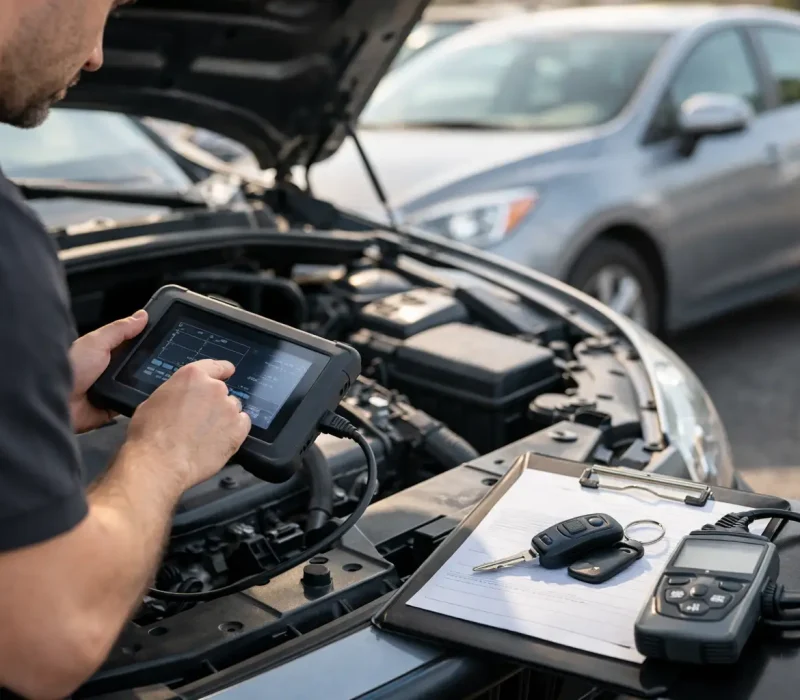
A healthy engine will tow better than a modified engine with unresolved faults. If acceleration has become flat, economy has fallen, or the vehicle produces excessive smoke, start with diagnostics rather than assuming it needs a remap.
Modern diesels rely on clean airflow, accurate sensor readings and a functioning emissions system to deliver torque consistently. Carbon buildup around the intake system can restrict airflow and dull throttle response. A blocked or heavily loaded DPF can raise exhaust backpressure, trigger warning lights and cause reduced-power mode. Faulty boost-control components, split hoses, tired injectors or sensor faults can create similar symptoms.
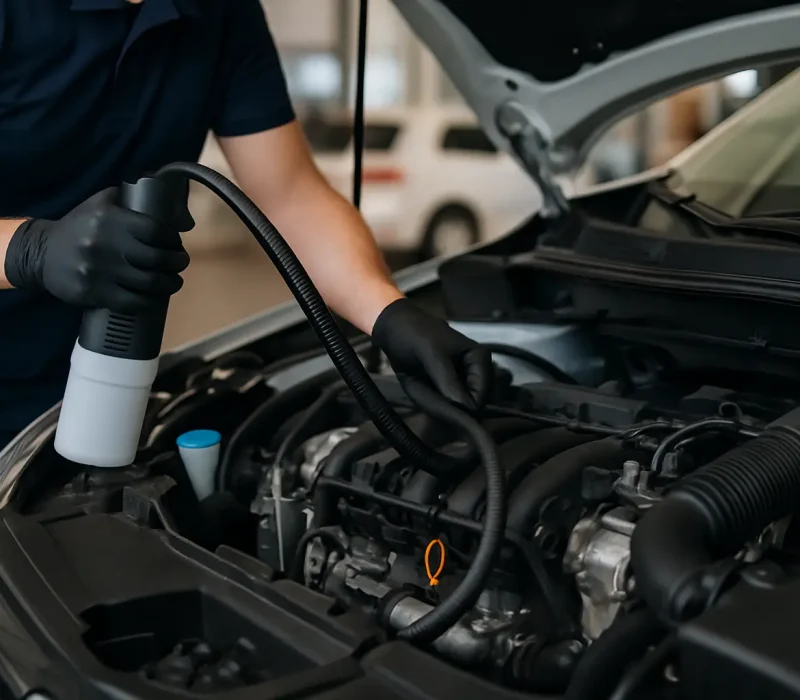
Professional diagnostics identify the cause before work begins. Where suitable, DPF chemical cleaning can remove accumulated soot and ash-related contamination without the cost of premature filter replacement. Engine carbon cleaning may also help restore airflow and response on vehicles affected by intake deposits. Neither service is a substitute for fixing the underlying reason a DPF is repeatedly loading up, such as failed sensors, poor regeneration conditions or short-trip use.
For high-mileage drivers and light commercial operators, this maintenance-first approach protects uptime. It is far better to deal with declining performance at home or at work than to lose a towing vehicle when a warning light becomes a limp-mode fault.
Best ways to improve towing performance with ECU tuning
Once the vehicle is mechanically sound, a custom ECU remap can be one of the most effective ways to improve towing performance. The biggest benefit is usually not peak horsepower. It is a stronger, broader spread of torque that reduces the need for constant gear changes and makes joining faster traffic, climbing hills and carrying a full load feel less strained.
A good towing calibration improves usable mid-range response while retaining sensible safety margins. It should be written for the specific vehicle, engine, software version and intended use – not uploaded as a generic file. The engine, clutch, gearbox, turbocharger and cooling system must all be considered.
The right option depends on how you use the vehicle. An Eco remap can suit drivers covering regular motorway miles with moderate loads, where improved low-to-mid-range efficiency may help reduce fuel use. A Balanced calibration is often a sensible choice for mixed commuting and towing, offering a useful increase in torque without chasing the highest possible output. A Stage 1 Power remap may suit a healthy vehicle that frequently tows near its working limit, but only where the drivetrain condition and servicing history support it.
More torque is not automatically better. A manual vehicle with a worn clutch may slip under a higher load, while an automatic vehicle with overdue fluid servicing may not be the right candidate for an increase. The most professional recommendation is sometimes to service, repair or retain a milder tune first.
Keep modifications safe, declared and realistic
Any performance modification should be declared to your insurer. Check your policy before booking work and keep a record of the calibration and vehicle condition. You must also continue to meet emissions and roadworthiness requirements. Removing or disabling emissions-control equipment for road use is not a responsible solution to DPF problems.
Drivers should also adjust their towing technique to match the conditions. Select a lower gear early on long inclines rather than labouring the engine at very low revs. Leave greater braking distances, use engine braking where appropriate, and slow down if crosswinds or passing lorries affect stability. Extra torque helps progress, but it does not change the physics of a heavy trailer.
Build a towing setup you can rely on
The strongest towing vehicle is one that has been checked as a complete system: legal weights, balanced load, correct tyres, effective brakes, healthy cooling and a clean-running engine. A carefully chosen remap then adds the useful torque that makes day-to-day towing calmer and more capable.
For drivers across Tamworth and Staffordshire, High REVS Performance can carry out mobile diagnostics, DPF and carbon cleaning, and custom ECU tuning at your home or workplace. The practical starting point is simple: establish the vehicle’s condition first, then choose improvements that suit the load you tow and the miles you actually drive.