


A DPF warning light is rarely just an inconvenience. Left unresolved, a restricted diesel particulate filter can reduce power, trigger limp mode, raise fuel use and, in some cases, lead to an expensive replacement. This guide to diesel particulate filter cleaning explains what is actually happening inside the filter, when a proper clean is worthwhile and when the fault needs deeper diagnosis.
What a diesel particulate filter does
A diesel particulate filter, usually called a DPF, sits in the exhaust system and captures soot produced during combustion. It is fitted to most modern diesel cars and light commercial vehicles to reduce particulate emissions from the tailpipe.
The filter is designed to clean itself through regeneration. During a successful regeneration, exhaust temperatures rise high enough to burn accumulated soot into a much smaller amount of ash. A driver may not notice the process at all, although some vehicles show slightly increased fuel consumption, a different idle speed or cooling fans running after the engine is switched off.
The problem is that regeneration needs the right conditions. Repeated short journeys, low-speed town driving, interrupted runs and an underlying engine fault can all prevent it from completing. Soot then continues to build until the vehicle records a fault or restricts performance to protect the engine and exhaust system.
Soot, ash and why the difference matters
Not every DPF blockage is the same. Soot is the combustible material that the vehicle should remove during regeneration. If the soot loading is moderate and there are no faults preventing regeneration, a sustained motorway run may sometimes allow the car to complete its own cleaning cycle.
Ash is different. It is the non-combustible residue left behind from normal engine operation, including tiny deposits associated with engine oil additives. It cannot be removed by driving faster or forcing another regeneration. Over time, ash gradually occupies the filter’s channels and reduces its usable capacity.
A professional chemical clean is intended to break down and flush out contamination that is restricting gas flow, where the DPF is structurally sound and suitable for treatment. It is not a magic answer for every warning light. A cracked filter, failed pressure sensor, faulty temperature sensor, turbo issue, injector fault or excessive oil consumption must be identified first. Cleaning a filter without fixing the cause can simply bring the same problem back.
Warning signs you should not ignore
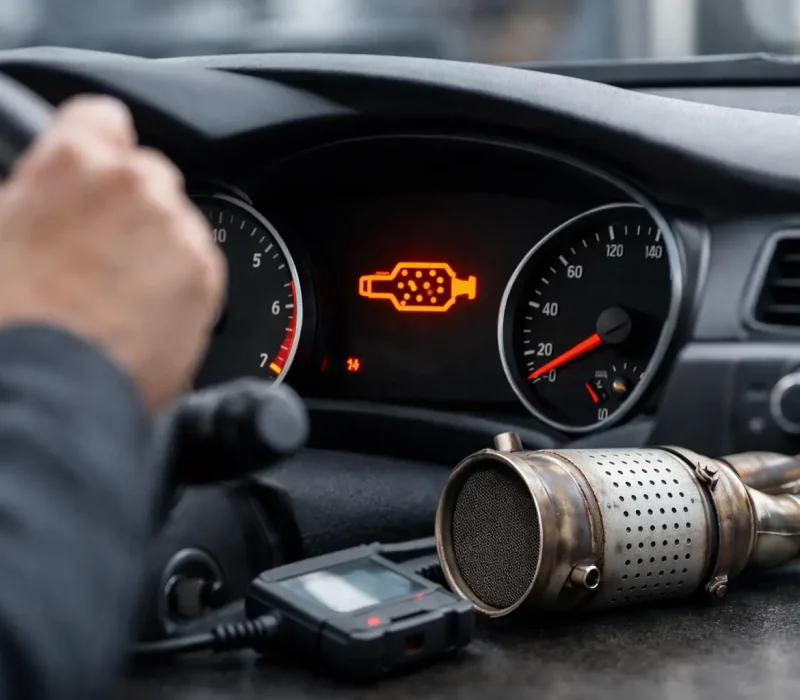
The DPF light is the most obvious sign, but it is not the only one. A vehicle may feel flat under acceleration, use more fuel than usual or enter limp mode with limited power. You might also notice frequent regeneration attempts, a strong hot smell after a journey, an engine management light or an increase in engine oil level.
An oil level that rises rather than falls deserves prompt attention. On some diesels, repeated incomplete regenerations can allow a small amount of fuel to dilute the oil. Continuing to drive in that condition risks reducing the oil’s protective qualities and causing wider engine damage.
For commercial drivers and high-mileage commuters, the operational cost is often more significant than the initial dashboard warning. Lost time, cancelled work, recovery charges and a vehicle that cannot tow or carry a normal load soon add up. Early diagnostics usually give the best chance of resolving the issue without replacing the filter.
Guide to diesel particulate filter cleaning: the right process
Effective DPF work starts with diagnosis, not a bottle of cleaner or a forced regeneration. A technician should read fault codes and live data, then assess factors such as calculated soot load, differential pressure across the DPF, exhaust temperature readings and the vehicle’s regeneration history.
This information helps separate a filter that is genuinely restricted from one being blamed for another fault. For example, an implausible differential-pressure reading may point to a failed sensor or blocked sensor pipe. A thermostat that leaves the engine running too cool can prevent the conditions needed for normal regeneration. An EGR, boost or injector fault can increase soot production and overload even a healthy filter.
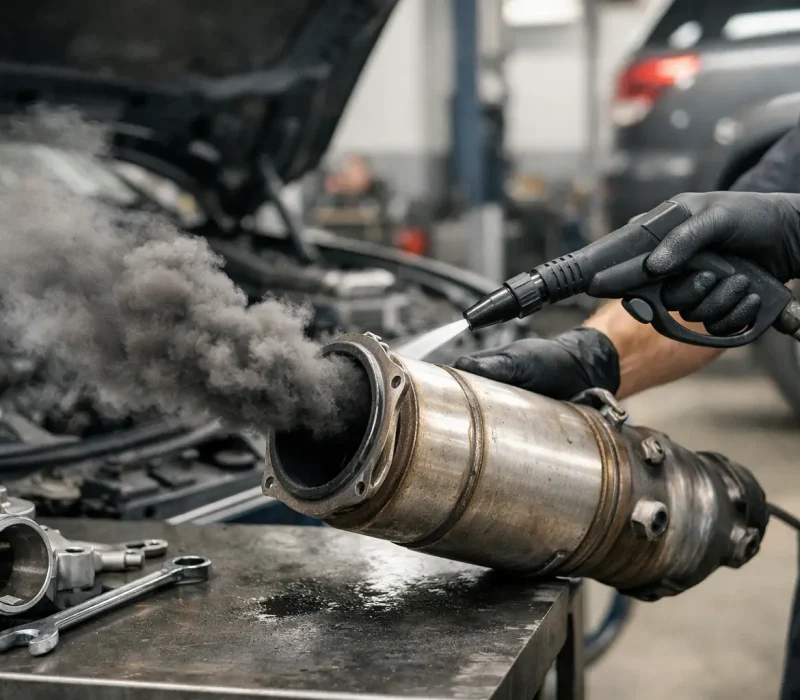
Where the readings support it, professional in-situ chemical cleaning can be a practical option. The process uses purpose-designed equipment and cleaning chemicals introduced through the appropriate point in the exhaust system. The aim is to loosen soot and deposits safely, restore exhaust flow and support a controlled regeneration where suitable.
The vehicle should then be checked again. Post-clean data matters: pressure readings, fault status and regeneration behaviour are more useful than simply clearing a warning light. A warning that disappears for a day is not proof that the underlying restriction has been resolved.
When a forced regeneration is suitable
A diagnostic forced regeneration can be useful where soot loading is within safe limits, exhaust temperature sensors are working correctly and there are no faults that would make the procedure unsafe. It allows the engine control unit to raise exhaust temperatures under controlled conditions.
However, it is not appropriate for every blocked DPF. If soot loading is excessive, attempting a forced regeneration can create very high exhaust temperatures and put stress on the filter, turbocharger and nearby components. The sensible route depends on the readings, the vehicle’s condition and the cause of the blockage.
When cleaning may not be enough
Chemical cleaning has limits. A filter that is physically damaged, melted, heavily ash-loaded beyond recovery or contaminated by a serious mechanical issue may need replacement. That can be frustrating, but a clear diagnosis is better than paying for a treatment that cannot provide a lasting result.
DPF removal is not a legitimate maintenance fix for road use. It can make a vehicle non-compliant, cause MOT problems and create insurance or legal complications. The correct approach is to restore the emissions system and resolve the fault causing the restriction.
Can a motorway run clear your DPF?
Sometimes, yes – but only in a specific situation. If the DPF warning has appeared early, the vehicle has no additional faults and the handbook permits it, a continuous run at normal road speed can give the car the conditions it needs to regenerate. This is most likely to help a vehicle used mainly for short trips that has only a modest soot build-up.
Do not treat a hard drive as a cure for a car already in limp mode or displaying several warning lights. High revs alone do not guarantee regeneration, and pushing a faulty vehicle can make matters worse. If the warning remains after an appropriate run, or returns quickly, diagnostics are the next sensible step.
Habits that reduce repeat DPF problems
Your driving pattern matters, particularly for diesel cars used mainly around town. A regular uninterrupted journey gives the exhaust system time to reach operating temperature and complete regenerations. It does not need to be a weekly blast at maximum speed; steady driving under suitable conditions is more useful than aggressive acceleration.
It also pays to respond to warnings early and use the correct low-SAPS engine oil specified for the vehicle. The wrong oil can contribute to ash accumulation. Avoid repeatedly switching the engine off when you suspect an active regeneration, where it is safe and practical to continue the journey.
For towing vehicles, vans and small fleets, keep an eye on changes in fuel economy, idle behaviour and power delivery rather than waiting for a warning light. A vehicle that frequently works under load may regenerate well, but injector, EGR and turbo faults can still increase soot production quickly.
Why mobile diagnostics make sense
A DPF issue often arrives at the least convenient moment: before work, during a busy week or when the vehicle is needed for school runs and deliveries. Mobile diagnostics and cleaning can reduce the disruption of arranging garage transport, while still allowing the vehicle to be assessed with professional equipment at home or work.
For drivers across Tamworth and Staffordshire, High REVS Performance carries out DPF diagnostics and chemical cleaning with the focus where it should be: establish the cause, treat suitable filters properly and confirm the result with data. That approach helps protect the engine, your time and the money you would rather not spend on premature DPF replacement.
If your diesel has started regenerating frequently, lost its usual pull or shown a DPF warning, act before a manageable restriction becomes a recovery job. The best time to investigate a filter problem is while the vehicle can still tell you clearly what is wrong.
Got a DPF problem? Send me your car details
Enter your reg, tick what's going on and it comes straight to me on WhatsApp. Mobile service across Tamworth and the surrounding areas. Prefer to talk? Call 07803 102280.