

A mobile remap appointment should be straightforward, not a gamble. High REVS Performance works across Tamworth and Staffordshire, checking the vehicle where you live or work before custom-writing the calibration. To prepare for ECU remapping properly, the key is not polishing the car or arriving with a full tank of premium fuel. It is making sure the engine is healthy enough for the stronger torque, sharper response or economy-focused tuning you want.
A Stage 1 remap works with the condition your vehicle is already in. It cannot repair a boost leak, a tired clutch, a blocked DPF or a fault that has been ignored because the warning light disappeared. A few sensible checks beforehand help us spend the appointment improving how the vehicle drives, rather than uncovering an issue that needs attention first.
Prepare for ECU remapping by checking vehicle health
The first stage of a professional mobile remap is an on-site diagnostic check. We read the ECU for current and stored fault codes, review relevant live data and confirm the vehicle is suitable for tuning. This is why honesty about symptoms matters. If it has occasionally gone into limp mode, smoked under load, hesitated when accelerating or shown an engine management light, say so before the appointment.
Stored codes can be just as useful as active ones. A dashboard light may clear after a restart, but the ECU can retain evidence of an intermittent pressure, airflow, EGR or DPF problem. Adding torque to a car with an unresolved fault is poor practice. The right approach is to diagnose the cause first, then tune once the vehicle is operating as it should.
Before your booking, give some thought to four areas:
- Any engine management, glow plug, DPF, AdBlue or transmission warnings, even if they are not currently displayed.
- Loss of power, uneven idle, excess smoke, poor starting, unusual noises or a change in fuel economy.
- Recent repairs or modifications, including replacement turbos, injectors, clutches, air filters and exhaust work.
- How the vehicle is used – short local journeys, regular motorway mileage, towing, commuting or carrying tools and stock.
That information allows the remap to be matched to the real vehicle and its workload. It also prevents a common disappointment: booking a power remap when the underlying issue is actually restricted airflow or a DPF that cannot regenerate properly.
Deal with warning lights before tuning
Warning lights are not an automatic refusal, but they do need a proper diagnosis. Clearing a fault code so a remap can go ahead is not a fix. The code will generally return, and a calibration cannot compensate for a mechanical or emissions-system defect.
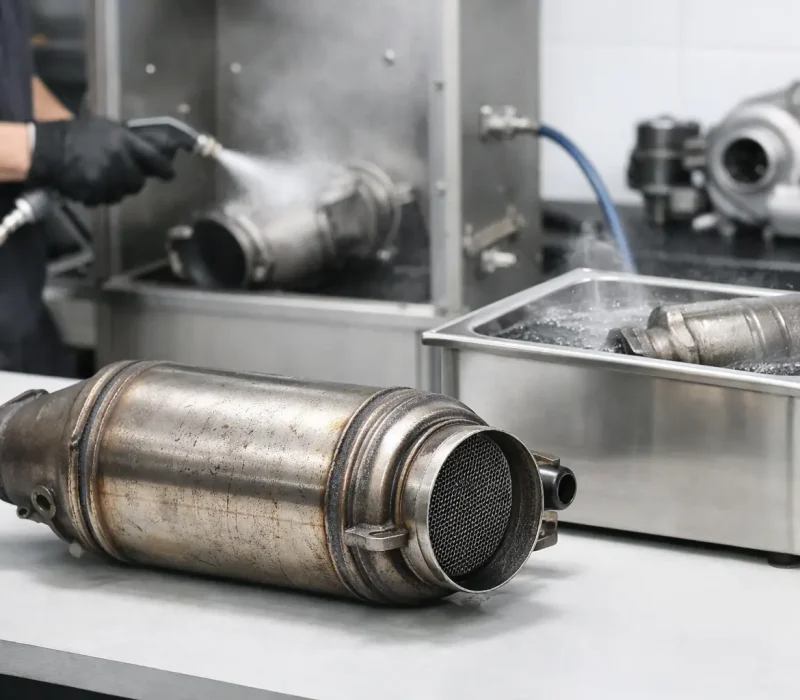
Diesel owners should pay particular attention to DPF warnings. A partly loaded filter may still allow the car to drive reasonably well, especially on a longer journey, yet it can be close to causing reduced-power mode. If live readings show excessive soot loading or a failed regeneration pattern, DPF chemical cleaning is often the sensible first service. It targets the deposits restricting the filter and can help avoid the cost and disruption of unnecessary DPF replacement.
The same applies to air leaks, boost-control faults and fuelling issues. A Stage 1 calibration is written within safe manufacturer tolerances for a healthy vehicle. Starting from a known-good base is what makes the result dependable.
A typical diesel job: solve the restriction first
Take a 2017 Ford Transit Custom 2.0 TDCi used by a Staffordshire tradesperson. The van feels flat when joining the A5, fuel use has crept up and the DPF light came on briefly after a week of short site-to-site runs. The owner may be tempted to book a remap for more pulling power.
At an on-site diagnostic appointment, the priority is to check DPF loading, differential pressure, regeneration history and any codes relating to sensors or boost control. If the filter is restricted, a DPF chemical clean should come before an Eco, Balanced or Stage 1 Power remap. Once the system is flowing correctly and the faults are resolved, the right calibration can give the van stronger usable torque for loaded work and a more responsive drive. That order protects the vehicle and produces a result the owner can actually feel.
Choose the remap around how you drive
Preparing for ECU remapping also means being clear about the outcome you want. More peak power is not always the best answer. A high-mileage commuter may benefit most from an Eco remap designed around improved efficiency and relaxed motorway torque. A family SUV that tows a caravan may suit a Balanced remap, where stronger mid-range pull is paired with sensible economy gains. For drivers who want a more engaging response and meaningful performance improvement, a Stage 1 Power remap is the natural option.
Be realistic about the vehicle’s drivetrain. On a manual car with a high-mileage original clutch, the existing clutch may already be near its limit. The extra torque from a remap does not automatically cause a failure, but it can expose wear that was previously masked by lower engine output. If the clutch is slipping now, particularly in a higher gear under acceleration, sort it before tuning.
Automatic and DSG-equipped vehicles also deserve a candid conversation about mileage, servicing and how they are used. Tell the technician if the gearbox has ever shifted harshly, flared between gears or displayed a transmission warning. Good tuning starts with good information.
What to do on the day of the mobile appointment
Make the vehicle accessible and allow enough time for it to be assessed, read, programmed and checked afterwards. A driveway, workplace car park or other safe space is usually ideal, provided there is room to work around the vehicle and a reliable power source can be arranged if required.
Bring both keys if you have them, and avoid booking immediately before a long journey, collection deadline or towing trip. Programming is carried out using genuine professional equipment, but the process should never be rushed. You want time for pre-checks, the custom file process and a final confirmation that the vehicle is running correctly.
A reasonable fuel level is helpful, especially for diesel vehicles where a road check or regeneration-related diagnostic work may be needed. You do not need to run premium fuel for a standard Stage 1 remap unless your vehicle manufacturer specifically requires it. What matters more is using the correct quality fuel and keeping up with normal servicing.
If you have service invoices, a record of recent fault codes or details of previous tuning, keep them available. A vehicle that has already been modified or previously remapped needs to be identified before any new file is written. Transparency protects both the car and the quality of the finished result.
Avoid last-minute changes that hide a problem
Do not disconnect the battery, clear codes or fit untested parts the night before an appointment in an attempt to make a warning disappear. That can remove useful diagnostic evidence and make an intermittent issue harder to trace. Equally, do not use a remap as a shortcut around a blocked DPF, failed sensor or poor maintenance history.
If your diesel has been used almost entirely for short trips, mention it. If your vehicle has recently had a new turbo, injector work or an intake repair, mention that too. These details do not make the appointment difficult. They give the technician the context needed to assess the vehicle properly and recommend the right next step.
Book the right service, not just more power
A properly prepared vehicle gives you the best chance of gaining stronger torque, smoother delivery and better real-world drivability from a custom remap. Sometimes that starts with Stage 1 tuning. Sometimes the best first move is on-site diagnostics or a DPF chemical clean to restore the engine’s condition before any calibration work begins.
If your car or van in Tamworth or Staffordshire is ready for a safer, more responsive and better-matched drive, book a mobile ECU remap, DPF clean or diagnostic appointment with High REVS Performance. A clear health check before the file is written is time well spent – and it is the practical way to get results you can rely on.