

A diesel van using more fuel than expected is rarely just an inconvenience. For a courier, tradesperson or small fleet operator, a few MPG lost over a year can mean hundreds of pounds in extra diesel costs. This diesel van MPG improvement example uses realistic figures to show what a gain can be worth, why it happens, and what needs checking before any economy-focused ECU remap.
A diesel van MPG improvement example using real costs
Take a typical modern 2.0-litre diesel van covering 20,000 miles a year. Before any work, it averages 35 MPG in mixed use: motorway driving, urban stops, tools in the back and the occasional loaded run.
At 35 MPG, the van uses around 571 imperial gallons of fuel to cover those 20,000 miles. Improve the average to 40 MPG and consumption falls to 500 gallons. That is a reduction of roughly 71 gallons, or 325 litres, over the year.
At a diesel price of £1.55 per litre, the saving works out at approximately £503 annually.
That five MPG gain is not guaranteed for every vehicle, and it is not achieved by simply fitting a generic file. But it illustrates why an Eco remap can make commercial sense for the right van. The difference is particularly relevant for high-mileage drivers, where the fuel saving continues every working week rather than being a one-off benefit.
The percentage tells the same story. Moving from 35 MPG to 40 MPG represents an improvement of around 14%. A van returning 45 MPG may need less dramatic improvement to save a worthwhile amount, while a heavily loaded vehicle doing local stop-start work may see a smaller MPG change but benefit from stronger low-down torque and fewer gear changes.
Why an economy remap can improve diesel van MPG
A well-calibrated diesel ECU remap does not create fuel from nowhere. It changes how the engine delivers torque, responds to throttle input and manages fuelling within safe manufacturer tolerances. The aim of an Eco calibration is usually to make the engine work less hard for the same real-world task.
Many standard van calibrations are designed to cover every market, climate, fuel quality and driving style. They can leave room for a vehicle-specific recalibration that improves efficiency in the part of the rev range where the van spends most of its time.
More usable torque, fewer revs
A diesel engine produces its best pulling power at relatively low revs. When torque arrives earlier and more smoothly, the driver can often hold a higher gear without labouring the engine. On a motorway incline or when carrying equipment, that can mean less throttle input and fewer unnecessary downshifts.
This is one reason a sensible remap can help a loaded van as well as an empty one. The benefit is not about driving faster. It is about having the torque needed to maintain speed without pushing the engine into an inefficient part of its operating range.
Better throttle calibration
Some vans feel flat at low revs, encouraging the driver to press harder on the accelerator than necessary. A refined throttle and torque request calibration can make the vehicle respond more predictably. Gentle inputs produce useful forward progress, which makes smoother driving easier.
It depends on how the van is driven, of course. If a driver uses the extra response to accelerate harder at every opportunity, fuel economy will not improve. An Eco remap gives the vehicle the potential to use less fuel. The final result still comes from the van, its condition, its load and the person behind the wheel.
What must be right before chasing better MPG
A remap cannot correct mechanical faults, and applying one to a poorly maintained diesel is the wrong approach. If the van has a warning light, limp mode, uneven idle, excessive smoke or a sudden fall in MPG, diagnostic work should come first.
A blocked or frequently regenerating DPF is a common example. During active regeneration, the engine may use additional fuel to raise exhaust temperatures and clear soot from the filter. If regeneration is repeatedly interrupted by short trips, or if the DPF has an underlying fault, economy can suffer noticeably.
Carbon build-up is another factor. Deposits in the intake system can restrict airflow and affect the way a diesel engine burns fuel. The result may be sluggish performance, poor response and increased consumption. Professional DPF chemical cleaning or engine carbon cleaning may be more appropriate than tuning when these symptoms are present.
There are also the basic checks that should never be ignored: tyre pressures, wheel alignment, sticking brakes, overdue servicing, split boost hoses, tired injectors and faulty sensors. A van with underinflated tyres and a dragging rear brake will not deliver its best MPG, however carefully the ECU is calibrated.
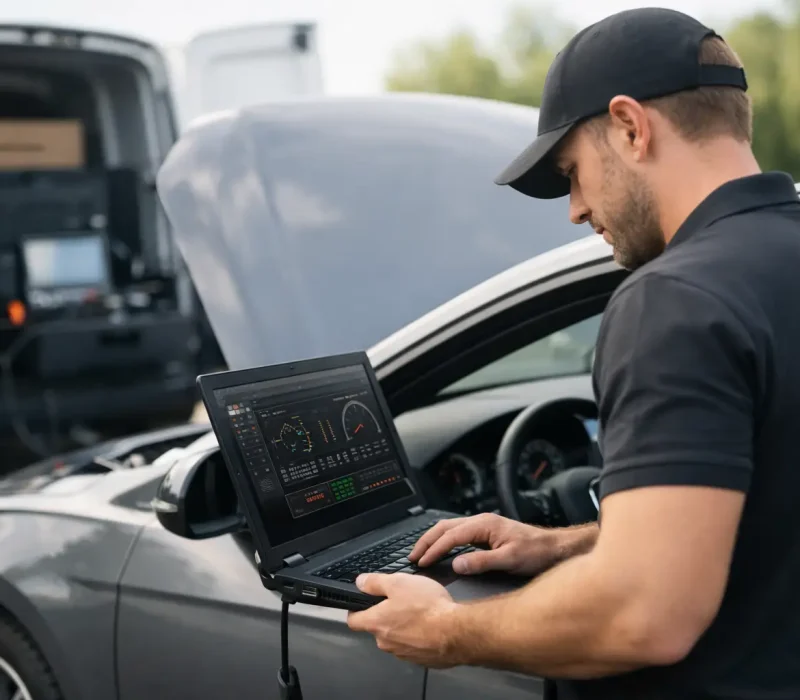
For this reason, proper diagnostics matter. Reading fault codes is only the start. Live data can help identify issues with boost pressure, airflow readings, DPF soot load, exhaust temperatures and sensor performance before they turn into a bigger repair bill.
Real-world results depend on the work the van does
A motorway-based van is generally the strongest candidate for measurable MPG improvement. At steady speed, the engine spends long periods under consistent load, so improved torque delivery and calmer throttle behaviour can have a clear effect.
A local plumbing or delivery van will be different. Cold starts, traffic, idling, short journeys and frequent stops all reduce the scope for major MPG gains. In that situation, the value of an Eco or Balanced remap may be a smoother drive, easier overtaking and stronger response with a full load, alongside a modest reduction in fuel use.
Towing changes the calculation again. A van pulling a trailer or carrying heavy equipment may not show a dramatic headline MPG figure because the load remains significant. However, better mid-range torque can reduce strain, make hills easier and cut down on unnecessary gear changes. For many towing users, that improvement in drivability is just as valuable as the fuel figure.
It is also worth measuring fuel economy properly. Do not judge a remap from one journey or a dashboard estimate alone. Fill the tank to the same point, record the mileage, run at least two full tanks under normal working conditions, then calculate miles driven divided by gallons used. That gives a more reliable comparison than an optimistic trip computer.
Eco, Balanced or Stage 1: choosing the right calibration
The best option depends on what the van needs to do. An Eco remap suits drivers focused primarily on fuel costs and relaxed, torque-led driving. It is a sensible choice for regular motorway mileage, commuting and commercial use where reducing running costs matters.
A Balanced remap is often right for owners who want a meaningful improvement in response and pulling power without making economy a secondary concern. It can suit a van that works during the week and is used for family trips, towing or longer journeys at weekends.
Stage 1 Power is aimed more directly at performance. It can transform overtaking ability and loaded acceleration when written safely for the vehicle, but it is not an MPG promise. Driven with restraint, some owners still see respectable economy because the engine produces torque more easily. Driven hard, it will use more fuel. That is a straightforward trade-off, not a sales pitch.
At High REVS Performance, remaps are custom-written for the individual vehicle using genuine professional tools, rather than loaded as a one-size-fits-all file. A mobile appointment also means the work can be carried out at home or at your workplace across Tamworth and Staffordshire, reducing downtime for busy owners.
Set a target that makes commercial sense
For a diesel van already in good mechanical health, a realistic target is more useful than chasing an unrealistic headline number. A gain of 2 to 5 MPG can be worthwhile at higher annual mileages, particularly when paired with better low-rev torque and a smoother drive. For a van with DPF or airflow problems, restoring it to its proper baseline may deliver the biggest saving of all.
Start with accurate fuel records and a proper vehicle health check. Once you know whether the loss is caused by driving conditions, maintenance or calibration, you can choose the work that gives the van the best chance of saving fuel without compromising reliability.
Check what Stage 1 does for your car
Enter your reg and see the power and torque gains for your exact car. Mobile remapping across Tamworth and the surrounding areas.
Check my car →Prefer to talk? Call 07803 102280