


High REVS Performance brings mobile ECU remapping to drivers across Tamworth and Staffordshire, so choosing among the best cars for eco remapping is not about finding the newest or most expensive model. It is about starting with a healthy vehicle, an engine that has usable torque in reserve, and driving that gives the economy map a chance to work. For many local commuters, tradespeople and high-mileage diesel owners, the right Eco remap can make everyday driving smoother while reducing the amount of throttle needed to keep pace.
An economy remap is not a magic MPG button. It is a custom calibration designed to improve torque delivery and throttle response within manufacturer tolerances. When the engine produces useful pulling power lower in the rev range, the driver can often change up earlier, hold gears more easily on inclines and use less throttle in normal driving. That is why certain diesel cars, vans and SUVs respond particularly well.
What makes a car suitable for eco remapping?
The strongest candidates tend to be turbocharged diesel vehicles that cover regular motorway, A-road or mixed-distance miles. These engines usually have substantial low-down torque and are often driven with a load, passengers, tools or luggage. A carefully written Eco map can improve the way that torque arrives, rather than simply chasing a headline power figure.
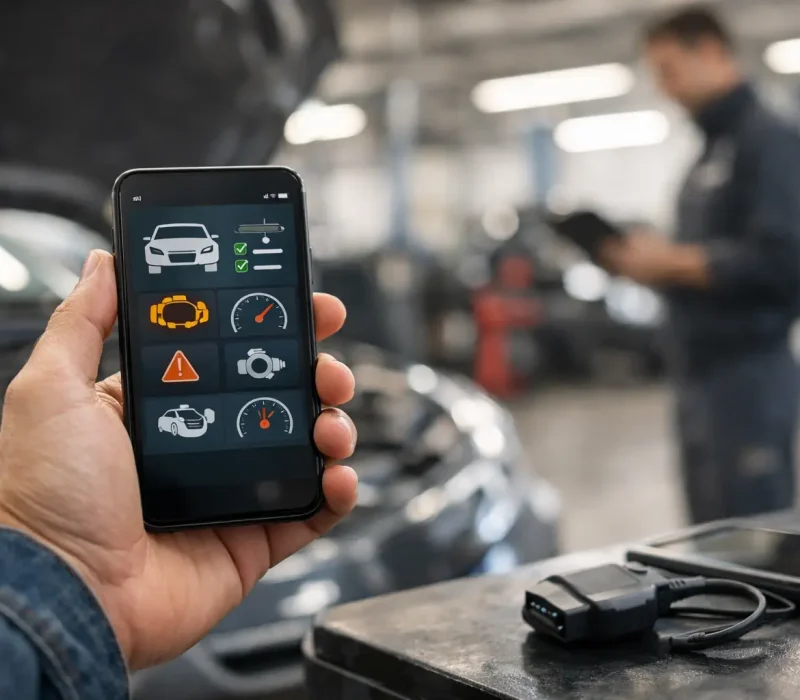
A vehicle used only for short school runs is less likely to show the same fuel-saving benefit. It may not fully warm up, and on a diesel it can be more prone to DPF loading. In that situation, an engine management or DPF issue should be dealt with before considering a remap. This is where mobile diagnostics are valuable: we can assess fault codes, live data and the condition of systems affecting economy at your home or workplace, without you losing a morning at a garage.
The best results usually come from a car that is mechanically sound, serviced properly and driven consistently. A blocked DPF, split boost hose, tired airflow sensor or thermostat fault can all damage MPG. Mapping over those faults is not professional tuning – it masks the reason the vehicle is underperforming.
Best cars for eco remapping: proven diesel choices
Volkswagen Group 1.6 and 2.0 TDI models
The Volkswagen, Audi, SEAT and Škoda 1.6 TDI and 2.0 TDI engines are frequent Eco remap candidates. Think Golf, Passat, Tiguan, Audi A3 and A4, SEAT Leon, Škoda Octavia and Superb models. These cars are common on Staffordshire roads because they are comfortable for commuting, capable on longer runs and economical before any tuning work begins.
The 2.0 TDI is especially well suited to drivers who cover motorway mileage or carry passengers and equipment. An Eco calibration can make overtaking and joining faster-moving traffic feel less laboured, often without needing to push the engine hard through each gear. For an owner who drives sensibly, that stronger mid-range can support improved real-world economy.
The 1.6 TDI can also benefit, particularly in lighter hatchbacks and estates. The gain is less about turning it into a performance car and more about removing the flat, hesitant feel that encourages drivers to press the pedal harder than necessary.
Ford 1.5 and 2.0 TDCi models
Ford’s TDCi range remains a practical choice for Eco remapping, including the Focus, Mondeo, Kuga, S-MAX, Galaxy, Transit Connect and Transit Custom. These are vehicles often used for long commutes, family travel and small-business work, where fuel spend and driveability directly affect running costs.
The 2.0 TDCi is a particularly sensible option for towing and loaded use. More accessible torque can mean fewer downchanges on hills and less effort when pulling away with equipment on board. The key distinction is that an Eco map should be calibrated for usable efficiency, not treated as a substitute for a full Stage 1 Power remap.
For vans, the condition check matters even more. A commercial vehicle with DPF warnings, recurring limp mode or poor regeneration history needs diagnosis before calibration. Restoring the airflow and exhaust system first protects the vehicle’s uptime and gives the remap a fair chance of delivering a benefit.
BMW 2.0d and 3.0d models
BMW diesel models such as the 320d, 520d, X3 20d and 530d can be very good eco-remapping candidates for drivers covering higher annual mileage. They already have strong motorway manners, and a custom map can sharpen their response in the middle of the rev range where most everyday driving takes place.
The 2.0d suits the regular commuter who wants easier overtakes and relaxed cruising. The 3.0d is better suited to heavier cars, towing users and drivers who value effortless torque. Neither should be tuned blindly, however. Modern BMW diesels rely on several emissions and boost-control components working correctly, so on-site diagnostics should come first if there are warning lights, rough running or noticeably reduced MPG.
Mercedes-Benz CDI and BlueTEC diesels
Mercedes-Benz C-Class, E-Class, GLC, Vito and Sprinter diesel models are another strong fit, especially for business users and long-distance drivers. The benefit is often felt in flexible acceleration rather than outright speed. A van that pulls cleanly from lower revs can be easier to drive smoothly through traffic and more comfortable when loaded.
For Vito and Sprinter owners, reducing unnecessary downtime is just as valuable as saving fuel. A mobile appointment can assess a suspected DPF or fault-code issue at the vehicle’s location, then identify whether an Eco map is appropriate once the underlying concern has been resolved.
A Tamworth example: when a remap should wait
A typical call-out might involve a 2017 Ford Transit Custom 2.0 TDCi used by a Tamworth tradesperson. The van feels flat when loaded, the fuel figures have worsened and the owner has started seeing an intermittent engine warning light. It would be easy to assume that a remap is the immediate answer.
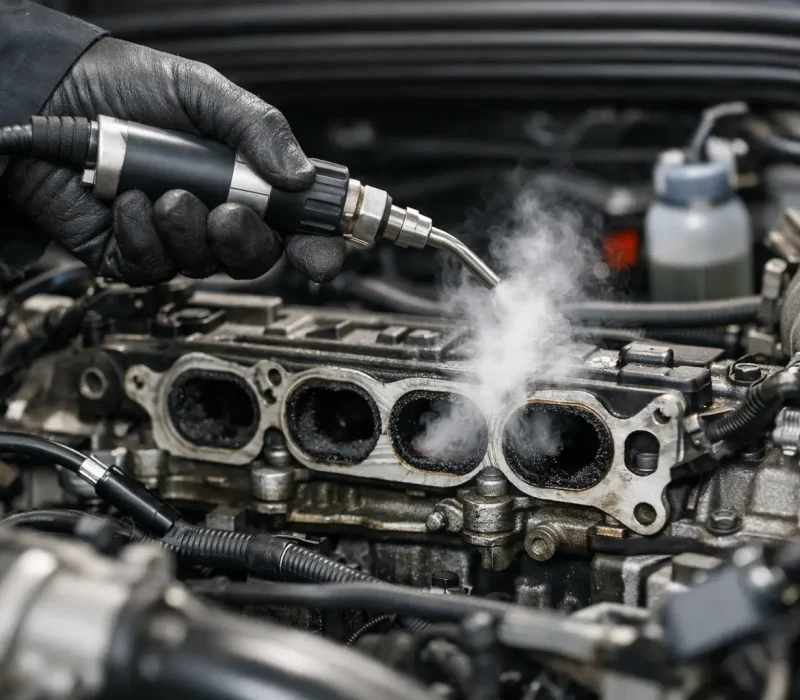
Instead, the sensible first step is mobile diagnostics. If live data shows excessive DPF soot loading or a pressure-sensor reading that does not make sense, an Eco remap should wait. A DPF chemical clean may be the better first job, helping restore exhaust flow and supporting proper regeneration. Once the van is running correctly, a custom Eco or Balanced remap can then be considered to improve torque delivery for the owner’s daily routes.
That sequence protects the engine and avoids spending money on a calibration before the vehicle is ready for it.
Petrol cars: can they benefit?
Turbocharged petrol engines can benefit from an economy-focused calibration, particularly the Volkswagen Group TSI range, Ford EcoBoost units and certain BMW turbo petrols. The improvement tends to be more dependent on driving style than with a torque-rich diesel. Petrol engines generally need to work harder under load, and a driver who regularly uses full acceleration will not see meaningful fuel savings simply because the software has changed.
For the right owner, though, improved low- and mid-range response can reduce the need to rev the engine as hard in normal conditions. A Balanced remap may be more appropriate than a pure Eco map where the customer wants a noticeable improvement in day-to-day performance alongside sensible running costs.
Naturally aspirated petrol cars are usually less rewarding. They may gain some refinement from calibration where supported, but they do not offer the same torque potential as a turbocharged engine. Honest advice matters here: the best car for an Eco remap is not necessarily the car you already own.
Eco, Balanced or Stage 1: choose for the way you drive
An Eco remap makes most sense for high-mileage driving, regular commuting and working vehicles where smoother torque and fuel use are the priority. A Balanced map is often the better middle ground for a family SUV, executive diesel or daily driver that needs stronger response without making economy a secondary concern.
Stage 1 Power remapping is aimed at drivers who want the greatest safe performance improvement available from standard hardware. It can still improve driveability and may produce respectable fuel figures during gentle driving, but it is not the same product as an Eco map. The correct choice comes from how the vehicle is used, not from a generic file or the biggest claimed number.
At High REVS Performance, calibrations are custom-written for the specific vehicle and carried out using genuine professional tools. Before work begins, the goal is straightforward: make sure the car is a suitable candidate, identify any faults that could affect the result, and recommend the service that matches the owner’s real priorities.
If your diesel has become sluggish, is using more fuel than it should or needs more effortless pulling power for commuting, towing or work, book a mobile ECU remap, DPF chemical clean or diagnostic appointment with High REVS Performance. We can come to your home or workplace and give you a clear, practical route to a healthier, better-driving vehicle.