


High REVS Performance provides mobile ECU remapping across Tamworth and Staffordshire, so this is one of the first questions we hear before a booking: will remapping void vehicle warranty? The honest answer is that a remap does not usually cancel every part of your vehicle warranty automatically. It can, however, give a manufacturer grounds to reject a claim where they can reasonably connect the fault to the modification.
That distinction matters. A carefully written Stage 1 calibration may transform torque, response and everyday drivability, but it is still a modification to the ECU software. If your vehicle is new, under an extended dealer warranty, on finance, or carrying a third-party warranty policy, understand the position before changing the file.
Will remapping void vehicle warranty in the UK?
In most cases, a manufacturer cannot simply say that every warranty item has disappeared because the car has been remapped. A failed electric window motor, faulty infotainment screen or leaking door seal has no meaningful connection to the ECU calibration. Those items should be considered on their own merits.
The position changes when the claim involves the engine, turbocharger, clutch, gearbox, emissions equipment or drivetrain. If a dealer identifies modified software and believes it contributed to the failure, they may decline that specific repair under warranty. How far they take that decision depends on the manufacturer, the warranty wording, the vehicle history and the fault itself.
For example, a clutch claim on a manual diesel that has been subjected to repeated hard launches after a high-torque calibration may receive far more scrutiny than a routine air-conditioning fault. Equally, an engine claim after an overheating event will lead to a closer look at ECU data, fault records and service history.
A remap is therefore not a reason to assume the whole vehicle is unprotected, nor is it something to treat as invisible. The sensible approach is to balance the remaining warranty value against the benefits you want from an Eco, Balanced or Stage 1 Power remap.
How dealers can identify an ECU remap
Modern vehicles carry more software information than many owners expect. A dealer does not need to feel a faster test drive to suspect a calibration change.
During diagnostic work or a manufacturer software update, the dealer may see that the ECU software identification does not match the latest approved version. Some control units record programming events, calibration verification data or flash counters. Manufacturers may also compare uploaded diagnostic information against their central systems. The exact checks vary widely by make, model and ECU generation, but detection is a realistic possibility.
Returning a vehicle to standard software before a dealer visit is not a guaranteed answer. Reverting the original file can restore the car’s standard driving behaviour, but it may not remove every record of programming activity. If the manufacturer has already logged a modified calibration, or the ECU retains a counter or checksum history, the change may still be apparent.
At High REVS Performance, we use genuine professional tools and write calibrations for the individual vehicle rather than fitting an unknown generic file. That protects the vehicle from poor tuning practice, but it does not turn a remap into a manufacturer-approved modification. Clear expectations are part of doing the job properly.
A realistic Staffordshire example
Consider a 2019 Volkswagen Transporter 2.0 TDI used by a Tamworth tradesperson. It spends weekdays carrying tools between short local jobs, then does occasional motorway runs and towing at weekends. The owner wants better pull in higher gears because the van feels flat when loaded, but it has a dealer-backed warranty for another eight months.
A Stage 1 remap could produce useful mid-range torque and make the van more relaxed to drive. Yet that same van has recently shown an intermittent DPF warning and has a history of incomplete regeneration journeys. Remapping it immediately would be the wrong order of work.
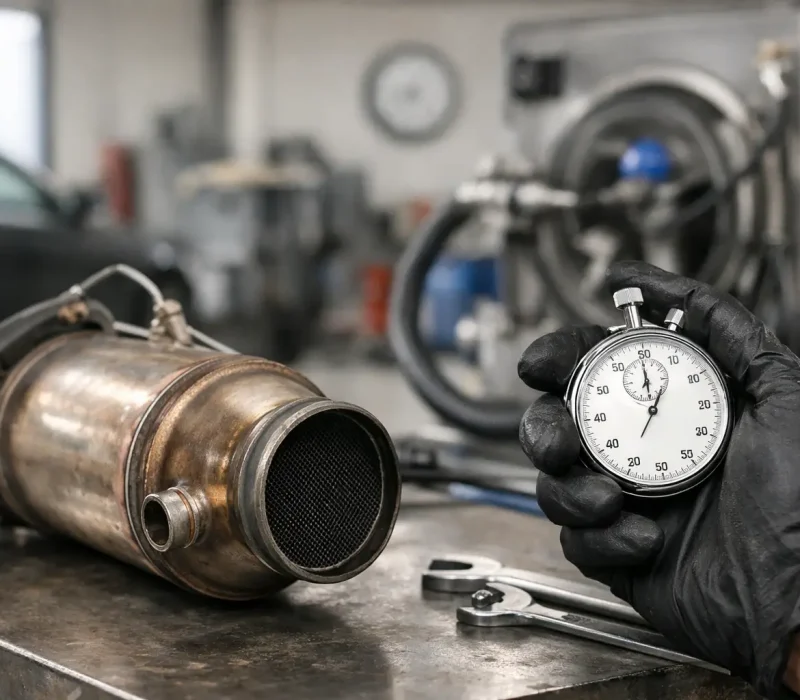
The sensible mobile visit starts with on-site diagnostics. We would assess fault codes, soot loading, differential pressure readings and live regeneration data to establish whether the DPF system is functioning correctly. If contamination is restricting the filter, DPF chemical cleaning may be the appropriate first service. Once the engine is running properly, the owner can decide whether the improvement from a remap is worth waiting until the warranty has expired.
That approach prevents a common and expensive mistake: using extra torque to mask an underlying emissions-system issue. It also gives the owner useful diagnostic evidence if a warranty claim is needed.
The warranty risk depends on the vehicle and the remap
A light Eco remap for a high-mileage motorway commuter is not the same proposition as a maximum-output file for a vehicle used for towing, heavy loads or enthusiastic driving. The quality of the calibration, the condition of the vehicle and the way it is used all affect the practical risk.
A properly developed Stage 1 remap stays within considered operating limits and is designed around the factory hardware. It should not disable protective functions or chase headline figures at the expense of reliability. Stronger torque still places more demand on components that are already subject to wear, particularly a clutch, dual-mass flywheel and automatic gearbox.
Vehicle condition matters just as much. A tired boost hose, weak battery, restricted DPF, injector imbalance or stored fault code should be investigated before any software change. Mobile diagnostics are particularly useful here because the checks can be completed at your home or workplace without losing a day to a garage appointment.
Check the small print before you book
If the warranty is a major factor in your decision, read the actual policy rather than relying on what a forum post or salesperson has said. Manufacturer warranties, approved-used warranties, dealer add-ons and independent mechanical-breakdown policies all use different terms.
Ask the warranty provider whether ECU calibration changes are excluded, whether they require modifications to be declared, and how they assess a claim where a modified vehicle has suffered a drivetrain fault. Get the answer in writing where possible. If the vehicle is leased, on PCP or company-owned, check the finance or fleet agreement too. Many agreements require the vehicle to be returned in its original condition and may prohibit undeclared modifications.
Insurance is separate from warranty and should not be overlooked. Tell your insurer about any remap before it is carried out. Some insurers will cover it after adjusting the premium, while others may have restrictions. Failing to declare a material modification can create a far bigger problem than the remap itself if you need to make a claim.
When it makes sense to wait
Waiting can be the best financial decision when a vehicle is still within a valuable manufacturer warranty and has known drivetrain concerns. The same applies if you have an unresolved engine-management light, DPF warning, gearbox hesitation or clutch slip. Diagnose and repair first, then consider the tune when the vehicle is healthy and your warranty position is clear.
On the other hand, an owner of an older, well-maintained vehicle that is outside manufacturer cover may reasonably decide that a custom Stage 1 remap offers more day-to-day value than an extended warranty they are unlikely to use. For a long-distance commuter, an Eco or Balanced calibration can improve usable torque and help reduce the effort needed to keep pace in traffic, without chasing an aggressive power figure.
The key is choosing a service that matches the vehicle’s job. A towing vehicle needs controlled torque delivery. A diesel used mainly for short runs may need DPF attention before it needs extra performance. A fleet van needs predictable uptime, not a calibration chosen for bragging rights.
If you are weighing up a remap while your vehicle is under warranty, book a mobile diagnostic or ECU remap appointment with High REVS Performance. We can assess the vehicle at your Tamworth or Staffordshire home or workplace, discuss the right Eco, Balanced or Stage 1 option, and make sure any existing DPF or fault-code concerns are dealt with first.