

A DPF warning light rarely appears at a convenient time. For drivers across Tamworth and Staffordshire, DPF problems often show up before work, during a school run or when a van is needed for the day’s jobs. High REVS Performance brings professional on-site diagnostics and DPF chemical cleaning to your home or workplace, helping you deal with the fault without losing a day at a garage.
A blocked diesel particulate filter is not simply an inconvenience to clear from the dashboard. Left unresolved, it can reduce fuel economy, limit power, cause repeated limp-mode faults and, in some cases, lead to an expensive filter replacement. The right repair starts with finding out why the filter has loaded up, rather than treating every warning light as the same job.
What the DPF does – and why it becomes blocked
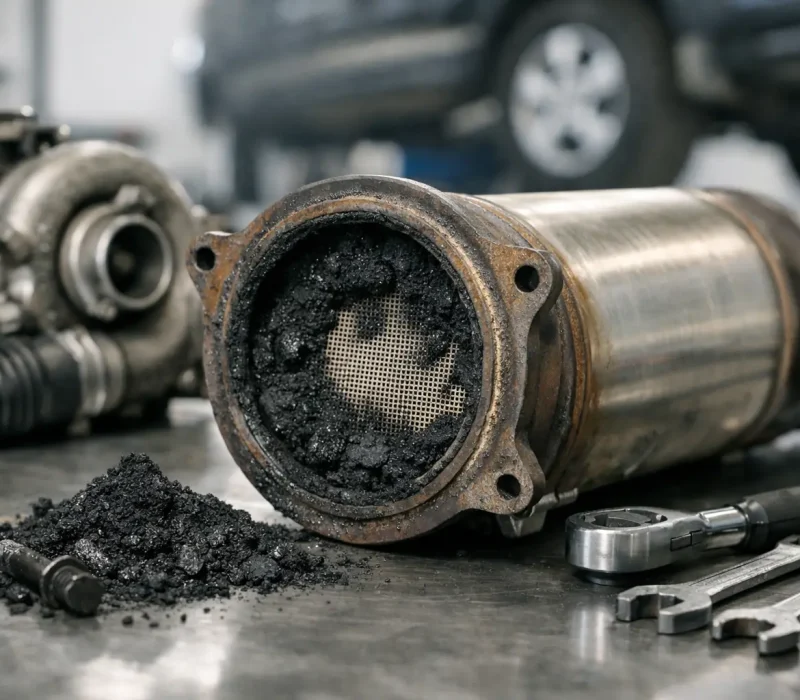
The diesel particulate filter captures soot produced during normal combustion. Under the right driving conditions, the vehicle performs regeneration: it raises exhaust temperatures and burns that soot away. This process is designed to happen in the background, but it relies on the engine reaching temperature and getting enough sustained running time.
Short local trips are a common reason for trouble. A diesel that spends most of its week travelling a few miles at a time may begin a regeneration cycle but not complete it. Over time, soot loading rises until the engine management system flags a fault or restricts performance to protect the vehicle.
That does not mean every affected vehicle is used only for short journeys. A failed pressure sensor, damaged temperature sensor, EGR issue, boost leak, injector problem or thermostat that is keeping the engine too cool can all prevent regeneration from working properly. This is why proper diagnostics matter before any cleaning work begins.
Common DPF problems and the signs you will notice
The first indication is often an amber DPF warning light. On many vehicles, this may be accompanied by an engine management light, a message instructing you to continue driving, or a noticeable change in how the vehicle performs.
Loss of power is particularly common. The car may feel flat when accelerating, struggle under load or enter limp mode, where power is deliberately limited. Fuel consumption can also worsen because the engine is working harder and may be attempting more frequent regeneration cycles.
Other warning signs include a cooling fan running after the ignition has been switched off, an unusually hot smell after a journey, raised idle speed or repeated stop-start faults. Some drivers also notice that the oil level has risen. This can happen when fuel used during interrupted regenerations finds its way into the engine oil, and it should be checked promptly.
A realistic example is a 2017 Ford Transit Custom used by a local tradesperson for short runs between jobs around Tamworth. It may still start and drive normally at first, but the DPF light appears, fuel use climbs and it eventually loses power when pulling tools or materials. Simply clearing the fault code may make the light disappear briefly, but the underlying soot loading remains. A mobile diagnostic check can confirm live DPF pressure readings, regeneration history and any sensor faults before deciding whether chemical cleaning is suitable.
Why a motorway run does not always solve it
Drivers are often advised to take the vehicle for a long, steady drive. If the DPF has only just reached a moderate soot level and there are no underlying faults, this can help the vehicle complete an active regeneration. It is not a guaranteed cure, however.
Once soot loading is high, the vehicle may refuse to regenerate for safety reasons. If there is an active sensor fault, low coolant temperature, incorrect oil specification or another engine fault, the conditions for regeneration may not be met at all. Continuing to drive with a warning light and reduced power can turn a manageable cleaning job into a more involved repair.
There is also a difference between soot and ash. Regeneration burns soot away, but ash from normal engine oil additives remains in the filter. Chemical cleaning can remove significant contamination where appropriate, but a heavily ash-loaded or physically damaged DPF may need further assessment. Honest diagnosis is better than promising that every filter can be restored.
Mobile diagnosis before DPF chemical cleaning
A professional DPF clean should not be a blind treatment. Before recommending a clean, we assess the fault codes and live data from the vehicle. This can include differential pressure readings, calculated soot load, exhaust gas temperatures, coolant temperature and the conditions that have prevented regeneration.
This approach protects you from spending money on the wrong solution. If a pressure sensor is giving false readings, for example, cleaning the filter alone will not stop the warning returning. If the DPF is genuinely restricted but the supporting systems are working correctly, a chemical clean can be a practical way to restore exhaust flow and avoid the cost of replacement.
The benefit of mobile servicing is simple: the assessment and, where suitable, the cleaning can be carried out at your address. For a busy commuter, a small business or a driver with a vehicle in limp mode, that saves the time and inconvenience of arranging garage drop-offs, lifts and collection times.
What DPF chemical cleaning can achieve
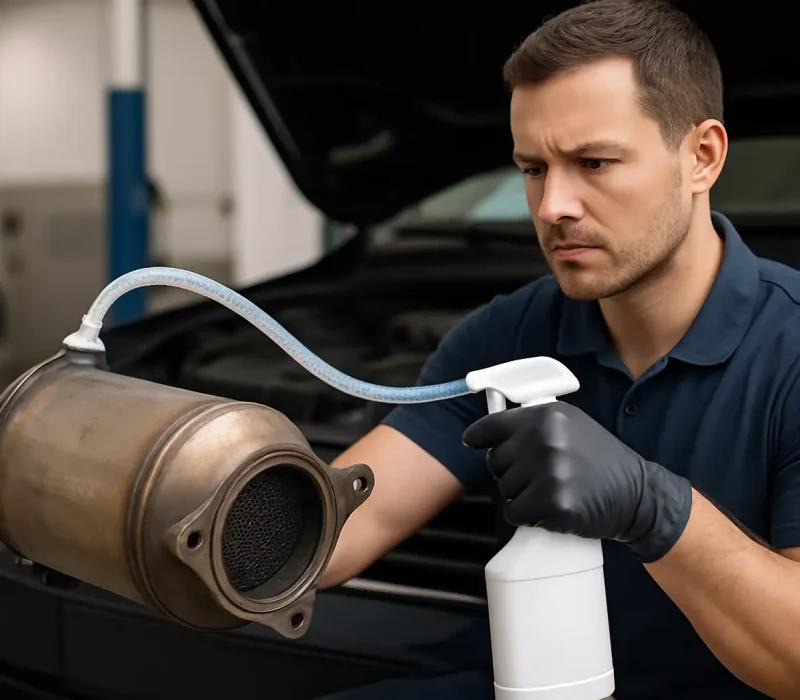
DPF chemical cleaning is intended to break down and flush out soot and contamination from the filter using purpose-made professional products. When the filter is a suitable candidate and the root cause has been addressed, it can reduce back pressure, help the engine breathe correctly and support normal regeneration behaviour.
The practical results customers usually want are straightforward: fewer warning lights, restored power, smoother response and fuel economy returning closer to normal. For light commercial vehicles, it can also mean less downtime and a better chance of keeping work booked in rather than cancelling jobs.
It is not a DPF removal service, nor is it a shortcut around an emissions fault. Removing or disabling emissions equipment can create MOT, insurance and legal problems. The aim is to restore the system your vehicle was designed to use, while identifying issues that could block it again.
Preventing repeat DPF faults after the clean
Once the vehicle is repaired, usage matters. If your driving is mostly short trips, giving the diesel regular longer runs at steady speeds can help it complete its normal regeneration cycle. The exact routine depends on the vehicle and its operating conditions, but a pattern of repeated cold, low-speed journeys is rarely ideal for a diesel DPF.
Use the correct low-ash engine oil at servicing intervals, and do not ignore an engine management light simply because the vehicle still feels driveable. Small faults that affect combustion, temperature or exhaust pressure can become DPF issues if they are left unresolved.
For drivers considering an ECU remap, the starting point should always be a mechanically healthy vehicle. A custom-written remap within manufacturer tolerances can improve torque, throttle response or economy depending on the package selected, but it should never be used to mask an active DPF fault. Resolve the fault first, check that the vehicle is regenerating correctly, then assess whether an Eco, Balanced or Stage 1 Power remap suits how you actually use it.
When to book a diagnostic appointment
Book an on-site diagnostic check if the DPF light stays on after a suitable run, the vehicle enters limp mode, regeneration warnings keep returning or fuel consumption has changed without explanation. The sooner the cause is identified, the more options are usually available.
Do not wait for complete power loss or assume a dashboard reset is a repair. A clear explanation of the fault data, the condition of the filter and the available repair route gives you a far better basis for deciding what to do next.
If your diesel has a DPF warning light, poor MPG or reduced power, book a mobile diagnostic appointment or DPF chemical clean with High REVS Performance and get a clear, professional answer at your home or workplace.
Got a DPF problem? Send me your car details
Enter your reg, tick what's going on and it comes straight to me on WhatsApp. Mobile service across Tamworth and the surrounding areas. Prefer to talk? Call 07803 102280.