

High REVS Performance provides mobile carbon cleaning and diagnostics across Tamworth and Staffordshire, so this Tamworth carbon cleaning review starts with the question that matters most: will it solve the fault or poor performance you are actually experiencing? Carbon cleaning can restore smoother running, sharper response and better airflow where deposits are the cause. It is not a magic answer for every warning light, limp-mode issue or loss of power.
That distinction protects your time and money. A proper mobile appointment begins by looking at the vehicle’s symptoms and fault data, rather than treating carbon cleaning as a generic add-on. If deposits are restricting the intake side of the engine, the service can make a genuine difference. If the real problem is a blocked DPF, split boost hose, failed sensor or injector issue, diagnostics should point the job in the right direction first.
What a Tamworth carbon cleaning review should tell you
The useful reviews are not simply those that say a car felt “better afterwards”. They explain the original symptoms, the type of driving the vehicle does and whether a check was carried out before work began. A diesel used for short local runs around Tamworth faces a very different build-up pattern from one covering regular motorway miles up the M42 or A5.
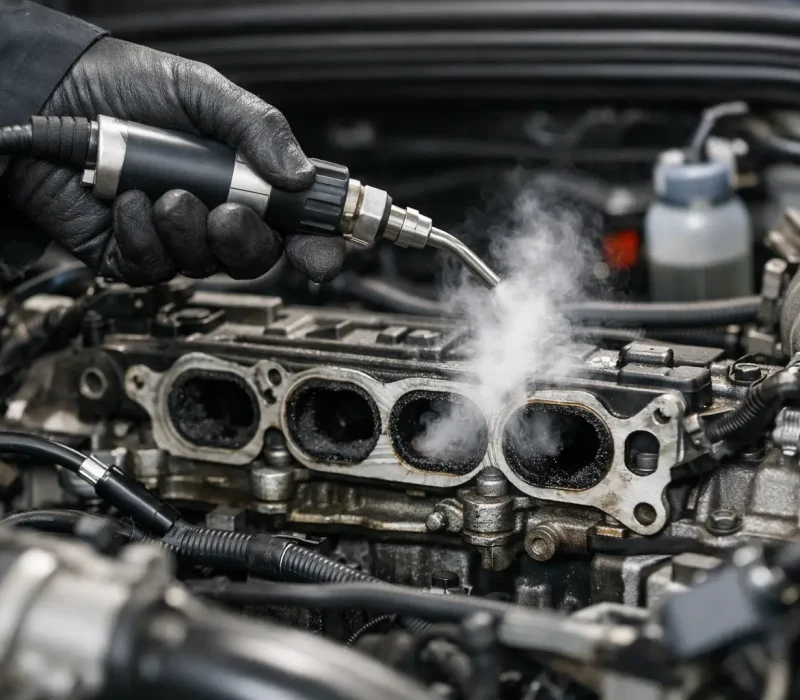
Carbon deposits can build up in areas involved in air handling and combustion, particularly on modern diesel engines with exhaust-gas recirculation systems. Over time, that contamination can affect airflow and contribute to hesitant acceleration, reduced throttle response, uneven idling and a car that no longer feels as willing under load. Drivers often notice it first when joining a dual carriageway, overtaking, climbing a hill or towing.
A good outcome is usually measured in how the vehicle drives, not by exaggerated promises. When carbon build-up is the root cause, owners may notice cleaner pick-up from low revs, more consistent power delivery and less of the flat, restricted feeling that had crept in gradually. Economy may also improve if the engine is no longer working against reduced airflow, but the result depends on the vehicle, mileage, fault condition and driving pattern.
Carbon cleaning versus DPF cleaning
These services are related only in the sense that both address contamination in modern engines. They are not interchangeable.
Engine carbon cleaning focuses on deposits that affect how the engine breathes and responds. DPF chemical cleaning is aimed at the diesel particulate filter, where soot and ash loading can cause repeated regeneration attempts, warning lights, poor fuel economy and eventually limp mode. A vehicle can need one service, both services or neither.
For example, a DPF warning light does not automatically mean carbon cleaning is required. If diagnostic readings show that the DPF is heavily loaded and the filter is otherwise serviceable, a targeted mobile DPF chemical clean is the more relevant repair route. It is designed to restore flow through the filter and can prevent the far higher cost of premature DPF replacement.
Likewise, a sluggish engine without a DPF warning may still have an underlying boost, fuelling or sensor fault. That is why a technician should not sell a cleaning service based solely on a description over the phone. On-site diagnostics give a clearer picture of live readings, stored fault codes and the systems behind the complaint.
A realistic mobile call-out example
Take a Ford Transit Custom 2.0 diesel used by a Staffordshire tradesperson. It spends most weekdays on short runs between jobs, carries tools, and occasionally tows a trailer. The driver reports that it feels flat below 2,000rpm, has started using more fuel and sometimes shows an engine-management warning after a busy week of stop-start driving.
It would be easy to assume the van needs a remap or a DPF clean. In reality, the first step is checking it properly at the customer’s driveway or work premises. If diagnostic data identifies excessive DPF soot loading, interrupted regenerations or related pressure-sensor readings, the DPF condition needs dealing with before any performance work is considered. If the DPF values are sensible but the engine is restricted by carbon-related airflow issues, carbon cleaning may be the sensible next step.
Once the cause has been addressed, the van should be tested through normal use. The owner is looking for usable torque when pulling away with weight in the back, cleaner response on the road and fewer interruptions to the working day. That is a much more valuable result than chasing a headline claim.
When carbon cleaning is a sensible investment
Carbon cleaning tends to be most worthwhile when the symptoms, vehicle use and diagnostic assessment point in the same direction. High-mileage diesels that spend much of their life in town, family cars used for repeated short journeys and light commercial vehicles carrying loads are common candidates. The issue often develops gradually, so drivers adapt without noticing how much response has been lost.
It can also be a sensible preparatory service for a vehicle that is otherwise healthy and being considered for a Stage 1 remap. A custom-written calibration works best when the engine is running correctly in the first place. Cleaning and correcting existing faults first helps protect reliability and ensures the remap is built around a sound base rather than used to mask a problem.
That does not mean every vehicle needs carbon cleaning before a remap. A well-maintained car with clean diagnostic data, good airflow readings and no drivability concerns may not benefit enough to justify it. The right recommendation should be based on condition, not a fixed package.
What to expect from a mobile appointment
The practical advantage of a mobile service is straightforward: you do not have to arrange lifts, lose a morning at a garage or leave a work vehicle off the road unnecessarily. The technician comes to your home or workplace, assesses the concern and carries out the appropriate work where suitable.
A professional visit should be clear about the process. You should be able to describe the symptoms, when they occur and whether any warning lights have appeared. The vehicle is then checked using professional diagnostic equipment, with the results used to decide whether carbon cleaning is appropriate or whether the fault lies elsewhere.
If cleaning is recommended, the aim is to improve the condition causing the restricted performance. It should not be presented as a substitute for repairing failed components. Fault codes should be interpreted in context, not simply erased, and any recommendation for DPF chemical cleaning, further repair or remapping should have a reason behind it.
Questions worth asking before you book
Ask whether diagnostics are included or advised before cleaning, especially if there is a warning light or the vehicle has entered limp mode. Ask what symptom the work is expected to address, and what the next step would be if readings point towards the DPF, EGR system, boost control or another component instead.
It is also worth being honest about how the vehicle is used. A daily motorway commuter, a school-run diesel and a builder’s van all put different demands on an engine. That information helps distinguish a carbon-related drivability issue from a DPF regeneration problem and avoids spending money on the wrong service.
For owners considering improved towing response, overtaking performance or fuel economy, ask whether the vehicle is healthy enough for a custom Stage 1 remap after any maintenance issues have been resolved. A safe calibration should stay within manufacturer tolerances and be written for the specific vehicle, not loaded as a one-size-fits-all file.
Make the booking match the problem
Carbon cleaning is worth it when it addresses a confirmed restriction and restores the way your engine should perform. It is less worthwhile when it is used as a guess in place of diagnostics. That is the difference between a service that improves day-to-day driving and one that merely delays the real repair.
If your car or van in Tamworth or Staffordshire feels flat, is using more fuel, has a warning light or is struggling under load, book a mobile diagnostic, DPF chemical clean or carbon cleaning appointment with High REVS Performance. You will get a practical assessment at your home or workplace and a recommendation based on what the vehicle actually needs.
Book a carbon clean
Enter your reg and send it straight to me on WhatsApp. Carbon cleaning is routine maintenance – it keeps the engine breathing well. Prefer to talk? Call 07803 102280.