


A lot of drivers ask the same thing before booking – is mobile remapping safe for cars, or is it a shortcut compared with taking the vehicle to a workshop? It is a fair question, because the answer is not simply yes or no. Mobile remapping can be very safe when the process, equipment and calibration are right. It can also be a poor decision if the file is generic, the vehicle is not checked properly, or the tuner pushes the engine beyond sensible limits.
The key point is this: the safety of a remap is not decided by where it is done. It is decided by how it is done.
Is mobile remapping safe for cars in practice?
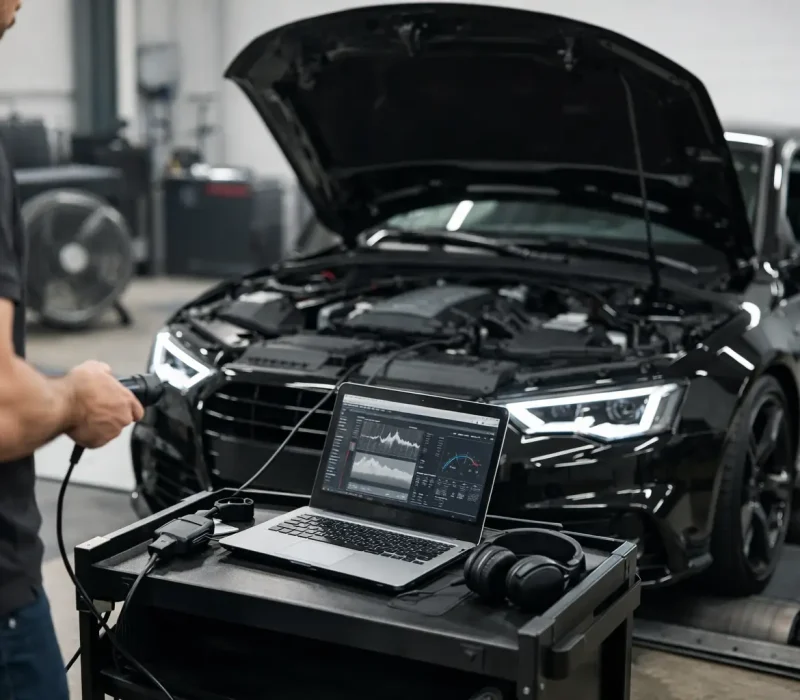
If a technician arrives with genuine programming tools, carries out pre-remap checks, reads the vehicle data correctly and applies a custom-written calibration within safe tolerances, mobile remapping is every bit as safe as having the work done in a fixed premises. The ECU does not care whether the vehicle is parked on your drive, at your workplace or inside a garage. What matters is voltage stability, correct communication with the control unit, and a safe software strategy.
Modern ECU tuning is software-based. The process involves reading the original file, assessing the vehicle’s condition, adjusting relevant parameters and then writing the revised map back to the ECU. If the technician is using professional hardware and follows the right procedure, being mobile does not reduce the quality of the result.
In fact, for many owners, mobile service adds a practical advantage. The car stays where it is most convenient, there is no wasted time travelling to a workshop, and the vehicle can often be assessed in the same real-world setting where it is driven every day.
What actually makes a mobile remap safe?
Safety starts before any file is written. A proper remap should never be treated as a quick plug-in job. The vehicle needs to be healthy enough to accept extra torque or altered throttle and fuelling behaviour. If there are existing issues such as boost leaks, injector faults, DPF problems, carbon build-up or warning lights, those need to be identified first.
The condition of the vehicle matters
A safe remap on a healthy engine can improve drivability, torque delivery and sometimes fuel economy. The same remap on a tired vehicle with unresolved faults can expose weaknesses that were already there. That is why basic diagnostics are not optional. Fault codes, live data and service history all help build a realistic picture of whether the car is a good candidate.
This is especially relevant on diesel vehicles. If the DPF is already heavily restricted or the EGR system is causing poor airflow, adding load through tuning without addressing the root cause is not sensible. The remap itself may not be the problem, but it can bring existing issues to the surface more quickly.
The file must suit the exact vehicle
One of the biggest risks in remapping comes from generic files. Two vehicles with the same engine code do not always behave identically. Mileage, maintenance, hardware condition and software version all matter. A safe calibration takes account of the individual car rather than applying a one-size-fits-all approach.
Custom-written remaps within manufacturer tolerances are the safer route because they focus on usable gains rather than headline numbers. For most road cars, especially daily drivers, that is exactly what you want – stronger mid-range torque, smoother response and better overall drivability without overstressing components.
The tools and process need to be professional
Stable battery support, genuine communication tools and correct file handling are all part of safe programming. Cheap tools and poor write procedures create unnecessary risk. ECU corruption is rare when the job is done properly, but careless work increases the chance of a failed write or communication issue.
An experienced tuner will also know when not to proceed. If battery voltage is unstable, if the ECU cannot be safely read through the expected method, or if the vehicle shows signs of a pre-existing problem, stopping is often the right call.
Common concerns about mobile remapping
Most concerns fall into three areas: engine reliability, clutch and gearbox wear, and insurance or warranty implications. All three deserve a straight answer.
Will a remap damage the engine?
A sensible Stage 1 remap on a healthy, well-maintained vehicle is generally considered safe. The aim is not to turn the engine into something it is not. It is to optimise how the engine already operates, usually by refining boost, fuelling, torque request and throttle behaviour within safe boundaries.
Problems usually happen when tuning is too aggressive, the car is poorly maintained, or the remap ignores known weak points. For example, if a turbo is already tired, extra demand may shorten its remaining life. That is not because mobile remapping is inherently unsafe. It is because any performance increase places more importance on the condition of supporting components.
What about the clutch, gearbox and DPF?
Extra torque is what most drivers notice first after a remap, and it is also what places added demand on the drivetrain. On a higher-mileage car with a worn clutch or automatic gearbox issues, a torque increase can reveal slippage or harsh shifting sooner than before. Again, the remap does not create wear from nowhere, but it can expose it.
For diesel owners, the picture is more nuanced. A well-calibrated remap can actually improve the way the engine delivers torque and may help drivability and efficiency. But if the vehicle is used mostly for short trips and already struggles with DPF regeneration, tuning alone is not the full answer. In that case, proper diagnostics, DPF cleaning or carbon cleaning may need to come first.
Does mobile remapping affect insurance or warranty?
Yes, it can. Any ECU remap should be declared to your insurer. If the car is still under manufacturer warranty, tuning may also affect cover. That is not unique to mobile tuning – it applies whether the work is carried out on a driveway or in a tuning centre. Safe remapping includes giving the customer a clear view of these practical considerations, not glossing over them.
Who should avoid remapping for now?
Not every car is ready today, and a reputable tuner should say so. If the vehicle has active fault codes, inconsistent boost pressure, injector imbalance, DPF blockage, poor servicing history or obvious mechanical issues, those faults should be resolved first.
The same applies if your priority is solving a warning light or limp-mode issue rather than improving performance. In those cases, diagnostics come before tuning. There is little value in remapping a vehicle that is already underperforming because of an unresolved fault.
For owners who use their car for commuting, towing, trade work or high annual mileage, this matters even more. Reliability and predictable running costs come first. A remap should support those goals, not compromise them.
How to tell if a mobile remapping service is safe
The easiest way to judge safety is to listen to the questions the tuner asks before they ever touch the ECU. If they want to know about service history, current faults, mileage, fuel type, usage and your goals, that is a good sign. If they promise major gains without checking the condition of the vehicle, that is not.
You should also expect clarity on the type of remap being offered. A proper service should explain whether the map is written for economy, balanced road use or Stage 1 power, and what that means in practice. Not every driver wants the same outcome. Someone who spends most of the week on the motorway may benefit more from a measured, efficient calibration than the most aggressive power figure available.
At High REVS Performance, that is why the focus stays on custom-written files, genuine tools and realistic gains rather than sales talk. Safe tuning is about giving the vehicle what it can comfortably handle and making sure the result suits how it is actually used.
The real answer to is mobile remapping safe for cars
Yes, mobile remapping can be safe for cars when it is carried out by an experienced technician using professional equipment, proper diagnostics and a calibration written for the specific vehicle. No, it is not safe when it is rushed, generic or applied to a car with faults that should have been dealt with first.
That distinction matters more than the mobile part. On-site remapping is simply a convenient way of delivering the service. The real measure of safety is the standard of the work.
If you are considering a remap, think beyond the headline gains. Ask whether the vehicle is healthy, whether the file is custom, whether the tuner respects sensible limits and whether the result matches the way you drive. Get those parts right, and mobile remapping becomes a practical, professional upgrade rather than a gamble.
The best remap should leave you with a car that feels stronger, smoother and easier to live with day to day – not one that feels like it is living on borrowed time.