


A hesitant pull-away, a flat spot when joining a roundabout, or a long pause before the car responds to your right foot can make an otherwise reliable vehicle feel hard work. A remap for better throttle response addresses the way the engine management system interprets throttle demand, helping the vehicle deliver torque more promptly and predictably without fitting physical performance parts.
For many drivers, the biggest benefit is not a headline bhp figure. It is the difference between pressing the accelerator and feeling the car respond with purpose. That matters on a daily commute, when overtaking safely, when towing, and when a loaded van needs to move cleanly through the gears.
What causes slow throttle response?
Modern engines are controlled by the ECU, which uses information from sensors across the engine and drivetrain to manage fuelling, boost pressure, ignition timing, torque limits and throttle operation. The accelerator pedal is usually electronic rather than directly linked to a throttle cable. In simple terms, your foot makes a request and the ECU decides how to deliver it.
Manufacturers deliberately build in a degree of conservatism. A standard calibration must work across different fuel qualities, climates, driving styles and service conditions. It also has to meet emissions requirements, protect drivetrain components and suit drivers who may never service a vehicle as carefully as they should. The result can be a pedal map and torque delivery that feel softer than necessary, particularly on turbocharged petrol and diesel engines.
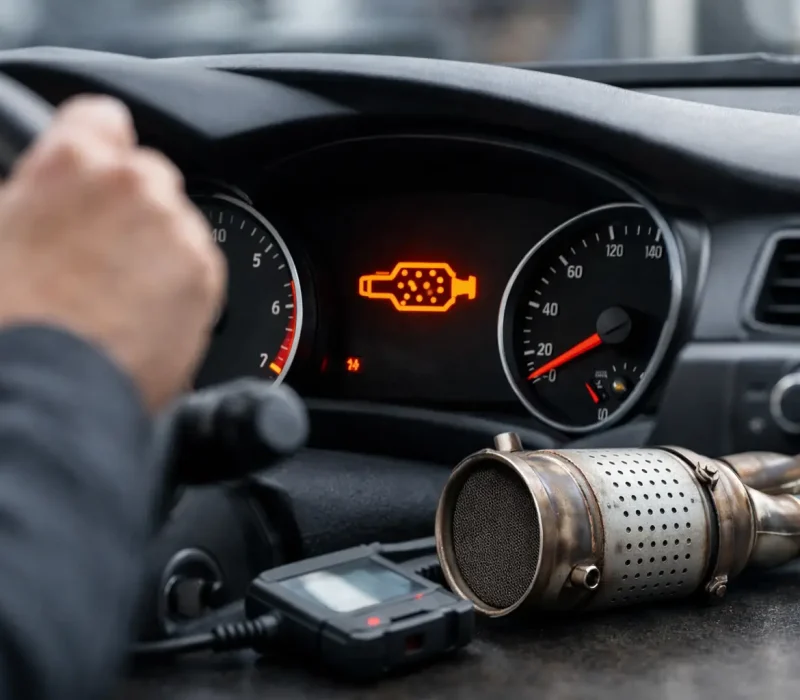
A delay is not always a tuning issue, however. Carbon build-up, a restricted DPF, a boost leak, worn air-flow components or stored fault codes can all leave a vehicle feeling sluggish. If the engine management light is on, the car is in limp mode, or it has developed a sudden lack of power, diagnostics should come before any remap.
How a remap improves throttle response
A professional ECU remap is a custom adjustment to the calibration data held in the vehicle’s engine control unit. It is not simply a device that makes the pedal more sensitive. While pedal sensitivity can be refined, a proper remap also considers the engine’s available torque and how it is delivered.
On a suitable, healthy vehicle, calibration changes may refine throttle request, torque limiters, boost control and fuelling strategy within safe manufacturer tolerances. The aim is a more direct relationship between pedal movement and usable engine response. Rather than waiting for a large pedal input before the engine feels awake, the vehicle can build torque earlier and more smoothly.
This is especially noticeable in the mid-range. A diesel that previously needed a downshift to make progress may pull more confidently from low revs. A small turbo petrol can feel less reluctant when leaving junctions or accelerating from 30 mph to motorway speed. The best result should feel controlled, not jumpy or artificially sharp.
Pedal box versus ECU remapping
A pedal box changes the signal between the accelerator pedal and the ECU. It can make the vehicle feel more eager because less pedal movement is needed for the same request, but it does not create additional engine torque. Press the pedal further in a standard car and you can usually achieve the same full-load demand.
An ECU remap can alter the way torque is requested and managed throughout the rev range, where the vehicle is mechanically capable of delivering it. That is why a well-written calibration can improve both response and real-world pulling power. The two approaches are not equivalent, and a pedal box is not a substitute for correcting an underlying engine fault.
The right remap depends on how you use the vehicle
There is no single file that suits every driver. A commuter covering motorway miles may value smoother overtaking and stronger low-rev torque while keeping fuel economy a priority. A towing driver may need a more useful spread of torque rather than maximum peak power. An enthusiast may want a more engaging response and stronger acceleration through the middle of the rev range.
An Eco remap can be appropriate where the focus is relaxed torque and efficient driving. A Balanced remap suits owners who want a noticeable improvement in drivability without making performance the only objective. A Stage 1 Power remap is designed for those who want to make more of the engine’s safe potential, provided the vehicle is well maintained and its condition supports it.
Fuel savings are possible, particularly when extra torque means fewer downshifts and lighter throttle inputs. They are not guaranteed. Using the improved performance at every opportunity will increase fuel use, and short journeys, traffic and driving style will always have a greater effect than a calibration alone.
Why vehicle condition matters before tuning
A remap should enhance a sound engine, not mask a problem. Before calibration, a technician should check the vehicle for fault codes and assess whether there are warning signs that need attention. This is particularly relevant on modern diesels, where DPF loading, EGR operation, intake carbon deposits and boost-control faults can all affect response.
A partially blocked DPF can restrict exhaust flow and contribute to reduced performance. Carbon build-up around the intake can limit airflow, making the engine feel less willing to respond. In these cases, chemical DPF cleaning, carbon cleaning or targeted repairs may be the correct first step. Once the underlying issue is resolved, the vehicle is in a far better position to benefit from a remap.
Servicing also matters. Correct oil specification, clean filters, quality fuel and attention to clutch or gearbox condition are part of responsible tuning. More torque places additional demand on the drivetrain, even when the calibration remains within sensible limits. An honest assessment should account for mileage, maintenance history and how the vehicle is used.
What safe, custom calibration looks like
The quality of a remap is defined by more than the claimed power increase. Safe calibration requires reading the original ECU data, checking the vehicle’s condition, writing a file for that specific engine and verifying the result. Generic files that are copied across multiple vehicles can overlook important software versions, hardware differences and existing mechanical issues.
At High REVS Performance, remaps are custom-written for the individual vehicle using genuine professional equipment, with the work carried out at your home or workplace where practical. That mobile approach saves the trip to a garage, but it should never mean rushing the process. A proper appointment includes communication about your goals, sensible expectations and checks before work begins.
A good calibration respects the engine, turbocharger, gearbox and clutch rather than chasing an impressive number for the sake of it. It should retain the vehicle’s normal protections and avoid emissions-related modifications that are unsuitable for road use. If a particular car is not a good candidate, the correct advice is to resolve its faults or leave it standard.
Will a remap make the car feel too aggressive?
Not if it is matched to the driver and vehicle. There is a difference between sharper response and an overly sensitive pedal. An aggressive initial pedal map can make town driving tiring, particularly in a diesel with strong low-end torque. It may also make smooth manoeuvring more difficult.
The better outcome is progressive response. The car should pull away cleanly, react promptly when you need it and remain easy to modulate in traffic. This is where a Balanced calibration often appeals to everyday drivers. It improves the part of the driving experience you use most, rather than concentrating solely on full-throttle acceleration.
Practical points before booking
Tell the technician about warning lights, recent repairs, towing requirements and any changes in the way the vehicle drives. Be clear whether you want improved economy, stronger overtaking performance or a more responsive feel around town. Those details influence the most suitable calibration.
You should also inform your insurer about a remap, as it is a vehicle modification. The vehicle must remain roadworthy, meet applicable emissions requirements and be declared accurately for insurance purposes. Sensible tuning and transparent ownership go together.
If your vehicle is mechanically healthy but feels delayed, flat or unnecessarily restrained, a carefully tailored remap can make every journey more relaxed. The most satisfying improvement is not a figure on paper – it is a car that responds cleanly when you ask it to, whether you are merging onto the A-road, carrying tools for work or simply heading home after a long day.