

A motorway commute that once returned 55 MPG can quietly fall into the mid-forties. The car may still feel usable, but fuel stops come round sooner and the monthly cost adds up. So, can a remap improve MPG? In the right vehicle, with the right calibration and driving conditions, yes. But a remap is not a cure for mechanical faults, short journeys or a heavy right foot.
An economy-focused ECU remap changes how the engine delivers its torque. The aim is to make useful pulling power available earlier and more efficiently, so the vehicle needs less throttle and fewer downshifts in everyday driving. For high-mileage drivers, motorway commuters, towing users and light commercial operators, that can translate into a genuine reduction in fuel use.
How an eco remap can improve MPG
Your ECU controls far more than peak power. It manages fuelling, boost pressure, torque limits, throttle response and, depending on the vehicle, several emissions-related strategies. Manufacturers use one base calibration to cover many markets, fuel qualities, climates, driving styles and service conditions. It is necessarily cautious.
A professionally written Eco remap refines the relevant maps for the specific vehicle while staying within sensible manufacturer tolerances. Rather than simply adding fuel, the calibration is designed to improve torque delivery at the engine speeds used most often on the road.
On a turbo-diesel, this commonly means stronger low and mid-range torque. The engine can hold a higher gear more comfortably on an incline, join faster-moving traffic without a full-throttle burst and tow with less effort. A petrol turbo engine may also benefit, although the economy gain is often smaller and more dependent on how it is driven.
The important point is this: a remap improves the opportunity for better MPG. It does not force the driver to use less fuel. If the extra torque is used for quicker acceleration at every opportunity, consumption can stay the same or rise.
Where drivers tend to see the best results
The best economy improvements usually come from vehicles that cover regular longer distances. A diesel estate, van or pickup travelling on A-roads and motorways has time to reach operating temperature, settle into higher gears and use the improved torque curve as intended.
Results are often less dramatic for a car used solely on short urban runs. Cold starts, stop-start traffic, idling and frequent DPF regeneration can dominate fuel consumption. A remap cannot remove the fuel penalty of a two-mile school run or a busy town-centre delivery route.
Vehicle condition matters just as much. An engine with a blocked DPF, sticking EGR valve, split boost hose, tired thermostat, failing sensor or excessive carbon build-up may already be using more fuel than it should. Mapping around those problems is poor practice. Diagnose and correct the cause first, then calibrate a healthy engine.
Diesel engines and DPF condition
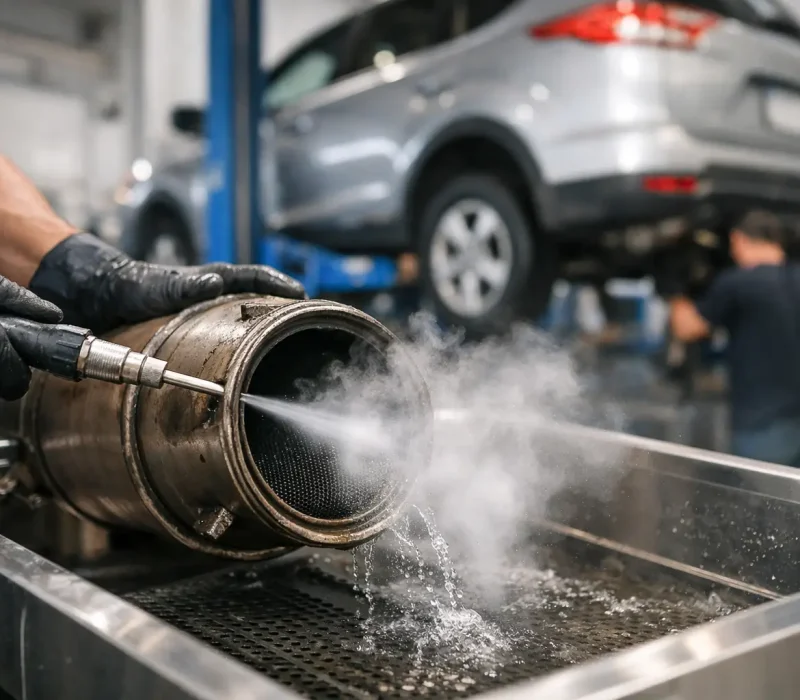
For many modern diesel owners, the DPF is central to the MPG conversation. When the filter is heavily loaded, the engine may regenerate more frequently. That process uses extra fuel and can leave the vehicle feeling less responsive. Repeated interrupted regenerations also create a risk of fuel dilution in the engine oil.
A proper diagnostic assessment can identify soot load, ash accumulation, differential pressure readings and relevant fault codes before any tuning work begins. If cleaning is required, addressing the DPF issue first can restore economy and performance on its own. Once the vehicle is operating correctly, an Eco or Balanced remap can then be considered on a sound basis.
What MPG improvement is realistic?
There is no honest single figure for every vehicle. Claims of guaranteed savings ignore too many variables: the engine, gearbox, mileage pattern, load, tyre pressures, traffic, fuel quality and the driver all matter.
For a healthy diesel used consistently on longer runs, some drivers see a worthwhile improvement, often in the region of 5 to 15 per cent when they adapt their driving to the stronger torque delivery. Others see less because their journeys do not suit the vehicle, or because they naturally make more use of the extra performance.
A realistic way to judge the outcome is to compare fuel use over several full tanks, using similar routes and conditions. Record litres filled and miles travelled rather than relying only on the dashboard trip computer. On-board MPG readings can be useful for spotting trends, but they are not always exact.
Season also affects the comparison. Cold weather, winter diesel, heated screens, longer warm-up periods and heavier traffic can all reduce MPG. A fair before-and-after assessment needs enough mileage to smooth out those changes.
Eco, Balanced or Stage 1: which suits your driving?
An Eco remap is the natural choice when fuel economy is the priority. It is suited to drivers who cover regular mileage and want easier overtaking, better mid-range pull and the potential for fewer fuel stops without chasing maximum figures.
A Balanced remap sits between economy and performance. It can improve drivability and torque while retaining a focus on sensible everyday consumption. This often appeals to drivers who commute during the week but also carry passengers, tow a caravan or want more confidence on rural roads.
A Stage 1 Power remap is aimed primarily at stronger performance. It may still return respectable economy when driven gently because the additional torque reduces effort at cruising speeds. However, it should not be chosen on the assumption that it will produce the biggest fuel saving. Its main benefit is a more engaging, more responsive drive.
The right option depends on how the vehicle is actually used, not the figure that looks best on paper. A custom-written file should reflect the engine, gearbox and the owner’s priorities rather than applying a generic setting to every car with the same badge.
Driving habits still decide the result
A good calibration gives you more flexibility, but efficient driving remains the biggest influence on consumption. Use the extra torque to change up earlier where appropriate and maintain momentum, rather than accelerating harder simply because the vehicle now feels quicker.
Tyre pressures should be checked regularly, especially on vans and vehicles carrying tools or towing. Unnecessary roof bars, excess weight and under-inflated tyres all create a fuel penalty. Servicing also matters: clean air filters, correct oil specification and timely attention to warning lights protect both economy and reliability.
Automatic gearboxes deserve consideration too. A remap can change engine torque delivery, but gearbox software and transmission condition affect how that torque reaches the road. On some vehicles, a transmission calibration may be relevant; on others, the sensible approach is simply to ensure the gearbox is serviced and operating correctly.
Why the quality of the remap matters
Cheap tuning files can appear attractive, particularly when they promise large gains in minutes. The risk is that they may be copied from another vehicle, use excessive boost or fuelling, ignore existing fault codes, or place unnecessary strain on components. That is not a route to dependable economy.
A professional process starts with vehicle checks and diagnostics. The original ECU data is read using genuine professional equipment, the calibration is tailored to the vehicle, and the result is checked after installation. Any responsible tuner should be clear about what the remap is intended to achieve and what it cannot fix.
Drivers should also tell their insurer about a remap. Modifications can affect cover and must be declared. The vehicle must remain road legal, retain its emissions equipment and continue to meet applicable MOT requirements. Removing or disabling emissions systems is not an economy solution and can create far more expensive problems.
A practical route to better fuel economy
If your fuel use has suddenly worsened, begin with diagnostics rather than tuning. Resolve warning lights, DPF concerns, boost leaks and service issues first. If the vehicle is healthy and you cover enough miles for economy gains to matter, a custom Eco remap can make day-to-day driving more relaxed as well as more efficient.
For drivers across Tamworth and Staffordshire, a mobile appointment means those checks and calibration work can be carried out at home or at work, without losing a day to the garage. High REVS Performance approaches remapping as part of the vehicle’s overall condition, not as a shortcut around faults.
The most satisfying MPG improvement is rarely dramatic on a single journey. It is the quieter benefit of a vehicle that pulls cleanly, needs less effort on every drive and makes each full tank go that bit further.