


A DPF warning light is rarely convenient. It usually appears before work, during a school run or when a van is needed for the next job. This Staffordshire DPF cleaning guide explains how High REVS Performance brings professional mobile DPF chemical cleaning and diagnostics to diesel owners at home or work across Tamworth and the wider area – without the lost time of booking into a garage.
The aim is not to mask a warning light or force a regeneration at any cost. A proper mobile visit identifies why the filter has become loaded, checks whether chemical cleaning is suitable, and helps restore exhaust flow before a blocked DPF turns into limp mode, poor economy or an expensive replacement.
What a DPF does and why it blocks
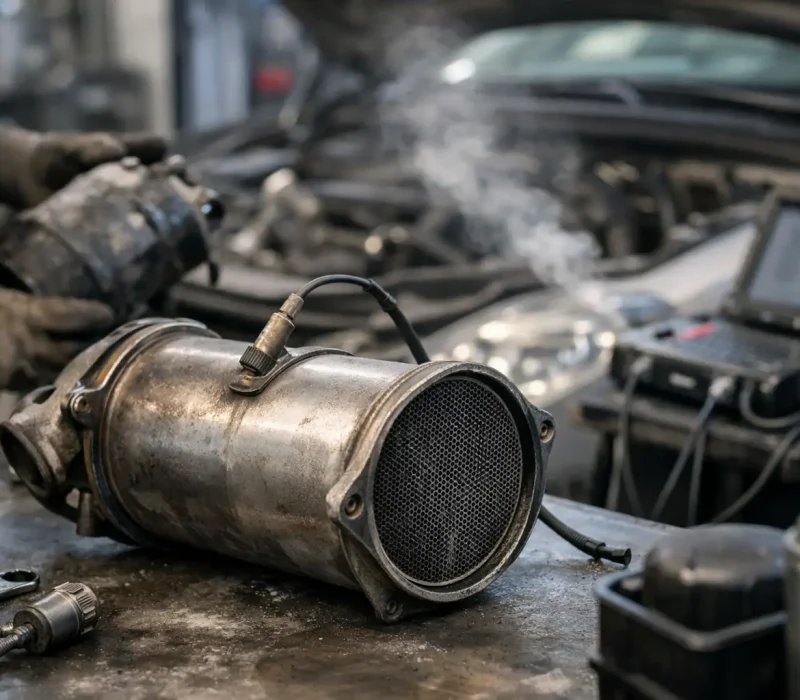
A diesel particulate filter collects soot from the exhaust. Under the right driving conditions, the vehicle raises exhaust temperature and burns that soot away through a regeneration cycle. For drivers doing regular longer journeys, this often happens unnoticed.
Problems start when the engine repeatedly cannot complete that cycle. Short commutes, stop-start work, cold running and interrupted journeys can leave soot loading to build up. Ash also accumulates gradually over the life of the filter. Unlike soot, ash cannot simply be burned away during a normal regeneration.
The DPF itself is not always the root cause. A faulty pressure sensor, temperature sensor, EGR issue, boost leak, injector fault or thermostat that prevents the engine reaching correct temperature can all affect regeneration. This is why clearing a code and sending the vehicle back out is not a repair.
Signs your diesel may need attention
A warning lamp is the obvious sign, but a DPF issue can show itself before the dashboard makes it clear. Many owners notice the vehicle has become less willing to pull, particularly under load, or that fuel use has crept up on the same commute.
Look out for a combination of reduced power, frequent cooling-fan operation after switching off, a rise in idle speed, a strong hot exhaust smell, repeated regeneration attempts, or engine management and glow plug warnings. On some vehicles, the first serious symptom is limp mode, where power is restricted to protect the engine and exhaust system.
Do not assume that a long motorway drive will fix every warning. It may assist a lightly soot-loaded filter when the vehicle has no supporting fault, but it will not remove excessive ash or repair a failed sensor. Continuing to drive a heavily loaded vehicle can make the eventual job more difficult and, in some cases, leave the DPF beyond a sensible chemical-cleaning route.
Staffordshire DPF cleaning guide: what happens on a mobile visit
Mobile DPF cleaning should begin with diagnostics, not a bottle of cleaner. At the appointment, the vehicle is assessed using professional diagnostic equipment to read fault codes and live data. That includes differential pressure across the DPF, calculated soot load, temperatures and the conditions that may be preventing regeneration.
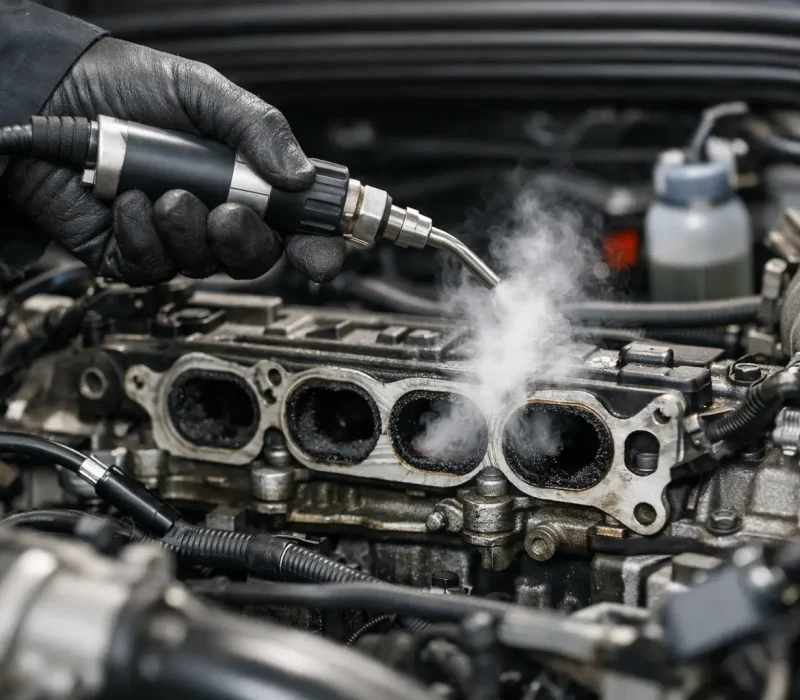
If the readings show the filter is suitable for treatment, a professional chemical-cleaning process is carried out through the appropriate access point. The treatment is designed to break down carbon deposits and help restore flow through the filter. The vehicle is then monitored during the cleaning and regeneration process, with post-clean readings used to confirm whether back pressure has improved.
This approach gives the owner a clearer answer than simply deleting the fault memory. If readings point to a sensor, EGR, boost or fuelling problem, that needs addressing first or alongside the clean. Otherwise, the same DPF warning can return because the condition that caused the blockage is still present.
A mobile appointment is particularly useful for a vehicle that is still drivable but unreliable, or for a work van that cannot be taken out of service for a full day. The work is carried out where the vehicle is parked, subject to suitable access and safe working conditions, so there is less disruption to your routine.
A typical local DPF fault scenario
A common call-out is a diesel estate used mainly for short runs. Take a 2017 Volkswagen Passat 2.0 TDI driven from Tamworth into nearby industrial estates and back, with occasional longer trips at the weekend. The owner may first notice a DPF warning, followed by less torque when joining the A5 and an engine fan that continues running after parking.
Diagnostics might show high differential pressure and stored faults relating to interrupted regenerations, while live data confirms that the engine is otherwise reaching temperature and the sensors are reporting plausibly. In that case, chemical cleaning can be an effective way to reduce restriction and allow the car to return to normal regeneration behaviour.
The result is not merely a warning light switched off. The meaningful outcome is improved exhaust flow, restored response and a vehicle that can complete its regeneration cycles again. If the data instead exposes an implausible sensor reading or another engine fault, the owner knows why cleaning alone would be poor value.
When chemical cleaning is the right option
Chemical cleaning is a practical option when soot and carbon restriction are the main issue and the DPF substrate is intact. It can help avoid the cost of unnecessary replacement and restore the drivability and economy lost as exhaust back pressure rises.
It is not a cure for every DPF. A cracked or melted filter, a filter loaded beyond recoverable limits, or a vehicle with an unresolved mechanical fault may need a different repair plan. Honest diagnostics matter here. Recommending a clean where it cannot produce a lasting result is false economy.
Removal or illegal modification of a DPF is not the answer. It can cause an MOT failure, insurance issues and further fault problems. Keeping the emissions system working properly protects the vehicle’s compliance as well as its performance.
Preventing the warning from coming back
Once the underlying cause has been dealt with, the way the vehicle is used makes a difference. If your diesel spends most of its life on short journeys, allowing it a regular uninterrupted run at normal operating temperature gives it a better chance to complete passive and active regeneration cycles.
Do not ignore early warnings, and do not repeatedly cancel a regeneration by switching off if the cooling fan is running and idle speed is raised. For high-mileage drivers and light commercial operators, timely diagnostics can prevent a minor soot-loading issue becoming downtime, recovery costs and a replacement DPF bill.
The right engine oil specification also matters because unsuitable oil can increase ash accumulation. If a vehicle has persistent DPF problems, diagnostics should guide the next step rather than guesswork, additives or repeated forced regenerations.
DPF cleaning before an ECU remap
For owners considering an Eco, Balanced or Stage 1 remap, the engine must be healthy first. A custom-written calibration within manufacturer tolerances can improve torque delivery, throttle response and, on suitable vehicles, fuel economy. It should never be used to work around an active DPF fault.
Resolving DPF restriction and checking live data beforehand gives the vehicle the right foundation for any performance work. That is especially relevant for drivers who tow, cover motorway miles or depend on a diesel car or van every day. Stronger, cleaner-running performance starts with an engine and exhaust system that are operating as they should.
If your diesel has a DPF warning, limp-mode symptoms or a noticeable drop in MPG, book a mobile DPF clean and diagnostic appointment with High REVS Performance. You will get a clear assessment at your home or workplace, practical advice based on live vehicle data, and the right next step for getting your diesel back to dependable service.