


That DPF warning light rarely appears at a convenient time. One day the car feels slightly flat, the next it is in limp mode, fuel economy has dropped, and you are weighing up the real dpf clean vs replacement cost before the problem gets more expensive.
For most diesel owners, the difference is significant. A proper clean can often restore flow and save a substantial amount over a full replacement, but not every blocked filter can or should be saved. The right decision depends on the condition of the DPF, the reason it blocked in the first place, and whether there is underlying engine trouble still feeding soot back into the system.
DPF clean vs replacement cost – the real difference
In simple terms, cleaning is usually the lower-cost route and replacement is the last resort when the filter is physically damaged, overloaded with ash, or beyond recovery. A chemical clean or specialist DPF cleaning service is typically a fraction of the price of a new unit. On many vehicles, replacement can run into four figures once parts, labour, diagnostics, and sensor-related work are included.
That is why proper diagnosis matters. If a DPF is only blocked with soot because the car has been doing repeated short trips, cleaning can make financial sense. If the internal structure has cracked, melted, or collapsed, spending money on cleaning first may only delay the inevitable.
Owners sometimes compare the cheapest advertised clean against the most expensive genuine dealer replacement and assume the answer is obvious. It is not always that simple. A low-cost clean done without proper diagnostics can be poor value if the pressure sensor, EGR fault, injector issue, or thermostat problem is left untreated. Equally, jumping straight to replacement without confirming the filter is actually failed can mean paying far more than necessary.
What you usually pay for a DPF clean
The cost of DPF cleaning varies by vehicle, blockage level, and cleaning method. On-car chemical cleaning is commonly chosen when the DPF is blocked but still structurally sound. It is less invasive, faster, and often suits owners who want the issue resolved without workshop downtime.
Off-car specialist cleaning can cost more than an on-car treatment because it involves removal and a more intensive process, but it may still be far cheaper than replacement. This route is more likely to be recommended when ash loading is high or when the blockage is too severe for a simpler clean.
What changes the bill? Vehicle access, diagnostic time, the severity of the blockage, and whether any related components also need attention. A DPF fault is not always just a DPF fault. Split boost hoses, failed glow plugs, faulty differential pressure sensors, poor regeneration history, and thermostat issues can all affect the outcome.
If you are comparing quotes, ask what is included. A proper service should not just clear fault codes and send you away. It should involve diagnosis, confirmation of DPF condition, cleaning where appropriate, and checks on why the filter blocked in the first place.
What you usually pay for DPF replacement
Replacement costs rise quickly because you are paying for more than the filter itself. There is the DPF unit, labour to remove and refit it, diagnostic work, and in some cases replacement sensors, clamps, gaskets, or exhaust fixings. On certain models, access is awkward enough to add a fair amount of labour time.
Then there is the part quality question. A genuine manufacturer DPF will often cost more than an aftermarket unit, but fit, longevity, and performance can differ. Some cheaper filters simply do not last as well or do not match original flow characteristics closely enough, which can create repeat issues.
For small commercial vehicles and some premium diesels, replacement costs can become especially painful. If the vehicle is used for work, there is also the hidden cost of downtime. That matters just as much as the repair invoice for many drivers and fleet operators.
When cleaning is the sensible option
Cleaning tends to be the right route when the DPF is blocked with soot but remains physically intact. This is common on diesels used for school runs, local commuting, or stop-start work where the vehicle rarely gets the long, steady drive needed for a full regeneration.
If the warning has appeared relatively early, the engine is still running evenly, and diagnostics show the DPF is restricted rather than damaged, cleaning can be a very cost-effective fix. It can restore exhaust flow, improve regeneration performance, reduce back pressure, and bring back lost drivability.
It also makes sense when the owner wants to avoid the inconvenience of a workshop visit. A properly carried out mobile cleaning and diagnostic service can save time while still delivering a professional result, provided the filter is a suitable candidate.
When replacement is the better call
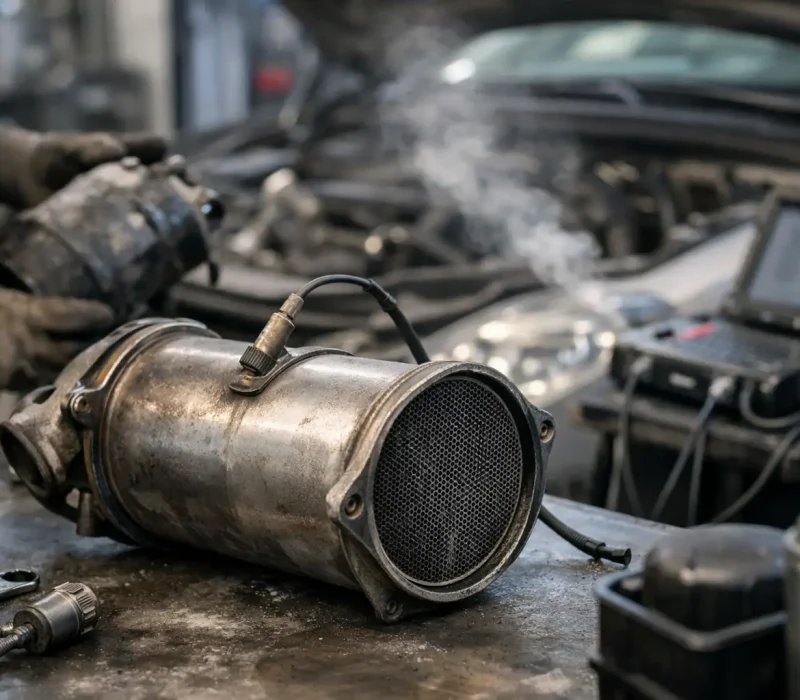
There are times when cleaning is simply not enough. If the DPF substrate has melted due to excessive exhaust temperatures, cracked from thermal stress, or broken up internally, replacement is the correct repair. No cleaning process will rebuild a damaged filter core.
The same applies when ash loading is at end-of-life level. Unlike soot, ash does not burn away during normal regeneration. It builds gradually over time from oil additives and normal engine operation. Once enough ash accumulates, the filter reaches the point where cleaning may offer limited benefit or only a short-term result.
Replacement is also more likely if the vehicle has been driven too long with a serious DPF fault, especially if repeated forced regenerations have overheated the system. In those cases, trying to save money with cleaning can end up costing more when the problem returns.
Why one diesel needs a clean and another needs a new DPF
The headline dpf clean vs replacement cost is only part of the decision. Two cars with the same warning light can need very different repairs because the cause of blockage is not always the same.
Driving pattern is the obvious one. Frequent short trips prevent proper regenerations, so soot accumulates. But engine condition matters just as much. If injectors are over-fuelling, the turbo is not performing correctly, the EGR system is sticking, or the thermostat is faulty and the engine is not reaching proper operating temperature, the DPF will keep loading up.
Oil quality and service history play a role too. Using the wrong engine oil can increase ash deposits and shorten DPF life. Ignoring early warning signs also pushes owners towards the expensive end of the scale. A car that is treated when the first symptoms appear is far more likely to be cleaned successfully than one that has already gone through repeated limp-mode events.
The cheapest option is not always the lowest cost
A quick quote is tempting when you want the warning light gone, but DPF work is one of those jobs where cheap can become expensive. If the service only clears codes, forces a regeneration, or sprays in chemicals without checking sensor readings and fault history, you may only be buying a short pause before the issue returns.
The better question is not, “What is the cheapest fix?” It is, “What will solve the problem properly?” That means looking at live data, differential pressure readings, regeneration behaviour, fault codes, and the general condition of the engine.
For diesel owners who rely on their vehicle daily, that approach is usually better value. It avoids paying twice and reduces the chance of ending up with a replacement bill that might have been preventable earlier.
How to decide between cleaning and replacement
Start with diagnosis, not assumption. A DPF warning light does not automatically mean the filter needs replacing, and a blocked DPF does not always mean cleaning will work. The decision should be based on measured back pressure, soot and ash loading where available, fault history, and whether the filter is structurally sound.
If the DPF is blocked but recoverable, cleaning is often the practical route. If the internal core is damaged or the filter is at the end of its service life, replacement is the right answer even if the upfront cost is higher. Done properly, that prevents repeat faults and protects the turbo, EGR system, and engine from the effects of excessive back pressure.
For drivers around Tamworth and wider Staffordshire, the biggest advantage of a mobile specialist is convenience without guessing. Instead of taking time out to sit in a garage waiting room, you can have the vehicle assessed at home or work and get a clearer answer on whether the DPF can be saved.
The smartest money is usually spent on accuracy first. If the filter can be cleaned safely and effectively, you avoid unnecessary replacement cost. If it cannot, you know you are paying for the repair the vehicle genuinely needs rather than hoping for a temporary fix. A diesel that regenerates properly, pulls cleanly, and stays out of limp mode is worth doing right the first time.