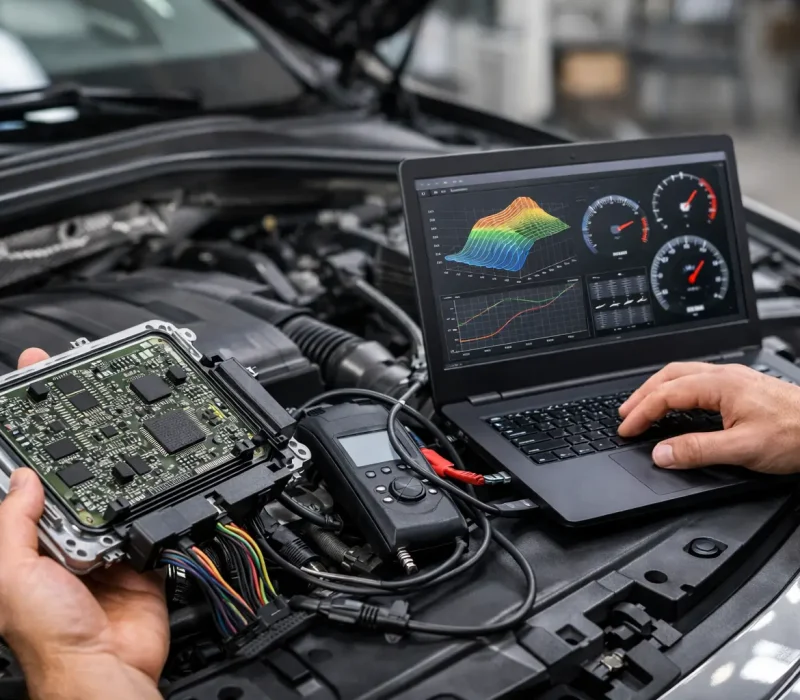



A used car can look tidy, drive well for ten minutes, and still be hiding faults that turn into a four-figure bill a few weeks later. That is exactly why a diagnostic check before buying a used car matters. Modern vehicles store a lot more than a dashboard warning light shows, and a proper scan can expose engine, emissions and electrical issues long before they become your problem.
If you are buying privately, viewing cars after work, or trying to keep a work van on the road without nasty surprises, diagnostics give you a more honest picture than a quick road test ever will. They are not a magic wand, but they are one of the clearest ways to reduce risk.
Why a diagnostic check before buying a used car is worth it
Most buyers still focus on the obvious things first – bodywork, tyre condition, service history and whether the engine sounds clean. Those checks matter, but modern cars are heavily managed by control modules. A vehicle can drive acceptably while carrying stored fault codes, incomplete repairs, DPF problems, injector issues or signs of battery and charging faults.
A diagnostic scan helps you see what the car has been trying to tell its previous owner. In some cases, the seller may not even know there is an issue. In others, faults may have been cleared shortly before the viewing to keep the dash free from warning lights. That is where live data, readiness monitors and fault history become useful.
For diesel buyers in particular, this step is often the difference between buying a decent motorway car and buying someone else’s DPF headache. A blocked filter, poor regeneration history or ongoing sensor problem can leave you with limp mode, poor mpg and expensive workshop time very quickly.
What diagnostics can actually reveal
A proper pre-purchase diagnostic session should go beyond plugging in a cheap code reader and saying “no faults found”. Basic scanners miss a lot. Dealer-level or professional diagnostic equipment can access deeper system data and show whether the vehicle has underlying problems in engine management, emissions control, transmission systems and other electronic modules.
Engine and fuelling faults
Misfires, boost leaks, EGR issues, injector imbalance, sensor faults and air metering problems may not always be obvious on a short drive. Some faults only show under load, at certain temperatures, or after repeated short journeys. Diagnostics can highlight stored and pending codes, alongside live readings that show whether the engine is actually operating as it should.
This matters because a car that feels “mostly fine” can still have a fault developing in the background. Left alone, that fault often leads to poor starting, rough running, reduced performance or increased fuel use.
DPF and emissions system issues
This is one of the biggest reasons to have a used diesel checked properly. A vehicle may have no warning lights on when you view it, but the DPF soot load could still be high, regeneration attempts may be failing, or pressure sensor readings may be pointing to a blockage developing.
AdBlue faults, NOx sensor issues and EGR problems can also sit quietly until the car is back in daily use. Once they surface, they are rarely cheap. If your driving is mainly local or stop-start, buying a diesel with a marginal DPF system is even more of a gamble.
Battery, charging and electrical problems
Modern vehicles rely on stable voltage. Weak batteries, poor alternator performance and intermittent communication faults can trigger all sorts of misleading symptoms. Parking sensors, stop-start systems, steering warnings and infotainment faults are not always isolated issues. Sometimes they start with poor power supply or network communication errors.
A scan can help separate a minor issue from the start of a bigger electrical chase.
What a diagnostic check cannot tell you on its own
Diagnostics are valuable, but they should never be treated as the only check. A car can return clean scan results and still have worn suspension, clutch slip, gearbox noise, accident damage or poor-quality repairs.
That is why the best approach combines electronic diagnosis with common-sense inspection. Service history, tyre wear patterns, smoke under load, coolant condition, oil level, panel gaps and how the vehicle drives all still count. If the seller is reluctant to allow proper checks, that usually tells you something as well.
In other words, diagnostics reduce risk. They do not remove it entirely.
Red flags that make a scan even more important
Some cars should be scanned before purchase without question. If the engine management light has been on recently, if the battery seems flat, if the idle is uneven, or if the seller says “it probably just needs a sensor”, you need more than a guess.
The same applies if the car has poor fuel economy, a delayed throttle response, excessive fan operation, repeated regeneration behaviour, or a history that feels vague around recent repairs. On diesel vehicles, any mention of DPF work, EGR cleaning or “it just needs a good run” should prompt caution.
A cheap used car with hidden faults can become expensive fast. A more expensive car with a clean diagnostic profile and consistent data is often the better buy.
How to use a diagnostic check before buying a used car properly
Timing matters. Ideally, the scan is done before any money changes hands, not after you have already committed. If you are serious about the vehicle, arrange the check as part of the buying process. That gives you three possible outcomes: confidence to go ahead, evidence to negotiate on price, or a clear reason to walk away.
Ask for more than fault codes
A proper assessment should include stored and pending codes, live data where relevant, emissions-related status, and signs that codes have recently been cleared. Readiness monitors can be especially useful because a freshly cleared car may show no warning lights simply because it has not completed enough drive cycles to trigger them again.
If you are buying a diesel, ask specifically about DPF load, regeneration history where available, sensor readings and whether there are any signs the system is under strain.
Match the check to the type of vehicle
Not every car has the same risk profile. A small petrol hatchback used for mixed driving may need a different emphasis from a Euro 6 diesel estate, a towing vehicle or a light commercial van. The more complex the emissions system and the heavier the use case, the more valuable a detailed scan becomes.
For high-mileage drivers and fleet users, downtime matters as much as the purchase price. A hidden fault is not just a repair bill. It can mean missed jobs, delayed deliveries or a vehicle off the road when you need it most.
Private sale or dealer – does it change anything?
Yes, but not as much as many buyers assume. A dealer may offer some comeback if a fault appears, depending on the circumstances and your consumer rights. A private sale usually leaves you with far less protection. That makes diagnostics especially useful when buying privately.
Even so, dealer stock is not automatically problem-free. Cars are often prepared to a price point, and not every forecourt vehicle gets a deep technical assessment. Some are simply cleaned, photographed and moved on quickly. A polished bonnet does not tell you what the DPF differential pressure is doing.
Is it worth paying for a professional check?
In most cases, yes. Professional diagnostic equipment and experience make a real difference. Interpreting vehicle data is not just about reading a code description. It is about understanding whether the fault is historic, intermittent, active, or likely to lead to another issue.
That is particularly relevant on modern turbocharged petrol and diesel vehicles, where one underlying problem can trigger several symptoms. Paying for a proper pre-purchase diagnostic visit is often far cheaper than replacing sensors at random after the sale, or finding out too late that the emissions system is already at its limit.
For buyers in Tamworth and Staffordshire, a mobile diagnostic service can be especially practical. If the vehicle is at a seller’s house or workplace, having the car assessed on site saves time and gives you a clearer decision there and then.
When to walk away
Sometimes a scan does not just help you negotiate. It tells you to leave the car alone. Multiple module faults, repeated emissions issues, signs of recent code clearing, inconsistent live data or a seller who cannot explain obvious problems are all reasons to be cautious.
There is always a temptation to believe a fault is minor because the car is otherwise clean or attractively priced. Sometimes that is true. Often it is not. If the numbers do not add up, or the vehicle already shows signs of deferred maintenance, the safer choice is usually to keep looking.
A used car should not need you to be optimistic. It should give you enough evidence to buy with confidence. A proper diagnostic check helps you make that decision on facts, not guesswork – and that is usually the difference between buying a car you enjoy and buying one that spends its first month introducing you to warning lights.